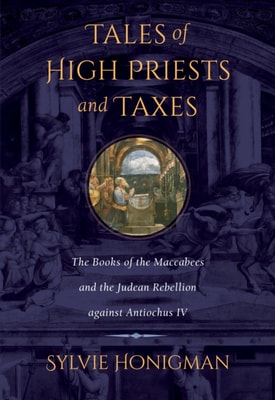
In the wake of the conquests of Alexander the Great, the ancient world of the Bible-the ancient Near East-came under Greek rule, and in the land of Israel, time-old traditions and Greek culture met.
The Deoband movementa revivalist movement within Sunni Islam that quickly spread from colonial India to Pakistan, Afghanistan, Bangladesh, and even the United Kingdom and South Africahas been poorly understood and sometimes feared.
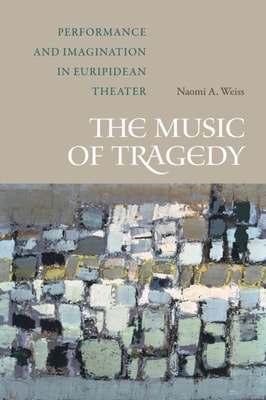
The Music of Tragedy offers a new approach to the study of classical Greek theater by examining the use of musical language, imagery, and performance in the late work of Euripides.
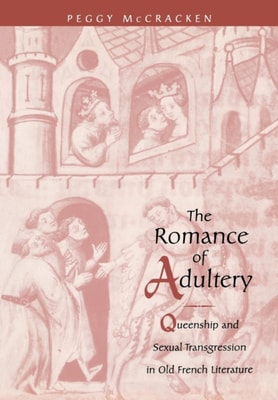
Peggy McCracken offers a feminist historicist reading of Guenevere, Iseut, and other adulterous queens of Old French literature, and situates romance narratives about queens and their lovers within the broader cultural debate about the institution of queenship in twelfth- and thirteenth-century France.
Medieval Venuses and Cupids analyses the transformations of the love deities in later Middle English Chaucerian poetry, academic Latin discourses on classical myth (including astrology, natural philosophy, and commentaries on classical Roman literature), and French conventions that associate Venus and Cupid with Ovidian arts of love.
For over seven hundred years, bodies of writing in vernacular languages served an indispensable role in the religious and intellectual culture of medieval Christian England, yet the character and extent of their importance have been insufficiently recognized.
New, sparkling translations of the Letters of Two Lovers, the Tegernesee Letters, and selections from the Regensburg SongsNine hundred years ago in Paris, a teacher and his brilliant female student fell in love and chronicled their affair in a passionate correspondence.
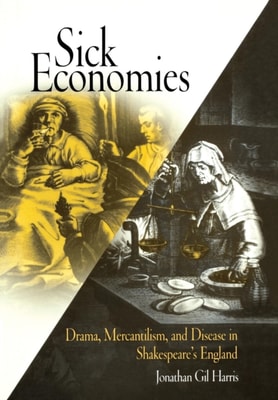
From French Physiocrat theories of the blood-like circulation of wealth to Adam Smith's "e;invisible hand"e; of the market, the body has played a crucial role in Western perceptions of the economic.
Working from the original Persian sources, translators and scholars David and Sabrineh Fideler offer faithful, elegant translations that represent the full scope of Sufi poetry.
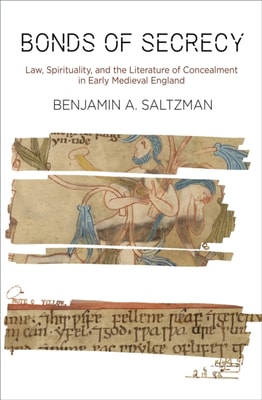
How beliefs about human and divine secrets informed medieval ideas about the mind and shaped the practices of literary interpretationsWhat did it mean to keep a secret in early medieval England?
The world portrayed by ancient declamation is often thought to be timeless; but it was in fact deeply rooted in the historical texture of the Roman Empire.
This book draws on the work of the British sculptor Antony Gormley alongside more traditional literary scholarship to argue for new relationships between Chaucer's poetry and works by others.
This book offers the most comprehensive, up-to-date, multidisciplinary approach to the work of Galician jongleur Martin Codax and the Vindel Parchment.
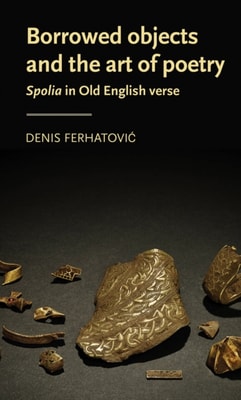
This study examines Exeter riddles, Anglo-Saxon biblical poems (Exodus, Andreas, Judith) and Beowulf in order to uncover the poetics of spolia, an imaginative use of recycled fictional artefacts to create sites of metatextual reflection.
This book presents an exciting new approach to the medieval church by examining the role of literary texts, visual decorations, ritual performance and lived experience in the production of sanctity.
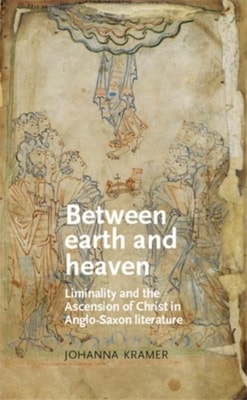
Between earth and heaven examines the teaching of the theology of Christ's ascension in Anglo-Saxon literature, offering the only comprehensive examination of how patristic ascension theology is transmitted, adapted and taught to Anglo-Saxon audiences.
Between earth and heaven examines the teaching of the theology of Christ's ascension in Anglo-Saxon literature, offering the only comprehensive examination of how patristic ascension theology is transmitted, adapted and taught to Anglo-Saxon audiences.
Practicing shame investigates how the literature of medieval England encouraged women to safeguard their honour by cultivating hypervigilance against the possibility of sexual shame.
Living on an island at the edge of the known world, the medieval Irish were in a unique position to examine the spaces of the North Atlantic region and contemplate how geography can shape a people.
This book presents an exciting new approach to the medieval church by examining the role of literary texts, visual decorations, ritual performance and lived experience in the production of sanctity.
This unique and exciting collection, inspired by the scholarship of literary critic Stephanie Trigg, offers cutting-edge responses to the writings of Geoffrey Chaucer for the current critical moment.
This collection investigates how the late-medieval household acted as a sorter, user and disseminator of different kinds of ready information, from the traditional and authoritative to the innovative and newly made.
Capitalising on developments in the field over the past decade, Riddles at work provides an up-to-date microcosm of research on the early medieval riddle tradition.
This wide-ranging collection makes available to specialists and nonspecialists alike important critical work on the Odyssey produced during the last half century.
The thirteen chapters in this collection open up new horizons for the study of biblical drama by putting special emphasis on multitemporality, the intersections of biblical narrative and performance, and the strategies employed by playwrights to rework and adapt the biblical source material in Catholic, Protestant and Jewish culture.
This book rethinks Plato's creation and use of myth by drawing on theories and methods from myth studies, religious studies, literary theory and related fields.
Reading Illegitimacy in Early Iberian Literature presents illegitimacy as a fluid, creative, and negotiable concept in early literature which challenges society's definition of what is acceptable.
In this landmark collection of essays, renowned classicist Charles Segal offers detailed analyses of major texts from archaic and early classical Greek poetry; in particular, works of Alcman, Mimnermus, Sappho, Pindar, Bacchylides, and Corinna.
Medieval Healthcare and the Rise of Charitable Institutions: The History of the Municipal Hospital examines the development of medieval institutions of care, beginning with a survey of the earliest known hospitals in ancient times to the classical period, to the early Middle Ages, and finally to the explosion of hospitals in the twelfth and thirteenth centuries.