For over one hundred years, ornithologists and amateur birders have jointly campaigned for the conservation of bird species, documenting not only birds' beauty and extraordinary diversity, but also their importance to ecosystems worldwide.
With more than two hundred species distributed from California through Texas and across most of mainland Mexico, Central and South America, and islands in the Caribbean Sea, the Phyllostomidae bat family (American leaf-nosed bats) is one of the world's most diverse mammalian families.
Academic Integrity in Vocational and Polytechnic Education addresses educative approaches to support academic integrity in hands-on and applied learning environments with a focus on practitioner experiences.
The Informed Gardener Blooms Again picks up where The Informed Gardener left off, using scientific literature to debunk a new set of common gardening myths.
This engaging and readable book provides an introduction to consciousness that does justice both to the science and to the philosophy of consciousness, that is, the mechanics of the mind and the experience of awareness.
A captivating historical survey of the key debates, questions, and controversies at the intersection of science and religion Throughout history, scientific discovery has clashed with religious dogma, creating conflict, controversy, and sometimes violent dispute.
An authoritative how-to guide that explains every aspect of science proposal writing This fully revised edition of the authoritative guide to science proposal writing is an essential tool for any researcher embarking on a grant or thesis application.
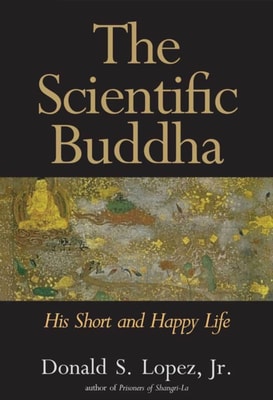
How Western notions of the Buddha have come to misrepresent his teachings and the traditional goals of Buddhist practice This book tells the story of the Scientific Buddha, "born" in Europe in the 1800s but commonly confused with the Buddha born in India 2,500 years ago.
How cultural categories shaped--and were shaped by--new ideas about controlling nature Ranging from alchemy to necromancy, "e;books of secrets"e; offered medieval readers an affordable and accessible collection of knowledge about the natural world.
Will give pleasure to anyone interested in original thinking about the brain Breathtakingly original Financial Times The trailblazing investigation of a question that has confounded us for centuries: how is consciousness created?
Although people have been altering earth’s landscapes to some extent for tens of thousands of years, humankind today is causing massive changes to the planet.
A unique examination of the civic use, regulation, and politics of communication and data technologies City life has been reconfigured by our use-and our expectations-of communication, data, and sensing technologies.
Since World War II, the biological and technological have been fusing and merging in new ways, resulting in the loss of a clear distinction between the two.
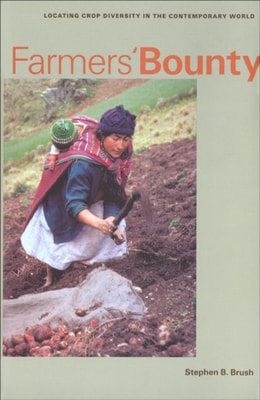
Biological diversity is as crucial in agriculture as it is in nature, and it is equally important to the economic health of both industrial and nonindustrial societies.
Fifty years after the Moon landing, a new history of the space race explores the lives of both Soviet and American engineers At the dawn of the space age, technological breakthroughs in Earth orbit flight were both breathtaking feats of ingenuity and disturbances to a delicate global balance of power.
A noted medical historian explores the roles played by various intellectual frameworks and trends in the writing of history A collection of ten essays paired with substantial prefaces, this book chronicles and contextualizes Roger Cooter’s contributions to the history of medicine.
Dolphins have fascinated humans for millennia, giving rise to an abundance of stories and myths about them, yet the actual details of their lives in the sea have remained elusive.
The combination of electron microscopy with transmitted light microscopy (termed correlative light and electron microscopy; CLEM) has been employed for decades to generate molecular identification that can be visualized by a dark, electron-dense precipitate.
The Behavior and Ecology of Pacific Salmon and Trout combines in-depth scientific information with outstanding photographs and original artwork to fully describe the fish species critical to the Pacific Rim.
A wide-ranging and original introduction to the Anthropocene (the Age of Humanity) that offers fresh, theoretical insights bridging the sciences and the humanities From noted environmental historian Carolyn Merchant, this book focuses on the original concept of the Anthropocene first proposed by Paul Crutzen and Eugene Stoermer in their foundational 2000 paper.
Methods of Enzymatic Analysis, Volume 4 reviews developments in the use of enzymes as tools in analytical biochemistry, including advances in assay techniques.
An ambitious, landmark history of the Scientific Revolution, from the age of Columbus to the age of Cook In 1492 Columbus set out across the Atlantic; in 1776 American colonists declared their independence.
A clear, concise introduction to the quickly growing field of complexity science that explains its conceptual and mathematical foundations What is a complex system?
Annual Reports on NMR Spectroscopy, Volume 107, the latest release in a series that has established itself as a premier resource for both specialists and non-specialists interested in new techniques and applications pertaining to NMR spectroscopy, includes a variety of updated chapters covering NMR Diffusion Studies, Recent Advances in Understanding of Nucleus Contributions to NMR Nuclear Shieldings, and more.
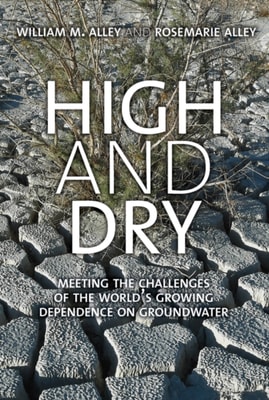
An engaging call to understand and protect groundwater, the primary source of drinking water for almost half of the world’s population Groundwater is essential for drinking water and food security.
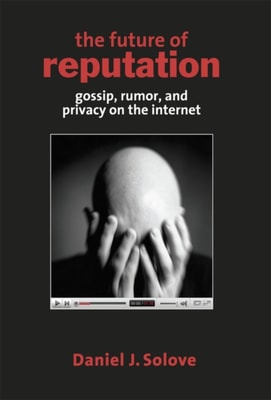
Teeming with chatrooms, online discussion groups, and blogs, the Internet offers previously unimagined opportunities for personal expression and communication.
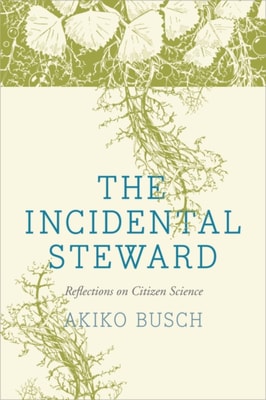
A thoughtful citizen scientist contemplates our changing natural world and the value of stewardship A search for a radio-tagged Indiana bat roosting in the woods behind her house in New York’s Hudson Valley led Akiko Busch to assorted other encounters with the natural world—local ecological monitoring projects, community-organized cleanup efforts, and data-driven citizen science research.