During the bloody climax of World War II, the American Office of Strategic Services (OSS) devised a psychological warfare tactic so incredibly bizarre and meticulously planned, it sounds like pure fiction.
PRE-ORDER THE ACTION-PACKED STORY OF THE WWII GROUP THAT BECAME OUR SAS, FROM ONE OF THE UK'S MOST STORIED SPECIAL FORCES OPERATORS History at its gripping, fascinating finest THE DAILY EXPRESS'A must read for any military enthusiast' JASON FOX Brilliant Stuff.
Here is the first social history devoted to the common soldier in the Russian army during the first half of the 19th-century--an examination of soldiers as a social class and the army as a social institution.
Reconstruction explores one of the most transformative and contested eras in American history: the years after the Civil War, when the United States attempted to rebuild the defeated South, define freedom after slavery, and decide whether democracy could truly include formerly enslaved people.
The American West explores one of the most dramatic and contested periods in United States history: the transformation of the West during the nineteenth century.
The United States in World War II tells the dramatic story of America's transformation from a cautious, divided nation into a decisive global superpower.
This work is a richly detailed study of the nature and development of the 139 Attic demes, the local units that made up the city-state of Athens during the classical and early Hellenistic periods.
This book of selections from the distinguished journal International Security speaks to the most important question of our age: the deterrence of nuclear war.
The traditional distinction between military and political affairs in American life has become less significant as military officers increasingly participate with civilians in the formulation of national policies.
This work stresses the importance, in making any choice of strategies-including the decision to use or refrain from using nuclear weapons-of gauging the intent behind the opponent's military moves.
The author explores a variety of questions related to General Sikorski's policies, such as his effort to maintain an independent Polish Arms' in the Soviet Union.
This historical analysis of the problems faced by the British navy during the War of 1739-1748 also sheds light on the character, limitations, and potentialities of eighteenth-century British administration.
The myth of the eighteenth-century British "e;war machine"e; persists, perplexing those who search for the reasons why Britain lost the Revolutionary War.
Good strategic assessment does not guarantee success in international relations, but bad strategic assessment dramatically increases the risk of disastrous failure.
BOOK 12 OF THE LADYBIRD EXPERT HISTORY OF THE SECOND WORLD WAR, FROM AWARD-WINNING HISTORIAN JAMES HOLLANDFeaturing stunning illustrations from Keith Burns, bringing the story to life in vivid detailWhy did Japan decide to attack at Pearl Harbour?
International lawyers and distinguished scholars consider the question: Is it legally justifiable to treat the Vietnam War as a civil war or as a peculiar modern species of international law?
Volume three of the complete wartime correspondence of the two great statesmen of the twentieth centuryThis three-volume work is the first complete collection of the correspondence of Winston Churchill and Franklin D.
Volume two of the complete wartime correspondence of the two great statesmen of the twentieth centuryThis three-volume work is the first complete collection of the correspondence of Winston Churchill and Franklin D.
Volume one of the complete wartime correspondence of the two great statesmen of the twentieth centuryThis three-volume work is the first complete collection of the correspondence of Winston Churchill and Franklin D.
Professor Havens analyzes the efforts of Japanese antiwar organizations to portray the war as much more than a fire across the sea"e; and to create new forms of activism in a country where individuals have traditionally left public issues to the authorities.
This searching analysis of what has been called America's longest war"e; was commissioned by the Senate Committee on Foreign Relations to achieve an improved understanding of American participation in the conflict.
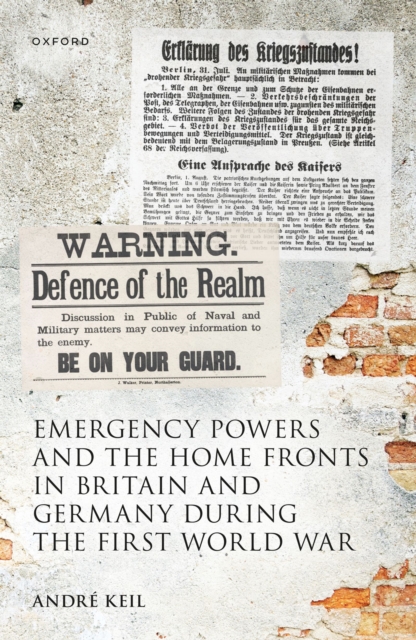
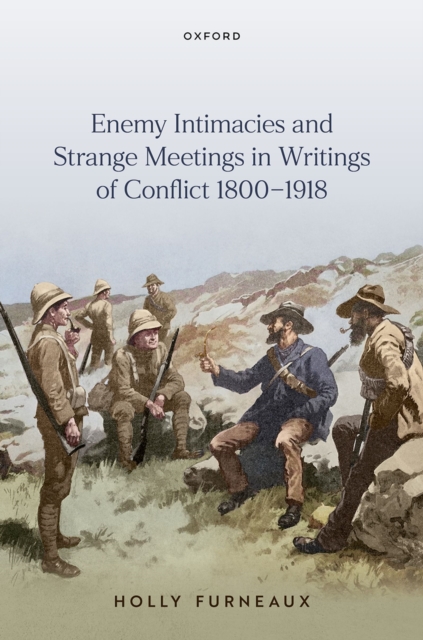
In essays that illuminate not only the recent past but shortcomings in today's intelligence assessments, sixteen experts show how prospective antagonists appraised each other prior to the World Wars.
In Making Sense of War, Amir Weiner reconceptualizes the entire historical experience of the Soviet Union from a new perspective, that of World War II.
From the Korean War to the current conflict in Iraq, Paying the Human Costs of War examines the ways in which the American public decides whether to support the use of military force.
The dynastic struggles of the Wars of the Roses (1455-85) have traditionally been portrayed as belonging to one of the most dramatic periods in the history of England, an age of murder and melodrama.
German Panzer ace Michael Wittmann was by far the most famous tank commander on any side in World War II, destroying 138 enemy tanks and 132 anti-tank guns with his Tiger.
Environmental tragedies such as Chernobyl and the Exxon Valdez remind us that catastrophic accidents are always possible in a world full of hazardous technologies.
Told for the first time in English, Paul Preston's new book tells the story of a preventable tragedy that cost many thousands of lives and ruined tens of thousands more at the end of the Spanish Civil War.