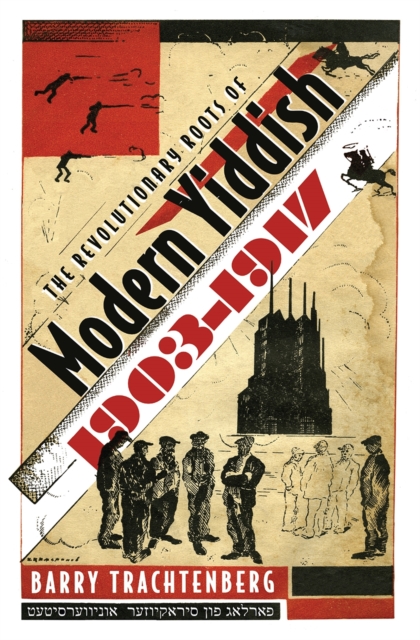
Revolutionary Roots of Modern Yiddish, 1903-1917






At the beginning of the twentieth century, Yiddish was widely viewed, even by many of its speakers, as a corrupt form of German that Jews had to abandon if they hoped to engage in serious intellectual, cultural, or political work. Yet, by 1917, it was the dominant language of the Russian Jewish press, a medium for modern literary criticism, a vehicle for science and learning, and the foundation of...

At the beginning of the twentieth century, Yiddish was widely viewed, even by many of its speakers, as a corrupt form of German that Jews had to abandon if they hoped to engage in serious intellectual, cultural, or political work. Yet, by 1917, it was the dominant language of the Russian Jewish press, a medium for modern literary criticism, a vehicle for science and learning, and the foundation of...