This second volume of Sermons by Jonathan Edwards on the Matthean Parables contains a previously unpublished series of six sermons by Edwards on Jesus' parable of the Sower and the Seed, as found in Matthew 13:3-7.
Although one often hears of the need to preach "e;the whole counsel of God,"e; few resources have seriously and specifically attempted to assist the preacher and planner of worship to do just that--until now.
Sacred Reading: The 2019 Guide to Daily Prayer provides a prayerful and intimate exploration of the daily gospel readings, illuminating each passage through a simple, six-step process that draws you into a personal encounter with Christ.
The Gospel of John and the Religious Quest argues that at its origin the Fourth Gospel was part of a dialogue with various religious traditions, and that to this day it is being used in active dialogue with those who live in traditions other than the Christian.
Burning Center, Porous Borders articulates what the church is and is called to be about in the world, a world now globalized to the point that the local is lived globally and the global is lived locally.
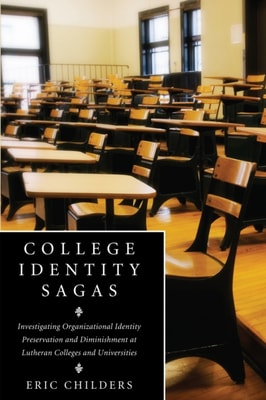
As the Christian church in the West moves further into the post-Christian era a dilemma rises for those thoughtful followers of Jesus Christ who find themselves in venerable, older church institutions that have become forgetful of their reason for being in the purpose of God.
"e;Those who serve as truth-tellers in the church, like those who listen to the truth-telling in the church, are a mix of yearning and fearfulness, of receptiveness and collusion.
In this centennial year of China's 1911 Revolution, Volume 3 in the Salt and Light series includes the life stories of influential Chinese who played a political or military role in the new Republic that emerged.
While debates abound today over the cost, purpose, and effectiveness of higher education, often lost in this conversation is a critical question: Should higher education attempt to shape students' moral and spiritual character in any systematic manner as in the past, or focus upon equipping students with mere technical knowledge?
Increasingly, adolescents and young adults in the United States are racially and socioeconomically diverse, while the teaching population remains predominantly white and middle class.
Uncommon Friendships explores the often-overlooked dynamic of interreligious friendships, considering their significance for how we think about contemporary religious thought.
With simple, heartbreaking detail, Das Maddimadugu recalls the joys and tragedies of his childhood in a destitute family of the untouchable caste, nearly sold into slavery, and "e;adopted"e; by a single Mennonite missionary woman.
Metaphors We Teach By helps teachers reflect on how the metaphors they use to think about education shape what happens in their classrooms and in their schools.
The Bible teems with nonhuman life, from its opening pages with God's creation of animals on the same day and out of the same earth as humans to its closing apocalyptic scenes of horses riding out of the sky.
As Protestant denominations are fracturing over whether to ordain gays and lesbians, this work looks at The United Methodist Church's conversations about the issue, in light of Methodism's historic contests over the leadership of African Americans and women, to see what can be learned from these earlier periods of change.
Utilizing resources from Martin Luther and the Lutheran tradition, this study offers an understanding of the gospel as promise as key to addressing the challenge of relating the missio Dei to a generous, constructive approach toward the religious other.
As the world watched the biggest global epidemic in history evolve, many anticipated that Christians would embrace those who were affected just as Jesus during his time embraced those who were sick and dying.
Secular contemporary development discourse deals with the problems of societal development and transformation by prioritizing the human good in terms of vital and social values with the aim of providing the basic necessities of life through social institutions that work.
In this pertinent and engaging volume leading Christian philosophers, theologians, and writers from all over the denominational map explode the black-and-white binaries that characterize both sides of the New Atheism debate.
Women have been adding their voices to the proclamation of the gospel for as long as there has been a gospel to proclaim, but only in the last half-century have these voices become part of the official catalogue of Christian preaching.
This diary is a fine-grained, often daily, theological reflection on the author's final ponderings on his ordeal with a serious illness, a concluding sabbatical, a last year of teaching, a culminating lecture, presiding at Eucharist, and summarial notes about "e;what God is doing in the world.