LEVISO ist motivierend, haptisch und fördert vor allem den Spaß am (selbstständigen) Lernen – geeignet für Kita, Schule und zu Hause, empfohlen ab 5 Jahre +++Schritt für Schritt den Zahlenraum bis 20 lernen – mit der Reihe LEVISO ist das spielerisch und einfach umzusetzen!
LEVISO ist motivierend, haptisch und fördert vor allem den Spaß am (selbstständigen) Lernen – geeignet für Kita, Schule und zu Hause, empfohlen ab 5 Jahre +++Schritt für Schritt den Zahlenraum bis 10 lernen – mit der Reihe LEVISO ist das spielerisch und einfach umzusetzen!
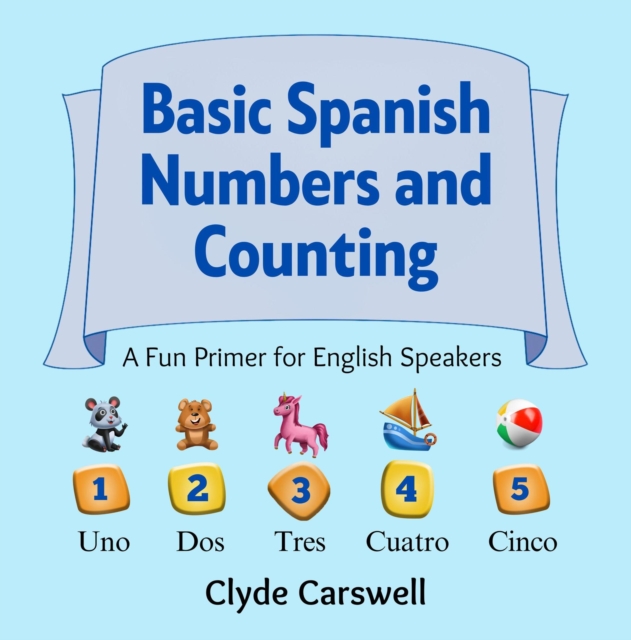
Basic Spanish Numbers and Counting is a playful, interactive learning resource for English speakers who want to learn fundamental Spanish numbers and how to count.
Prólogo___Las voces de los teóricos y profesores en la construcción del Énfasis en Educación Matemática del Doctorado Interinstitucional en Educación de la Universidad Distrital Francisco José de CaldasVarios autoresEl estudio de los programas de formación de profesores de matemáticas desde una perspectiva sistémica humanistaOlga Lucía León Corredor y Diana Gil-ChavesSigno, lenguaje, sujeto y alteridadRodolfo Vergel CausadoLa gestión del proceso de enseñanza-aprendizaje: incidencia en el aprendizaje de los futuros profesores y su vínculo con la competencia docente de "mirar profesionalmente"Luis Ángel Bohórquez ArenasSobre los autores
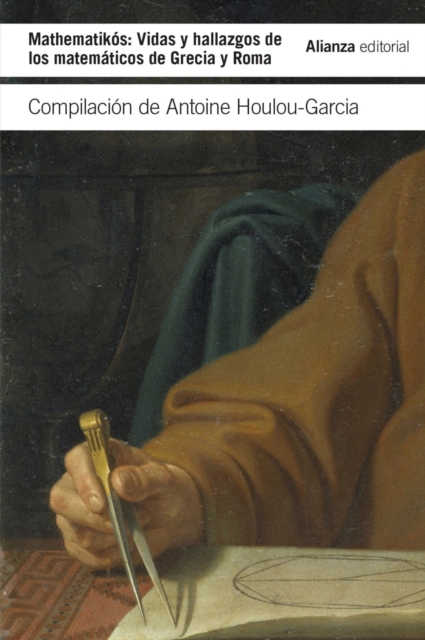
Este libro singular y extraordinario descubre y recopila los principales textos originales de los matemáticos de la Antigüedad griega y romana, normalmente inaccesibles o dispersos, que de forma habitual han llegado hasta nosotros contados o expuestos siempre de quinta o sexta mano y como premisa.
En esta especie de "bestiario numérico", Liz Strachan (profesora y divulgadora de matemáticas durante más de cuarenta años) elige un centenar largo de números enteros no negativos que considera especiales, desde el cero hasta 1.
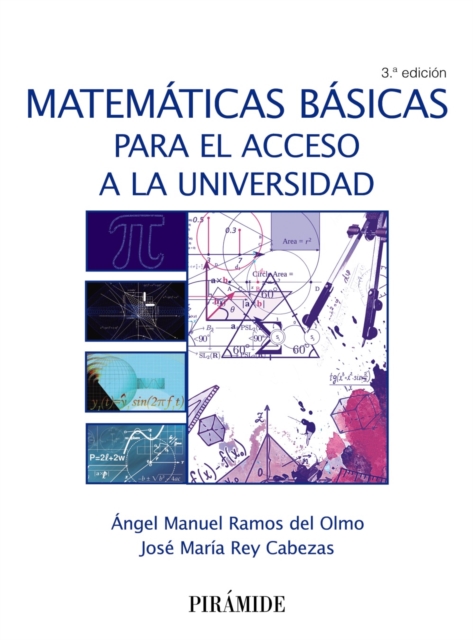
Este libro es el resultado de la experiencia de los autores como docentes en cursos de matemáticas para el acceso a la universidad, como profesores en la propia universidad y como miembros de tribunales de las pruebas de acceso a la misma.
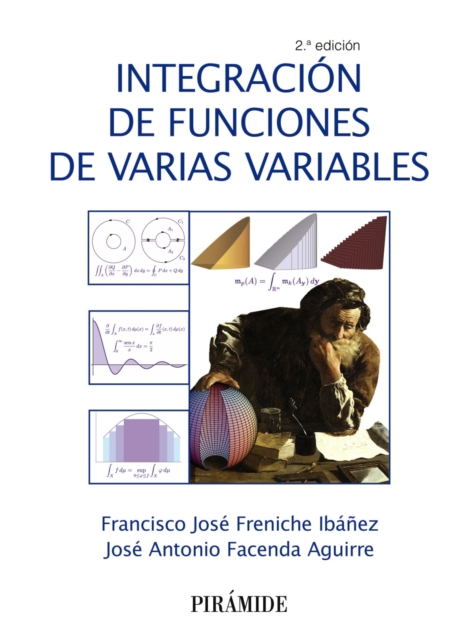
El cálculo integral de funciones de varias variables reales es una materia fundamental en la formación matemática, no solo en las facultades de matemáticas, sino también en las de ciencias y en las escuelas técnicas.
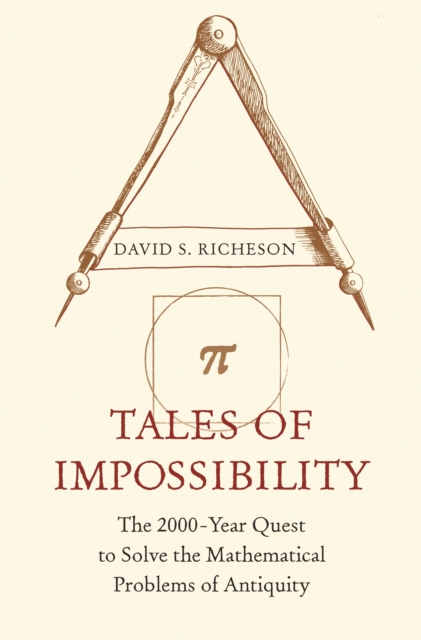
A comprehensive look at four of the most famous problems in mathematicsTales of Impossibility recounts the intriguing story of the renowned problems of antiquity, four of the most famous and studied questions in the history of mathematics.
The aim of this book is to study various geometric properties and algebraic invariants of smooth projective varieties with infinite fundamental groups.
An investigation of finite Riemann surfaces from the point of view of functional analysis, that is, the study of the various Abelian differentials of the surface in their dependence on the surface itself.
This book is a Weekend Pocketbook on Everything You Should Know About the Shape of the Universe, the story of one of cosmology's oldest and biggest questions: what does the whole cosmos look like?
Numerical analysts and computer operators in all fields will welcome this publication in book form of Cecil Hastings' well-known approximations for digital computers, formerly issued in loose sheets and available only to a limited number of specialists.
Through a set of lively anecdotes and essays, Nathaniel Borenstein traces the divergence between the fields of software engineering and user-centered software design, and attempts to reconcile the needs of people in both camps.
This volume sets out the basic applied mathematical and numerical methods of chaotic dynamics and illustrates the wide range of phenomena, inside and outside the laboratory, that can be treated as chaotic processes.
Kunihiko Kodaira's influence in mathematics has been fundamental and international, and his efforts have helped lay the foundations of modern complex analysis.
A complete theory of integration as it appears in geometric and physical problems must include integration over oriented r-dimensional domains in n-space; both the integrand and the domain may be variable.
The calculus of finite differences is here treated thoroughly and clearly by one of the leading American experts in the field of numerical analysis and computation.
This book is meant to give an account of recent developments in the theory of Plateau's problem for parametric minimal surfaces and surfaces of prescribed constant mean curvature ("e;H-surfaces"e;) and its analytical framework.
This book offers a systematic and comprehensive presentation of the concepts of a spin manifold, spinor fields, Dirac operators, and A-genera, which, over the last two decades, have come to play a significant role in many areas of modern mathematics.
Professor Morgenstern's deep interests in economic time series and problems of measurement are represented by path-breaking articles devoted to the application of modern statistical analysis to temporal economic data.
This volume contains thirty-three selected general research papers devoted to the theory and application of the mathematics of constrained optimization, including linear programming and its extensions to convex programming, general nonlinear programming, integer programming, and programming under uncertainty.