The mathematical genius Alan Turing, now well known for his crucial wartime role in breaking the ENIGMA code, was the first to conceive of the fundamental principle of the modern computer-the idea of controlling a computing machine's operations by means of a program of coded instructions, stored in the machine's 'memory'.
In this autobiography, Sir Peter Mansfield describes his life from war time childhood that initially sparked his interest in physics to his work in magnetic resonance imaging (MRI) that eventually led to the award of the Nobel Prize in 2003.
In this autobiography, Sir Peter Mansfield describes his life from war time childhood that initially sparked his interest in physics to his work in magnetic resonance imaging (MRI) that eventually led to the award of the Nobel Prize in 2003.
Kidney Disease: From advanced disease to bereavement provides guidance to renal and palliative care professionals dealing with patients with advanced kidney disease, who are approaching end of life.
Rosalind Franklin is famous in the history of science for her contribution to the discovery of the structure of DNA, the start of the greatest biological revolution of the twentieth century.
Rosalind Franklin is famous in the history of science for her contribution to the discovery of the structure of DNA, the start of the greatest biological revolution of the twentieth century.
Niels Bohr and the Quantum Atom is the first book that focuses in detail on the birth and development of Bohr's atomic theory and gives a comprehensive picture of it.
Niels Bohr and the Quantum Atom is the first book that focuses in detail on the birth and development of Bohr's atomic theory and gives a comprehensive picture of it.
The mathematical genius Alan Turing, now well known for his crucial wartime role in breaking the ENIGMA code, was the first to conceive of the fundamental principle of the modern computer-the idea of controlling a computing machine's operations by means of a program of coded instructions, stored in the machine's 'memory'.
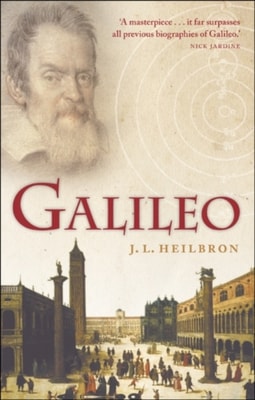
Just over four hundred years ago, in 1610, Galileo published the Siderius nuncius, or Starry Messenger, a 'hurried little masterpiece' in John Heilbron's words.
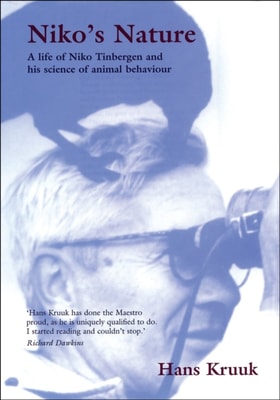
A charismatic naturalist, bird-watcher, teacher, artist, photographer, film-maker, and winner of the Nobel Prize, Niko Tinbergen was a prominent and influential scientist.
In 1912 Lawrence Bragg explained the interaction of X-rays with crystals, and he and his father, William thereby pioneered X-ray spectroscopy and X-ray crystallography.
Just over four hundred years ago, in 1610, Galileo published the Siderius nuncius, or Starry Messenger, a 'hurried little masterpiece' in John Heilbron's words.
This book presents a biography of Abdus Salam, the first Muslim to win a Nobel Prize for Science (Physics 1979), who was nevertheless excommunicated and branded as a heretic in his own country.
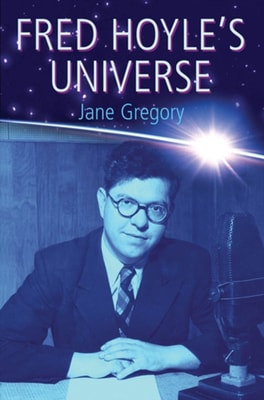
Fred Hoyle was one of the most widely acclaimed and colourful scientists of the twentieth century, a down-to-earth Yorkshireman who combined a brilliant scientific mind with a relish for communication and controversy.
Peter Byrne tells the story of Hugh Everett III (1930-1982), whose "e;many worlds"e; theory of multiple universes has had a profound impact on physics and philosophy.
The Oxford Specialist Handbooks series provides readers with clear, concise information on all that is needed to successfully train in the medical sub-specialties.
Despite the fact that most palliative care educators are involved in teaching, there is little literature devoted to education specifically within palliative care.
This book presents a biography of Abdus Salam, the first Muslim to win a Nobel Prize for Science (Physics 1979), who was nevertheless excommunicated and branded as a heretic in his own country.
In 1912 Lawrence Bragg explained the interaction of X-rays with crystals, and he and his father, William thereby pioneered X-ray spectroscopy and X-ray crystallography.
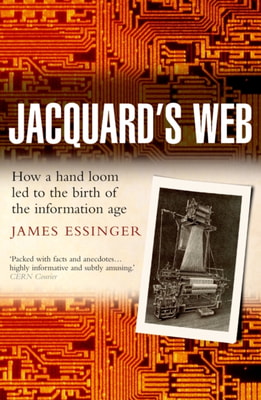
Jacquard's Web is the story of some of the most ingenious inventors the world has ever known, a fascinating account of how a hand-loom invented in Napoleonic France led to the development of the modern information age.
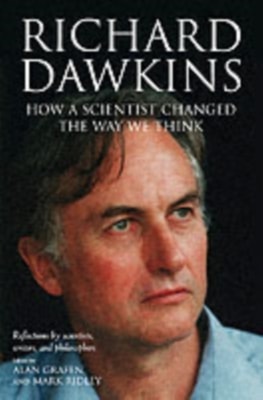
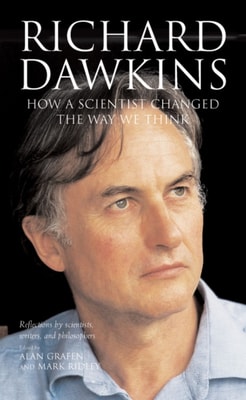
Published to coincide with the 30th anniversary of The Selfish Gene, this sparkling collection explores the impact of Richard Dawkins as scientist, rationalist, and one of the most important thinkers alive today.
Bernard Bolzano (1781-1848, Prague) was a remarkable thinker and reformer far ahead of his time in many areas, including philosophy, theology, ethics, politics, logic, and mathematics.
Fred Hoyle was one of the most widely acclaimed and colourful scientists of the twentieth century, a down-to-earth Yorkshireman who combined a brilliant scientific mind with a relish for communication and controversy.
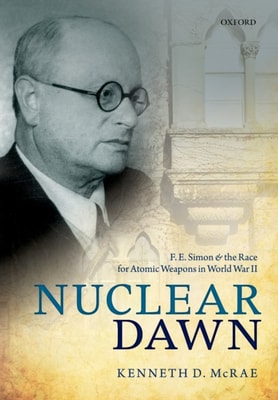
This book provides a rounded biography of Franz (later Sir Francis) Simon, his early life in Germany, his move to Oxford in 1933, and his experimental contributions to low temperature physics approximating absolute zero.
This book provides a rounded biography of Franz (later Sir Francis) Simon, his early life in Germany, his move to Oxford in 1933, and his experimental contributions to low temperature physics approximating absolute zero.
Amytrophic Lateral Sclerosis (ALS or motor neurone disease) is a progressive neurodegenerative disease that can cause profound suffering for both the patient and their family.
Amytrophic Lateral Sclerosis (ALS or motor neurone disease) is a progressive neurodegenerative disease that can cause profound suffering for both the patient and their family.
Jacquard's Web is the story of some of the most ingenious inventors the world has ever known, a fascinating account of how a hand-loom invented in Napoleonic France led to the development of the modern information age.
Published to coincide with the 30th anniversary of The Selfish Gene, this sparkling collection explores the impact of Richard Dawkins as scientist, rationalist, and one of the most important thinkers alive today.
Rising from a humble background in rural southern Ireland, John Tyndall became one of the foremost physicists, communicators of science, and polemicists in mid-Victorian Britain.
Rising from a humble background in rural southern Ireland, John Tyndall became one of the foremost physicists, communicators of science, and polemicists in mid-Victorian Britain.
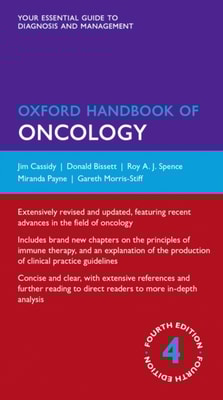
Now fully revised and in its fourth edition, the Oxford Handbook of Oncology has been the essential go-to guide for students and practitioners in oncology for over a decade.
Alan Turing has long proved a subject of fascination, but following the centenary of his birth in 2012, the code-breaker, computer pioneer, mathematician (and much more) has become even more celebrated with much media coverage, and several meetings, conferences and books raising public awareness of Turing's life and work.