This book examines how trust relates to the main political concepts - sovereignty, reason of state, and natural law - of seventeenth-century discourse.
This study explores the rise and nature of modernist approaches to economics, sociology, international relations, administration, language, history and anthropology.
This book offers a new approach to understanding the history of ignorance across politics, religion, history and science during the early Enlightenment.
This book shows how absolute naturalism, deciphering nature without reference to God, emerged from the inheritance, dynamics and debates of orthodox culture.
Radically reconceives Friedrich Nietzsche''s early life, offering an alternative approach and new insights into the early development of Nietzsche''s philosophy.
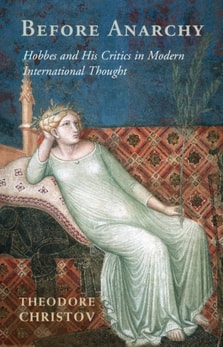
Against the twentieth-century ''Hobbesian anarchy'', Before Anarchy reconsiders the originality and reception of Hobbes''s interpersonal and international state of nature.
This book examines racial and ethnic politics outside of the traditional context and questions the models used to understand mobility and government responsiveness.
This book provides the first political theory of post-Communist Europe, discussing liberty, rights, transitional justice, property, privatization, and rule of law.
This book traces Heidegger''s influence on a variety of political movements to fundamental ambiguities in his understanding of everydayness and nihilism.
This book traces the genealogy and historical memory of the twelfth-century ruler Prithviraj Chauhan, remembered as the ''last Hindu Emperor of India''.
An original interpretation of the connection between idealism, history and nationalism in Fichte''s general philosophical, educational and moral project.
A groundbreaking, revisionist account of the importance of the history of philosophy to intellectual change - scientific, philosophical and religious - in seventeenth-century England.
Examines the literary output of four influential American Indian intellectuals who challenged conceptions of identity at the turn of the twentieth century.