Advanced Dairy Chemistry-l: Proteins is the first volume of the third edition of the series on advanced topics in Dairy Chemistry, which started in 1982 with the publication of Developments in Dairy Chemistry.
The book will educate and decode the role of vitamins, essential fatty acids and other nutraceuticals on skin health and their tremendous impact to the current needs of the skin care industry.
Since its inception, paleoanthropology has been closely wedded to the idea that big-game hunting by our hominin ancestors arose, first and foremost, as a means for acquiring energy and vital nutrients.
Although its underlying concept is a relatively simple one-the measurement of the human body and its parts-anthropometry employs a myriad of methods and instruments, and is useful for a variety of purposes, from understanding the impact of disease on individuals to tracking changes in populations over time.
It is becoming increasingly evident that the deficiency of n-3 fatty acids in diet is not only associated with cardiovascular diseases, but also involved in stroke, epilepsy and other neurological and neurodegenerative diseases, such as Alzheimer disease, Parkinson disease, and peroxisomal diseases.
Ecosystems and Human Health introduces Ecohealth as an emerging field of study, traces its evolution, and explains its applications in cross-disciplinary and holistic programs.
Improvisation as Art traces how modernity's emphasis on inventiveness has changed the meaning of improvisation; and how the ideals and laws that led improvisation to be banned from "e;high art"e; in the eighteenth century simultaneously enabled the inventive reintegration of improvisation into modernism.
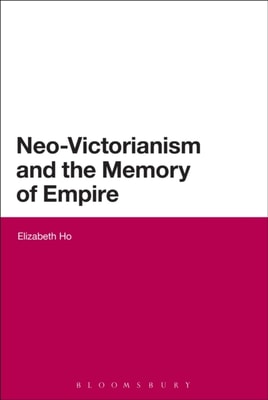
Examining the global dimensions of Neo-Victorianism, this book explores how the appropriation of Victorian images in contemporary literature and culture has emerged as a critical response to the crises of decolonization and Imperial collapse.
George Eliot (born Mary Ann Evans, 1819-1880) was one of the most important writers of the European nineteenth century, as well as a pioneering translator of challenging and controversial Continental thinkers, and an influential editor and essayist.
While postcolonial studies of Romantic-period literature have flourished in recent years, scholars have long neglected the extent of Samuel Taylor Coleridge's engagement with the Orient in both his literary and philsophical writings.
On the bicentenary of his birth, this short account of the emotional life of Charles Dickens examines his relationships with some of the women to whom he was closest.
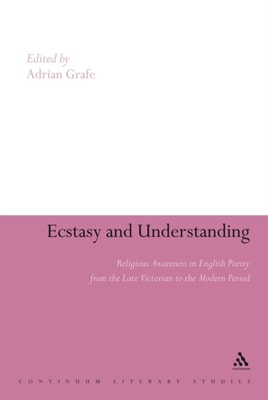
This collection of research explores the interaction of religious awareness and literary expression in English poetry in the late nineteenth and twentieth centuries.
Examining the global dimensions of Neo-Victorianism, this book explores how the appropriation of Victorian images in contemporary literature and culture has emerged as a critical response to the crises of decolonization and Imperial collapse.
A complete introduction to Modernist writers, ideas and movements, this book considers the precursors as well as the legacy of Modernist Literature in a clear, accessible manner.
A classic survey of modern English poetry from the new tradition established by Yeats in the 1890s through to Eliot, including a reassessment of the Georgians and the influence of Pound.
Mapping the largely neglected history of autofictional literature, and describing developments against socio-historical changes, cultural trends, and philosophical-psychological discussions around self and mind, this book both explores and historicizes autofiction's contemporary boom.
Author of Biographia Literaria (1817) and The Friend (1809-10, 1812 and 1818), Samuel Taylor Coleridge was the central figure in the British transmission of German idealism in the 19th century.
British writers of the Romantic Period were popular in Germany throughout the nineteenth century, and translations of Scott, Burns, Moore, Hemans, and Byron (among others) became widespread.
Reader's Guides provide a comprehensive starting point for any advanced student, giving an overview of the context, criticism and influence of key works.
Henry James's ghost story novella, The Turn of the Screw (1898) is a key gothic text and is one of the most popular James texts for undergraduate study.
Reader's Guides provide a comprehensive starting point for any advanced student, giving an overview of the context, criticism and influence of key works.
An illuminating study looking at an influential group of Roman Catholic novelists and writers - Chesterton, Belloc, Waugh, Greene, Spark and David Lodge among others.
The figure of Dante's Beatrice can be seen as a cultural phenomenon or myth during the nineteenth century, inspiring a wide variety of representations in literature and the visual arts.
A one-stop resource containing introductory material through to practical case studies in reading primary and secondary texts to introducing criticism and new directions in research.
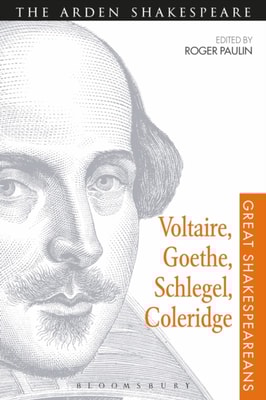
Great Shakespeareans offers a systematic account of those figures who have had the greatest influence on the interpretation, understanding and cultural reception of Shakespeare, both nationally and internationally.
When an Archbishop of Canterbury takes time off to write a book about Dostoevsky, this is a sign of great hope and encouragement for The Church of England and for all those who seek God.
Dickens, Journalism, Music presents the first full analysis of the articles on music published in the two journals conducted by Charles Dickens, Household Words and its successor, All the Year Round.
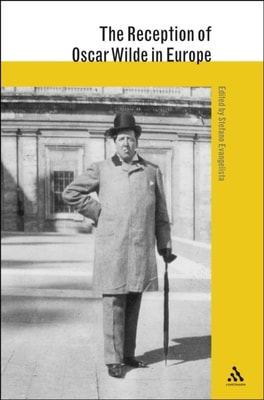
Oscar Wilde (1854-1900) is now widely recognised not only as one of the most representative figures of the British fin de siècle, but as one of the most influential Anglophone authors of the nineteenth century.