Shakespeare and Character brings together leading scholars in theory, literary criticism, and performance studies in order to redress a serious gap in Shakespeare studies and to put character back at the centre of our understanding of Shakespeare's achievement as an artist and thinker.
This study shows how poets worked within and against the available forms of nature writing to challenge their place within physical, political, and cultural landscapes.
In a unique collection of essays devoted to one of America's most significant twentieth-century poets, a group of international contributors considers the Transatlantic nature of Stevens' poetry, providing original accounts of how a poet wary of 'influence' created a poetics which continues to haunt contermporary verse.
This new collection of essays by major scholars in the field looks at the ways in which cross-fertilization has taken place in Gothic writing from France, Germany, Britain and America over the last 200 years, and argues that Gothic writing reflects international exchanges in theme and form.
The Interpersonal Idiom offers a timely reformulation of identity in the age of Shakespeare, recovering a rich and now obsolete language that casts selfhood not as subjective experience but as the experience of others.
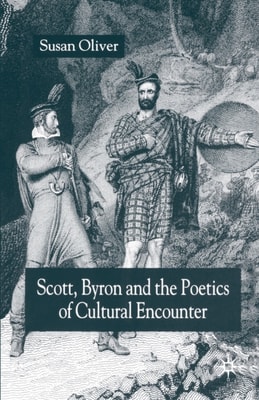
Scott, Byron and the Poetics of Cultural Encounter is an innovative study of Scott's and Byron's poetical engagement with borders (actual and metaphorical) and the people living on and around them.
This volume replaces the traditional image of George Herbert as meditative recluse with a portrait of the poet as engaged throughout his life with the religion, politics and society of his time.
Cultural Constructions of Madness in the Eighteenth Century deals with the (mis)representation of insanity through a substantial range of literary forms and figures from across the eighteenth century and beyond.
Metaphor and Iconicity attempts to clarify the interplay of metaphor and iconicity in the creation and interpretation of spoken and written texts from a cognitive perspective.
In this study of Yeats' poetry between 1902 and 1916, Greaves strongly reacts to the tendency in literary criticism to categorize Yeats' work as 'modernist', Instead, Greaves offer a different way of looking at the transition in Yeats' work in this period, by examining the poems in the context of Yeats' life.
Criticism has largely emphasised the private meaning of 'Romantic Satanism', treating it as the celebration of subjectivity through allusions to Paradise Lost that voice Satan's solitary defiance.
During the 1790s and 1800s, cultural critics became convinced that Britain was being 'inundated' by pernicious literary translations imported from the European Continent.
The first study dedicated to the relationship between Alexander Pope and George Berkeley, this book undertakes a comparative reading of their work on the visual environment, economics and providence, challenging current ideas of the relationship between poetry and philosophy in early eighteenth-century Britain.
Although modern English and Irish poetry arises from the different cultures of the two countries these poets have shared - throughout this century - the same editors and publishers, competed for the same prizes, and been judged, ostensibly, by the same standards.
This study explores why women in the English Renaissance wrote so few sonnet sequences, in comparison with the traditions of Continental women writers and of English male authors.
This new study is a major contribution to sign language study and to literature generally, looking at the complex grammatical, phonological and morphological systems of sign language linguistic structure and their role in sign language poetry and performance.
This classic text, reprinted several times since its first publication in 1976, has been extensively revised in this new edition and includes new chapters on Henry V, As You Like It, and on 'the study of the audience and the study of response'.
This accessible and jargon-free book features readings of over 20 key texts and authors in Western poetry and philosophy, including Homer, Plato, Beowulf , Dante, Chaucer, Shakespeare and Rousseau.
Hamlin's study provides the first full-scale account of the reception and literary appropriation of ancient scepticism in Elizabethan and Jacobean England (c.
Shakespeare, Spencer and the Matter of Britain examines the work of two of the most important English Renaissance authors in terms of the cultural, social and political contexts of early modern Britain.
William Wordsworth: Interviews and Recollections collects and reprints, on a generous scale, selections from the texts of both immediately recorded opinions and characterizations that were written down in later years.
This work provides a comprehensive account of the life and writings of Andrew Marvell (1621-78), as well as the reception of his work in the century after his death.
Blake's Night Thoughts discusses Blake as a poet and artist of night, considering night through graveyard poetry and Young in the eighteenth-century, urbanism in the nineteenth and Levinas and Blanchot's writings in the twentieth.
Shuger's study of Measure to Measure offers a sweeping reinterpretation of English political thought in the aftermath of the Reformation, one that focuses not on the tension between Crown and Parliament but on the relation of the sacred to the state.
Shelley and Vitality reassesses Percy Shelley's engagement with early nineteenth-century science and medicine, specifically his knowledge and use of theories on the nature of life presented in the debate between surgeons John Abernethy and William Lawrence.
To 'rematerialize' in the sense of Rematerializing Shakespeare: Authority and Representation on the Early Modern English Stage is not to recover a lost material infrastructure, as Marx spoke of, nor is it to restore to some material existence its priority over the imaginary.
The specially commissioned essays in Women and Poetry, 1660-1750 address the multiplicity of female poetic practice and the public image of the woman poet between the Restoration and mid-eighteenth century.
An original and energetic examination of the relationship between theology, faith, religious history and national politics in the works of Oscar Wilde, which focuses in particular on his life-long attraction to Catholicism.
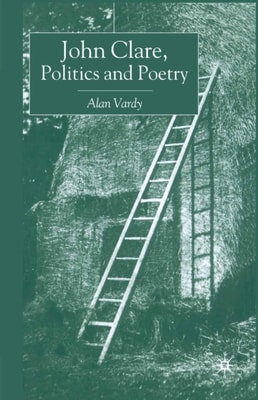
John Clare, Politics and Poetry challenges the traditional portrait of 'poor John Clare', the helpless victim of personal and professional circumstance.
Of all the wide-ranging interests Coleridge showed in his career, religion was the deepest and most long lasting, and Beer demonstrates in this book how none of this work can be fully understood without taking this into account.
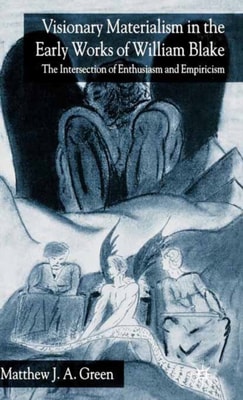
Incorporating the most recent discoveries concerning Blake's heritage and cultural context, Visionary Materialism in the Early Works of William Blake: The Intersection of Enthusiasm and Empiricism proposes a radical new reading of his early works, that sees them taking enlightenment ideas to heights never dreamed of by Locke and Priestley.