An award-winning scholar and teacher explores how Shakespeare's greatest characters were built on a learned sense of empathyWhile exploring Shakespeare's plays with her students, Paula Marantz Cohen discovered that teaching and discussing his plays unlocked a surprising sense of compassion in the classroom.
Treacherous, power-hungry, untempered by moral restraint, and embittered by physical deformity, Richard, the younger brother of King Edward IV, is ablaze with ambition to take England’s throne.
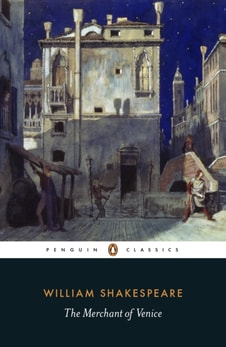
In this lively comedy of love and money in sixteenth-century Venice, Bassanio wants to impress the wealthy heiress Portia but lacks the necessary funds.
In one of Shakespeare’s bawdier comedies, contemporary audiences still take great pleasure in the rapid-fire verbal battles between the shrewish Katharina and the canny Petruchio, determined to subdue Katharina’s legendary temper and win her dowry.
King Lear, one of Shakespeare's darkest and most savage plays, tells the story of the foolish and Job-like Lear, who divides his kingdom, as he does his affections, according to vanity and whim.
Readers of Shakespeare’s greatest tragedies have long noted the absence of readily explainable motivations for some of Shakespeare’s greatest characters: why does Hamlet delay his revenge for so long?
Renowned poet and acclaimed translator Charles Martin faithfully captures Euripides's dramatic tone and style in this searing tale of revenge and sacrifice.
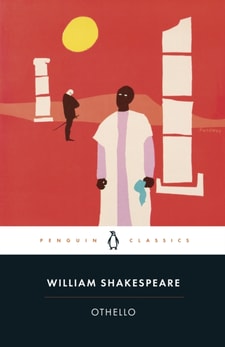
'If we wish to know the force of human genius we should read Shakespeare' William HazlittA soldier of great standing and a newly married man, Othello seems to be in an enviable position.
'The man who of all modern, and perhaps ancient poets, had the largest and most comprehensive soul' John DrydenAntonio, a Venetian merchant, wishes to help his friend get money to impress a rich heiress.
Though modern readers no longer believe in the four humors of Galenic naturalism-blood, choler, melancholy, and phlegm-early modern thought found in these bodily fluids key to explaining human emotions and behavior.
Speculation about Shakespeare's own religious beliefs and responses to the Reformation have dominated discussions of faith in the playwright's work for decades.
Oxford School Shakespeare is an acclaimed edition especially designed for students, with accessible on-page notes and explanatory illustrations, clear background information, and rigorous but accessible scholarly credentials.
The idea of toxic masculinity might feel like a very modern, even twenty-first century notion, but similar concerns about male behaviour, also often characterised in terms of poisons and poisoning, can be identified in the literature of 400 hundred years ago, not only in Shakespeare's Othello and The Winter's Tale but also lesser-known plays that were popular on the London stage in the 1600s.
Twelfth Night is one of the most popular of Shakespeare's plays in the modern theatre, and this edition places particular emphasis on its theatrical qualities throughout.
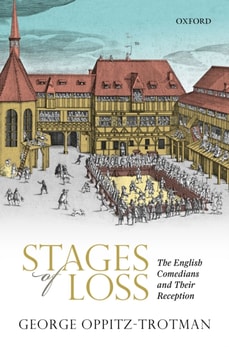
Stages of Loss supplies an original and deeply researched account of travel and festivity in early modern Europe, complicating, revising, and sometimes entirely rewriting received accounts of the emergence and development of professional theatre.
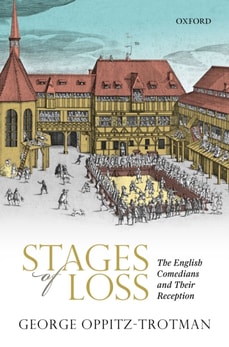
Stages of Loss supplies an original and deeply researched account of travel and festivity in early modern Europe, complicating, revising, and sometimes entirely rewriting received accounts of the emergence and development of professional theatre.
Impossible bequests of the soul; an outlawed younger son who rises to become justice of the king's forests; the artificially-preserved corpse of the heir to an empire; a medieval clerk kept awake at night by fears of falling; a seventeenth-century noblewoman who commissions copies upon copies of her genealogy; Elizabethan efforts to eradicate Irish customs of succession; thoughts of the legacy of sin bequeathed to mankind by our first parents, Adam and Eve.
Impossible bequests of the soul; an outlawed younger son who rises to become justice of the king's forests; the artificially-preserved corpse of the heir to an empire; a medieval clerk kept awake at night by fears of falling; a seventeenth-century noblewoman who commissions copies upon copies of her genealogy; Elizabethan efforts to eradicate Irish customs of succession; thoughts of the legacy of sin bequeathed to mankind by our first parents, Adam and Eve.
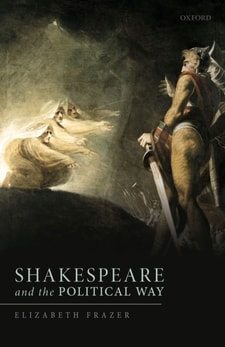
Studies of Shakespeare and politics often ask the question whether his dramas are on the side of aristocratic or monarchical sovereign authority, or are on the side of those who resist; whether he endorses a standard view of male and patriarchal authority, or whether his cross-dressing heroines put him among feminist thinkers.
Studies of Shakespeare and politics often ask the question whether his dramas are on the side of aristocratic or monarchical sovereign authority, or are on the side of those who resist; whether he endorses a standard view of male and patriarchal authority, or whether his cross-dressing heroines put him among feminist thinkers.
This companion volume to The New Oxford Shakespeare: The Complete Works concentrates on the issues of canon and chronology--currently the most active and controversial debates in the field of Shakespeare editing.
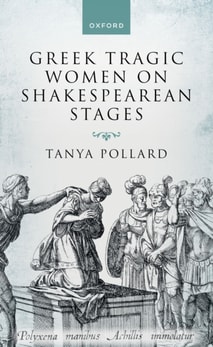
Greek Tragic Women on Shakespearean Stages argues that ancient Greek plays exerted a powerful and uncharted influence on early modern England's dramatic landscape.