Data analysis, machine learning and knowledge discovery are research areas at the intersection of computer science, artificial intelligence, mathematics and statistics.
This volume focuses on innovative approaches and recent developments in clustering, analysis of data and models, and applications: The first part of the book covers a broad range of innovations in the area of clustering, from algorithmic innovations for graph clustering to new visualization and evaluation techniques.
This book presents four mathematical essays which explore the foundations of mathematics and related topics ranging from philosophy and logic to modern computer mathematics.
The goal of this guide and manual is to provide a practical and brief overview of the theory on computerized adaptive testing (CAT) and multistage testing (MST) and to illustrate the methodologies and applications using R open source language and several data examples.
The goal of this book is to gather in a single work the most relevant concepts related in optimization methods, showing how such theories and methods can be addressed using the open source, multi-platform R tool.
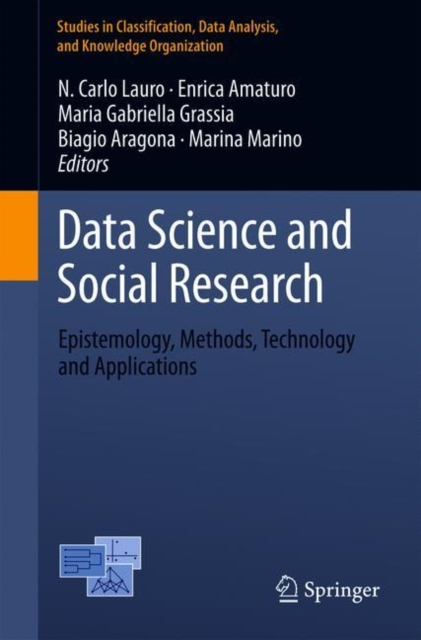
This edited volume lays the groundwork for Social Data Science, addressing epistemological issues, methods, technologies, software and applications of data science in the social sciences.
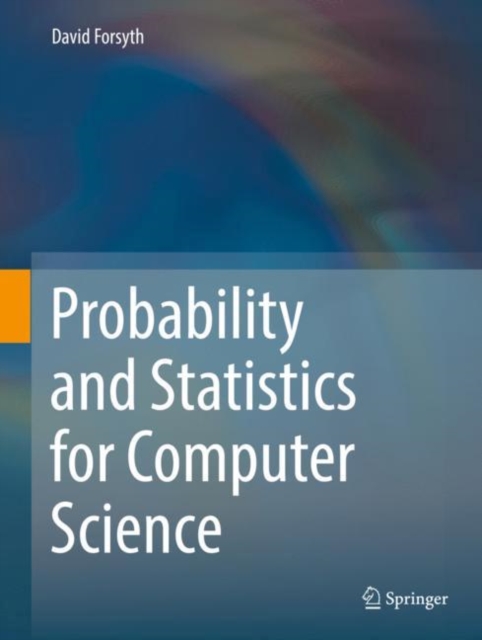
This textbook is aimed at computer science undergraduates late in sophomore or early in junior year, supplying a comprehensive background in qualitative and quantitative data analysis, probability, random variables, and statistical methods, including machine learning.
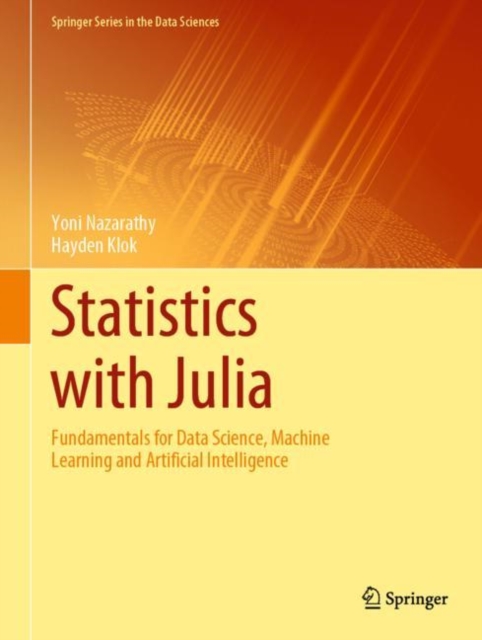
This monograph uses the Julia language to guide the reader through an exploration of the fundamental concepts of probability and statistics, all with a view of mastering machine learning, data science, and artificial intelligence.
The YUIMA package is the first comprehensive R framework based on S4 classes and methods which allows for the simulation of stochastic differential equations driven by Wiener process, Levy processes or fractional Brownian motion, as well as CARMA, COGARCH, and Point processes.
This book shows how information theory, probability, statistics, mathematics and personal computers can be applied to the exploration of numbers and proportions in music.
This textbook presents methods and techniques for time series analysis and forecasting and shows how to use Python to implement them and solve data science problems.
Dieses Werk stellt eine kompakte und zugleich umfassende Einführung zu Mathematica dar, einem sehr populären und äußerst vielseitigen Computeralgebrasystem, welches auf der Programmiersprache Wolfram Language beruht.
Dieses Werk stellt eine kompakte und zugleich umfassende Einführung zu Mathematica dar, einem sehr populären und äußerst vielseitigen Computeralgebrasystem, welches auf der Programmiersprache Wolfram Language beruht.
Das vielseitige Mathematikprogramm DERIVE, das bereits auf kleinen Personal Computern zum Einsatz kommen kann und trotzdem sehr leistungsstark ist, zeichnet sich durch hohe Benutzerfreundlichkeit aus.
his book grew out of the wish to let students of econometrics get acquainted T with the powerful techniques of computer algebra at an early stage in their curriculum.
Vor ziemlich genau zehn Jahren stand ich (im Zusammenhang mit Stabilitätsuntersu chungen an Hamiltonschen Systemen) vor der Aufgab~, komplizierte Koordinaten transformationen bis zu höheren Ordnungen zu berechnen.
More than ten years ago, I wanted to carry out coordinate transformations for Hamiltonian systems, in order to discuss the stability of certain equilibrium posi- tions.
"e;A Crash Course in Mathematica"e; is a compact introduction to the program Mathematica, which is widely used in mathematics, as well as in the natural and engineering sciences.
Mathematik lernen mit DERIVE entwickelt die mathematischen Grundlagen, die in den Natur- und Ingenieurwissenschaften benötigt werden, und ist gleichzeitig eine praktische Einführung in das Computer Algebra Programm DERIVE.
This textbook presents methods and techniques for time series analysis and forecasting and shows how to use Python to implement them and solve data science problems.
Recent data shows that 87% of Artificial Intelligence/Big Data projects don't make it into production (VB Staff, 2019), meaning that most projects are never deployed.
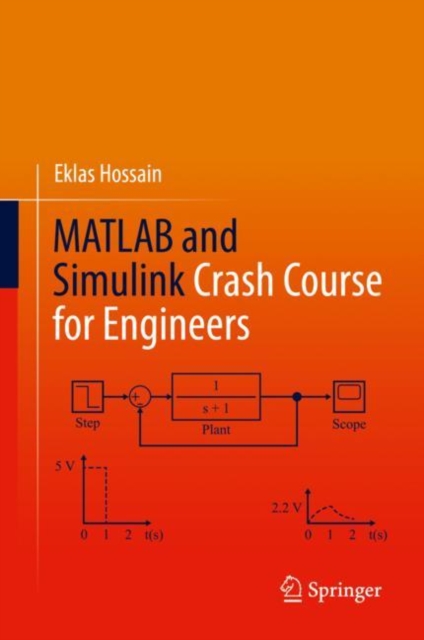
MATLAB and Simulink Crash Course for Engineers is a reader-friendly introductory guide to the features, functions, and applications of MATLAB and Simulink.
This proceedings volume features top contributions in modern statistical methods from Statistics 2021 Canada, the 6th Annual Canadian Conference in Applied Statistics, held virtually on July 15-18, 2021.