This book expounds the principle and related applications of nonlinear principal component analysis (PCA), which is useful method to analyze mixed measurement levels data.
This book provides a highly practical introduction to Bayesian statistical modeling with Stan, which has become the most popular probabilistic programming language.
This book is written for statisticians, data analysts, programmers, researchers, professionals, and general consumers on how to perform different types of statistical data analysis for research purposes using R object-oriented programming language and RStudio integrated development environment (IDE).
This book collects together selected peer-reviewed contributions presented at the European Conference on Data Analysis, ECDA 2022, held in Naples, Italy, September 14-16, 2022.
This volume gathers peer-reviewed contributions presented at the 6th International Workshop on Functional and Operatorial Statistics, IWFOS 2025, held in Novara, Italy, June 25-27, 2025.
Comparison Between Continuous-Time and Discrete-Time: Event History Analysis with Stata elucidates the statistical concepts and empirical applications of both continuous-time and discrete-time event history models.
In the five previous editions of Advanced Engineering Mathematics with MATLAB(R), the author presented a text firmly grounded in mathematics that engineers and scientists must understand and know how to use.
A Hands-On Way to Learning Data AnalysisPart of the core of statistics, linear models are used to make predictions and explain the relationship between the response and the predictors.
Written for the practicing electronics professional, Tolerance Analysis of Electronic Circuits Using MATHCADa offers a comprehensive, step-by-step treatment of methods used to perform analyses essential to the design process of circuit cards and systems of cards, including:worst-case analysis, limits for production testing, component stress analysis, determining if a design meets specification limits, and manufacturing yield analysis Using a practical approach that allows engineers and technicians to put the techniques directly into practice, the author presents the mathematical procedures used to determine performance limits.
Balancing the "e;cookbook"e; approach of some texts with the more mathematical approach of others, Nonparametric Statistical Methods for Complete and Censored Data introduces commonly used non-parametric methods for complete data and extends those methods to right censored data analysis.
Regression Modeling: Methods, Theory, and Computation with SAS provides an introduction to a diverse assortment of regression techniques using SAS to solve a wide variety of regression problems.
The emergence of high-speed computing has facilitated the development of many exciting statistical and mathematical methods in the last 25 years, broadening the landscape of available tools in statistical investigations of complex data.
With special emphasis on engineering and science applications, this textbook provides a mathematical introduction to the field of partial differential equations (PDEs).
Experimental design is often overlooked in the literature of applied and mathematical statistics: statistics is taught and understood as merely a collection of methods for analyzing data.
An introductory text for students taking a first course in statistics-in fields as diverse as engineering, business, chemistry, and biology-Essential Statistics: Fourth Edition thoroughly updates and enhances the hugely successful third edition.
Along with many practical applications, Bayesian Model Selection and Statistical Modeling presents an array of Bayesian inference and model selection procedures.
Exploratory and Robust Data Analysis: A Modern Applied Statistics Guide Using SPSS and R is an essential resource for students, researchers, and professionals seeking a comprehensive yet practical approach to modern statistical analysis.
Although the study of statistical modelling has made great strides in recent years, the number and variety of distributions to choose from continue to create problems.
Thoroughly revised and updated, The Art of Modeling in Science and Engineering with Mathematica, Second Edition explores the mathematical tools and procedures used in modeling based on the laws of conservation of mass, energy, momentum, and electrical charge.
Using the same accessible, hands-on approach as its best-selling predecessor, the Handbook of Univariate and Multivariate Data Analysis with IBM SPSS, Second Edition explains how to apply statistical tests to experimental findings, identify the assumptions underlying the tests, and interpret the findings.
A unique textbook for an undergraduate course on mathematical modeling, Differential Equations with MATLAB: Exploration, Applications, and Theory provides students with an understanding of the practical and theoretical aspects of mathematical models involving ordinary and partial differential equations (ODEs and PDEs).
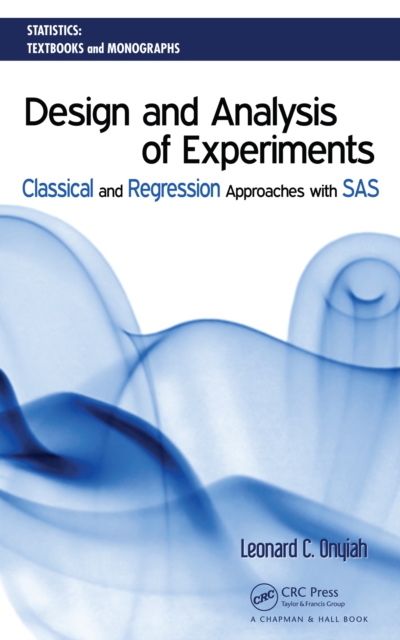
Unlike other books on the modeling and analysis of experimental data, Design and Analysis of Experiments: Classical and Regression Approaches with SAS not only covers classical experimental design theory, it also explores regression approaches.
A Guide to the Evaluation of IntegralsSpecial Integrals of Gradshetyn and Ryzhik: the Proofs provides self-contained proofs of a variety of entries in the frequently used table of integrals by I.
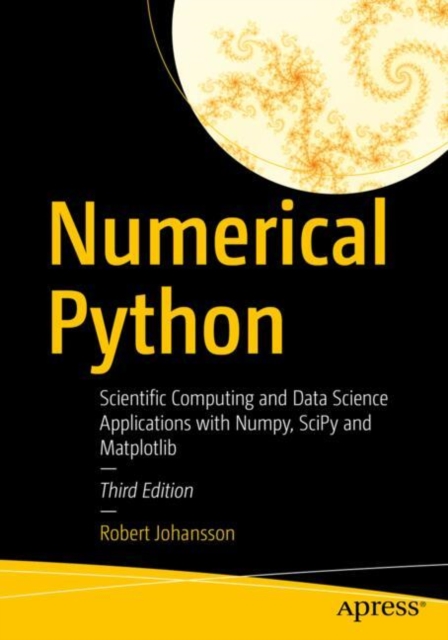
Learn how to leverage the scientific computing and data analysis capabilities of Python, its standard library, and popular open-source numerical Python packages like NumPy, SymPy, SciPy, matplotlib, and more.
Although the popularity of the Bayesian approach to statistics has been growing for years, many still think of it as somewhat esoteric, not focused on practical issues, or generally too difficult to understand.
Building the Future: Advanced Web Development Techniques with Flask and Python Description: Unlock the potential of modern web development with this comprehensive guide to building powerful web applications using Flask and Python.
Today Lie group theoretical approach to differential equations has been extended to new situations and has become applicable to the majority of equations that frequently occur in applied sciences.
While there have been few theoretical contributions on the Markov Chain Monte Carlo (MCMC) methods in the past decade, current understanding and application of MCMC to the solution of inference problems has increased by leaps and bounds.
Retaining all the material from the second edition and adding substantial new material, this third edition presents models and statistical methods for analyzing spatially referenced point process data.