This book constitutes the referred proceedings of the 7th International Conference on Attacks and Defenses for Internet-of-Things, ADIoT 2024, held as an hybrid event, in Hangzhou, China, during December 13–14, 2024.
This book constitutes the refereed proceedings of the 26th European Conference on Genetic Programming, EuroGP 2023, held as part of EvoStar 2023, in Brno, Czech Republic, during April 12-14, 2023, and co-located with the EvoStar events, EvoCOP, EvoMUSART, and EvoApplications.
This book constitutes the refereed proceedings of the 19th International Conference on Economics of Grids, Clouds, Systems, and Services, GECON 2022, held in Izola, Slovenia, in September 2022.
This book constitutes the proceedings of the 25th International Symposium on Practical Aspects of Declarative Languages, PADL 2023, which was held in Boston, MA, USA, in January 2023.
This book constitutes the refereed proceedings of the 8th International Symposium on Parallel Architecture, Algorithm and Programming, PAAP 2017, held in Haikou, China, in June 2017.
Build and upgrade an automated software delivery pipeline that supports containerization, integration testing, semantic versioning, automated deployment, and more.
This book constitutes the refereed proceedings of the 26th European Conference on Genetic Programming, EuroGP 2023, held as part of EvoStar 2023, in Brno, Czech Republic, during April 12-14, 2023, and co-located with the EvoStar events, EvoCOP, EvoMUSART, and EvoApplications.
This book constitutes the refereed proceedings of the 19th International Conference on Economics of Grids, Clouds, Systems, and Services, GECON 2022, held in Izola, Slovenia, in September 2022.
This book constitutes the thoroughly refereed post-conference proceedings of the 35th International Workshop on Languages and Compilers for Parallel Computing, LCPC 2022, held in Chicago, IL, USA, in October 2022.
This book constitutes the proceedings of the 25th International Symposium on Practical Aspects of Declarative Languages, PADL 2023, which was held in Boston, MA, USA, in January 2023.
This book constitutes the thoroughly refereed post-conference proceedings of the 35th International Workshop on Languages and Compilers for Parallel Computing, LCPC 2022, held in Chicago, IL, USA, in October 2022.
Master Python techniques and libraries to reduce run times, efficiently handle huge datasets, and optimize execution for complex machine learning applications.
It is not always clear what computer programs mean in the various languages in which they can be written, yet a picture can be worth 1000 words, a diagram 1000 instructions.
This easy-to-follow and classroom-tested textbook guides the reader through the fundamentals of programming with Python, an accessible language which can be learned incrementally.
This book constitutes the proceedings of the 17th International Symposium on Functional and Logic Programming, FLOPS 2024, held in Kumamoto, Japan, in May 2024.
This book constitutes the refereed proceedings of the 8th International Symposium on Parallel Architecture, Algorithm and Programming, PAAP 2017, held in Haikou, China, in June 2017.
It is not always clear what computer programs mean in the various languages in which they can be written, yet a picture can be worth 1000 words, a diagram 1000 instructions.
Navigating the realm where physics intersects with programming, this book serves as an indispensable guide for students embarking on their journey with Julia.
Learn to solve parallel problems with GPU-accelerated C++ code and create reusable libraries that can be accessed from other programming languagesKey FeaturesHarness the power of GPU parallelism to accelerate real-world tasksUtilize CUDA streams and scale performance with custom C++ solutionsCreate reusable GPU libraries and expose them to Python seamlesslyBook DescriptionWritten by Paulo Motta, a senior researcher with decades of experience, this comprehensive GPU programming book is an essential guide for leveraging the power of parallelism to accelerate your computations.
Open-source software supply chains wield significant influence in the software industry, drawing substantial interest from enterprises, researchers, and policymakers.
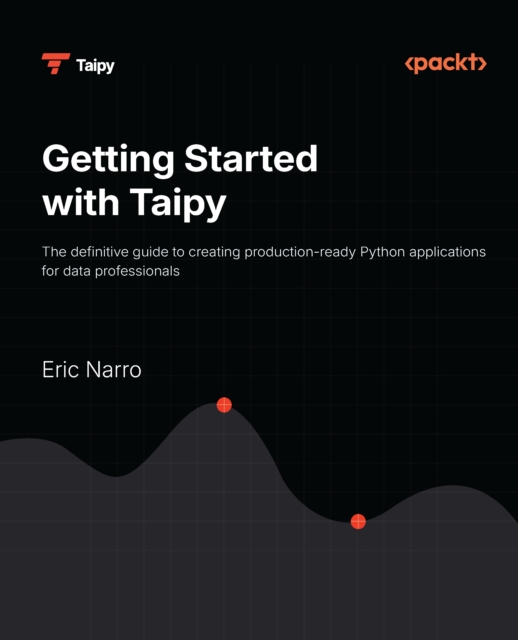
Share your machine learning models, create chatbots, as well as build and deploy insightful dashboards speedily using Taipy with this hands-on book featuring real-world application examples from multiple industriesKey FeaturesCreate visually compelling, interactive data applications with TaipyBring predictive models to end users and create data pipelines to compare scenarios with what-if analysesGo beyond prototypes to build and deploy production-ready applications using the cloud provider of your choicePurchase of the print or Kindle book includes a free PDF eBook in full colorBook DescriptionWhile data analysts, data scientists, and BI experts have the tools to analyze data, build models, and create compelling visuals, they often struggle to translate these insights into practical, user-friendly applications that help end users answer real-world questions, such as identifying revenue trends, predicting inventory needs, or detecting fraud, without wading through complex code.
Share your machine learning models, create chatbots, as well as build and deploy insightful dashboards speedily using Taipy with this hands-on book featuring real-world application examples from multiple industriesKey FeaturesCreate visually compelling, interactive data applications with TaipyBring predictive models to end users and create data pipelines to compare scenarios with what-if analysesGo beyond prototypes to build and deploy production-ready applications using the cloud provider of your choicePurchase of the print or Kindle book includes a free PDF eBook in full colorBook DescriptionWhile data analysts, data scientists, and BI experts have the tools to analyze data, build models, and create compelling visuals, they often struggle to translate these insights into practical, user-friendly applications that help end users answer real-world questions, such as identifying revenue trends, predicting inventory needs, or detecting fraud, without wading through complex code.