This book constitutes the refereed proceedings of the 6th RECOMB Comparative Genomics Satellite Workshop, RECOMB-CG 2008, held in Paris, France, in October 2008.
The two volume set LNCS 5263/5264 constitutes the refereed proceedings of the 5th International Symposium on Neural Networks, ISNN 2008, held in Beijing, China in September 2008.
This book constitutes the refereed proceedings of the joint conference on Machine Learning and Knowledge Discovery in Databases: ECML PKDD 2008, held in Antwerp, Belgium, in September 2008.
This book constitutes the refereed proceedings of the 11th International Conference on Model Driven Engineering Languages and Systems, MoDELS 2008, held in Toulouse, France, during September 28-October 3, 2008.
This book constitutes the refereed proceedings of the 10th International Conference on Parallel Problem Solving from Nature, PPSN 2008, held in Dortmund, Germany, in September 2008.
The LNCS journal Transactions on Computational Systems Biology is devoted to inter- and multidisciplinary research in the fields of computer science and life sciences and supports a paradigmatic shift in the techniques from computer and information science to cope with the new challenges arising from the systems oriented point of view of biological phenomena.
This book constitutes the refereed proceedings of the 27th International Conference on Computer Safety, Reliability, and Security, SAFECOMP 2008, held in Newcastle upon Tyne, UK, in September 2008.
This book constitutes the refereed proceedings of the Second International Conference on Scalable Uncertainty Management, SUM 2008, held in Naples, Italy, in Oktober 2008.
This book constitutes the refereed proceedings of the 12th International Conference on Developments in Language Theory, DLT 2008, held in Kyoto, Japan, September 2008.
This book constitutes the refereed proceedings of the 13th Iberoamerican Congress on Pattern Recognition, CIARP 2008, held in Havana, Cuba, in September 2008.
The four-volume set comprising LNCS volumes 5302/5303/5304/5305 constitutes the refereed proceedings of the 10th European Conference on Computer Vision, ECCV 2008, held in Marseille, France, in October 2008.
This book constitutes the refereed proceedings of the 6th International Conference on Security and Cryptology for Networks, SCN 2008, held in Amalfi, Italy, in September 2008.
This book constitutes the refereed proceedings of the 6th International Conference on Formal Modeling and Analysis of Timed Systems, FORMATS 2008, held in Saint Malo, France, September 2008.
This book constitutes the refereed proceedings of the 5th International Workshop on Hybrid Metaheuristics, HM 2008, held in Malaga, Spain, in October 2008.
This book constitutes the refereed proceedings of the 10th International Conference on Advanced Concepts for Intelligent Vision Systems, ACIVS 2008, held in Juan-les-Pins, France, in October 2008.
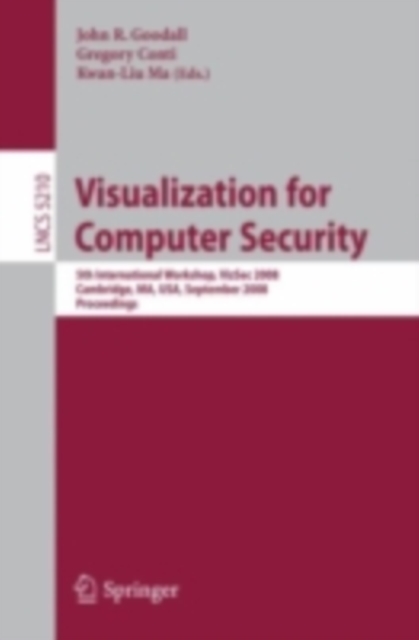
This book constitutes the refereed proceedings of the 5th International Workshop on Visualization for Cyber Security held on September 15, 2008, in Cambridge, Massachusetts, USA, in conjunction with the 11th International Symposium on Recent Advances in Intrusion Detection (RAID).
This book constitutes the refereed proceedings of the 6th International Conference on Computational Methods in Systems Biology, CMSB 2008, held in Rostock, Germany, in September 2008.
The 11th International Conference on Medical Imaging and Computer Assisted Intervention, MICCAI 2008, was held at the Helen and Martin Kimmel Center of New York University, New York City, USA on September 6-10, 2008.
The articles in this volume were selected for presentation at the Sixth Inter- tional Conference on Rough Sets and Current Trends in Computing (RSCTC 2008), which took place on October 23-25 in Akron, Ohio, USA.
This book constitutes the refereed proceedings of the 6th International Symposium on Automated Technology for Verification and Analysis, ATVA 2008, held in Seoul, Korea, in October 2008.
This book constitutes the refereed proceedings of the 10th International Conference on Information and Communications Security, ICICS 2008, held in Birmingham, UK, in October 2008.
This book constitutes the refereed proceedings of the 8th International Conference on Evolvable Systems, ICES 2008, held in Prague, Czech Republic, in September 2008.
IBERAMIA is the international conference series of the Ibero-American Art- cialIntelligencecommunitythathasbeenmeetingeverytwoyearssincethe1988 meeting in Barcelona.
This book constitutes the thoroughly refereed post-workshop proceedings of the 12th International Workshop on Formal Methods for Industrial Critical Systems, FMICS 2007, held in Berlin, Germany, in July 2007 - colocated with CAV 2007, the 19th International Conference on Computer Aided Verification.
This book constitutes the refereed proceedings of the 7th International Conference on Ad-Hoc, Mobile, and Wireless Networks, ADHOC-NOW 2008, held in Sophia-Antipolis, France, September 2008.
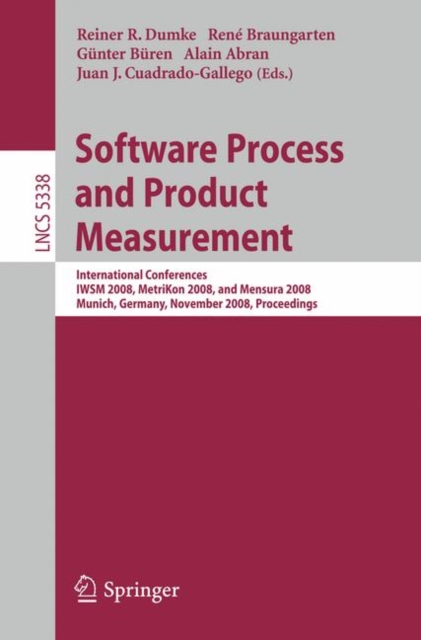
This book constitutes the thoroughly refereed post-proceedings of the International Workshop on Software Measurement, IWSM-Mensura 2007, held in Palma de Mallorca, Spain, in November 2007.
This book constitutes the thoroughly refereed post-conference proceedings of the 20th International Workshop on Languages and Compilers for Parallel Computing, LCPC 2007, held in Urbana, IL, USA, in October 2007.
This book constitutes the thoroughly refereed proceedings of the Second International Conference on Pairing-Based Cryptography, Pairing 2008, held in London, UK, in September 2008.
This book constitutes the refereed proceedings of the 7th International Conference on Unconventional Computation, UC 2008, held in Vienna, Austria, in August 2008.
This book constitutes the thoroughly refereed post-conference proceedings of the 12th International Conference on Financial Cryptography and Data Security, FC 2008, held in Cozumel, Mexico, in January 2008.
This book constitutes the refereed proceedings of the 14th International Conference on Parallel Computing, Euro-Par 2008, held in Las Palmas de Gran Canaria, Spain, in August 2008.
This book constitutes the refereed proceedings of the 6th International Conference on Natural Language Processing, GoTAL 2008, Gothenburg, Sweden, August 2008.
This book constitutes the thoroughly refereed post-proceedings of the 19th International Workshop on Implementation and Applications of Functional Languages, IFL 2007, held in Freiburg, Germany in September 2007.
This book constitutes the thoroughly refereed post-conference proceedings of the Second IFIP TC 2 Central and East Conference on Software Engineering Techniques, CEE-SET 2007, held in Poznan, Poland, in October 2007.
This book constitutes the refereed proceedings of the First International Conference on Hybrid Learning, ICHL 2008, held in Hong Kong, China, in August 2008.
This book constitutes the refereed proceedings of the 10th Interntaional Workshop on Cryptographic Hardware and Embedded Systems, CHES 2008, held in Washington, D.
This book constitutes the refereed proceedings of the 7th International Conference on Artificial Immune Systems, ICARIS 2008, held in Phuket, Thailand, in August 2008.
This book constitutes the proceedings of the Third International Conference on Information Theoretic Security, held in Calgary, Canada, in August 2008.