Details a real-world product that applies a cutting-edge multi-core architectureIncreasingly demanding modern applications-such as those used in telecommunications networking and real-time processing of audio, video, and multimedia streams-require multiple processors to achieve computational performance at the rate of a few giga-operations per second.
Ubiquitous in today's consumer-driven society, embedded systems use microprocessors that are hidden in our everyday products and designed to perform specific tasks.
With contributions from some of the most notable experts in the field, Performance Tuning of Scientific Applications presents current research in performance analysis.
Get insights and guidance on various challenges within the industry and what business levers you can consider to effortlessly lead your business transformation through RISE with SAPPurchase of the print or Kindle book includes a free PDF eBookKey FeaturesGain actionable insights into end-to-end process performance with process analyticsScale performance and reliability to accelerate your journey to the cloud and beyondGet a clear overview of the enabling tools and services you can leverage for the transformationBook DescriptionIf you re unsure whether adopting SAP S/4HANA is the right move for your enterprise, then this book is for you.
Formal methods are mathematically-based techniques, often supported by reasoning tools, that can offer a rigorous and effective way to model, design and analyze computer systems.
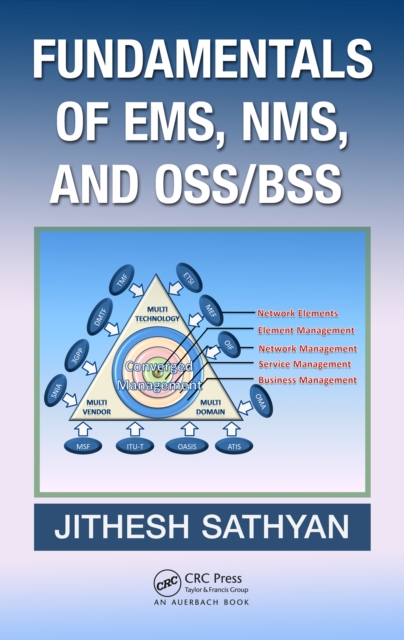
In this era where data and voice services are available at a push of a button, service providers have virtually limitless options for reaching their customers with value-added services.
Soft computing techniques have the ability to handle complex, uncertain, and imprecise information to create usable solutions to convoluted problems, or those just too time-consuming to solve with current hardware.
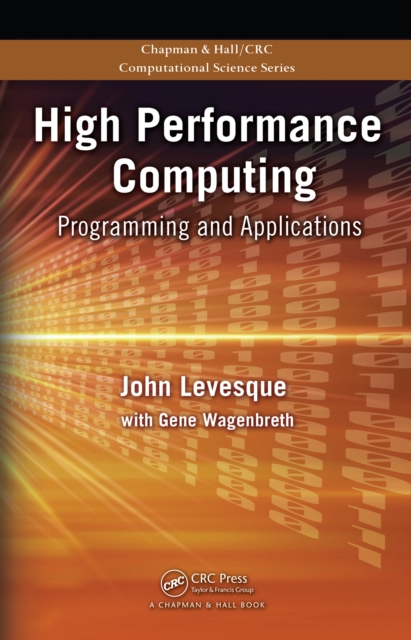
High Performance Computing: Programming and Applications presents techniques that address new performance issues in the programming of high performance computing (HPC) applications.
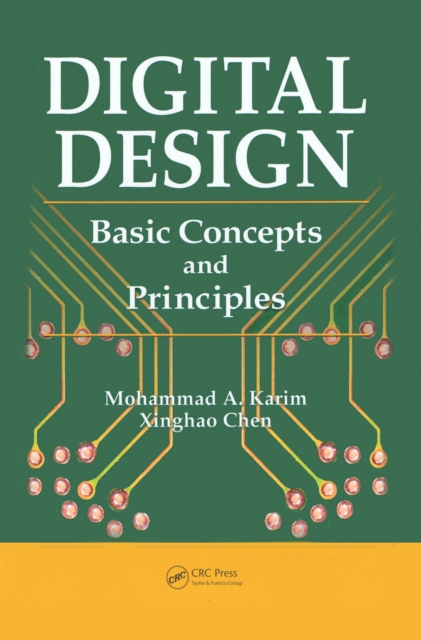
In today's digital design environment, engineers must achieve quick turn-around time with ready accesses to circuit synthesis and simulation applications.
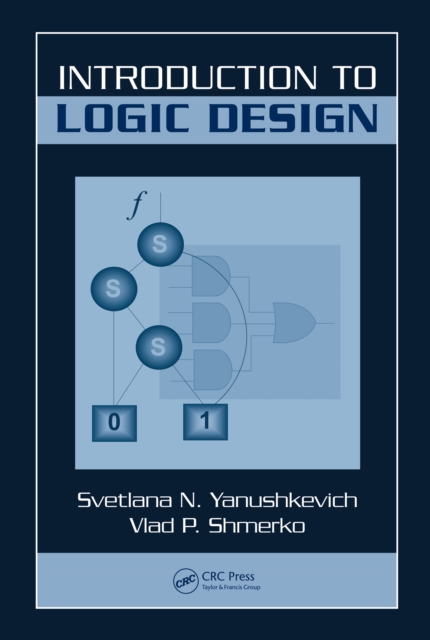
With an abundance of insightful examples, problems, and computer experiments, Introduction to Logic Design provides a balanced, easy-to-read treatment of the fundamental theory of logic functions and applications to the design of digital devices and systems.
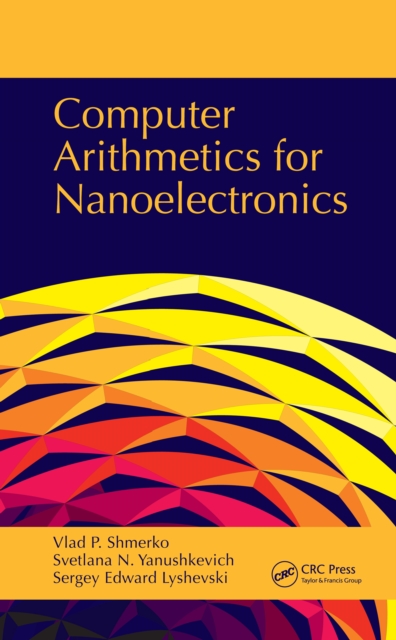
Emphasizes the Basic Principles of Computational Arithmetic and Computational Structure DesignTaking an interdisciplinary approach to the nanoscale generation of computer devices and systems, Computer Arithmetics for Nanoelectronics develops a consensus between computational properties provided by data structures and phenomenological properties of nano and molecular technology.
Collects the Latest Research Involving the Application of Process Algebra to ComputingExploring state-of-the-art applications, Process Algebra for Parallel and Distributed Processing shows how one formal method of reasoning-process algebra-has become a powerful tool for solving design and implementation challenges of concurrent systems.
Designed for senior undergraduate and first-year graduate students, Grid Computing: Techniques and Applications shows professors how to teach this subject in a practical way.
Illustrating the effect of concurrency on programs written in familiar languages, this text focuses on novel language abstractions that truly bring concurrency into the language and aid analysis and compilation tools in generating efficient, correct programs.
Despite the tremendous advances in performance enabled by modern architectures, there are always new applications and demands arising that require ever-increasing capabilities.
Chip Design and Implementation from a Practical ViewpointFocusing on chip implementation, Low-Power NoC for High-Performance SoC Design provides practical knowledge and real examples of how to use network on chip (NoC) in the design of system on chip (SoC).
An In-Depth View of Hardware Issues, Programming Practices, and Implementation of Key MethodsExploring the challenges of parallel programming from the perspective of quantum chemists, Parallel Computing in Quantum Chemistry thoroughly covers topics relevant to designing and implementing parallel quantum chemistry programs.
Techniques for Optimizing Multiprocessor Implementations of Signal Processing ApplicationsAn indispensable component of the information age, signal processing is embedded in a variety of consumer devices, including cell phones and digital television, as well as in communication infrastructure, such as media servers and cellular base stations.
Until now, there were few textbooks that focused on the dynamic subject of speculative execution, a topic that is crucial to the development of high performance computer architectures.
Developing NoC based interconnect tailored to a particular application domain, satisfying the application performance constraints with minimum power-area overhead is a major challenge.
Electronic System Level Design: an Open-Source Approach is based on the successful experience acquired with the conception of the ADL ArchC, the development of its underlying tool suite, and the building of its platform modeling infrastructure.
Functional Design Errors in Digital Circuits Diagnosis covers a wide spectrum of innovative methods to automate the debugging process throughout the design flow: from Register-Transfer Level (RTL) all the way to the silicon die.
Structured Analog CMOS Design describes a structured analog design approach that makes it possible to simplify complex analog design problems and develop a design strategy that can be used for the design of large number of analog cells.
Synthesis and Optimization of DSP Algorithms describes approaches taken to synthesising structural hardware descriptions of digital circuits from high-level descriptions of Digital Signal Processing (DSP) algorithms.
The main intention of this book is to give an impression of the state of the art in energy-aware task-scheduling-related issues for very dynamic emb- ded real-time processing applications.
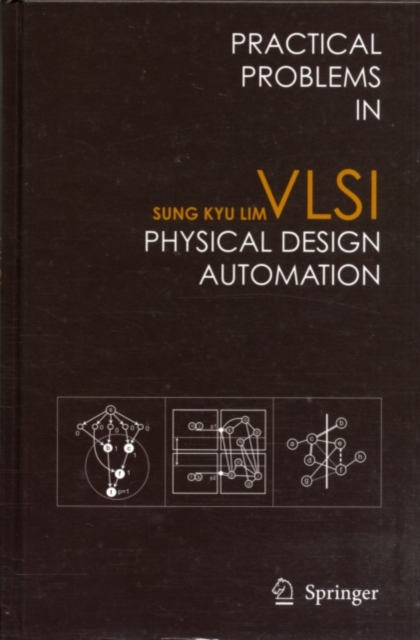
Practical Problems in VLSI Physical Design Automation contains problems and solutions related to various well-known algorithms used in VLSI physical design automation.
As we embrace the world of personal, portable, and perplexingly complex digital systems, it has befallen upon the bewildered designer to take advantage of the available transistors to produce a system which is small, fast, cheap and correct, yet possesses increased functionality.
Platform Based Design at the Electronic System Level presents a multi-faceted view of the set of problems that the electronic industry currently faces in the development and integration of complex heterogeneous systems (including both hardware and software components).
In this book, we are concerned with studying the co-design methodology, in general, and how to determine the more suitable interface mechanism in a co-design system, in particular.
Processor Design provides insight into a number of different flavors of processor architectures and their design, software tool generation, implementation, and verification.