This book explores the design implications of emerging, non-volatile memory (NVM) technologies on future computer memory hierarchy architecture designs.
This book provides readers with a variety of algorithms and software tools, dedicated to the physical design of through-silicon-via (TSV) based, three-dimensional integrated circuits.
N etwork-based computing domain unifies all best research efforts presented from single computer systems to networked systems to render overwhelming computational power for several modern day applications.
The role of arithmetic in datapath design in VLSI design has been increasing in importance over the last several years due to the demand for processors that are smaller, faster, and dissipate less power.
The papers in this volume were presented at the Second Annual Work- shop on Active Middleware Services and were selected for inclusion here by the Editors.
This book presents models and procedures to design pipeline analog-to-digital converters, compensating for device inaccuracies, so that high-performance specs can be met within short design cycles.
This book provides the foundations for understanding hardware security and trust, which have become major concerns for national security over the past decade.
This book describes methods for distributing power in high speed, high complexity integrated circuits with power levels exceeding many tens of watts and power supplies below a volt.
As Grids and service-oriented architectures have evolved to a common infrastructure for providing and consuming services in research and commercial environments, mechanisms are needed to agree on the objectives and the quality of such service provision.
Grids, P2P and Services Computing, the 12th volume of the CoreGRID series, is based on the CoreGrid ERCIM Working Group Workshop on Grids, P2P and Service Computing in Conjunction with EuroPar 2009.
Production Grids in Asia: Applications, Developments and Global Ties, an edited volume, is based on ISGC (International Symposium on Grid Computing), one of the most prestigious annual events in Asia.
With updates and enhancements to the incredibly successful first edition, Probability and Random Processes for Electrical and Computer Engineers, Second Edition retains the best aspects of the original but offers an even more potent introduction to probability and random variables and processes.
Derived from industry-training classes that the author teaches at the Embedded Systems Institute at Eindhoven, the Netherlands and at Buskerud University College at Kongsberg in Norway, Systems Architecting: A Business Perspective places the processes of systems architecting in a broader context by juxtaposing the relationship of the systems archit
A family of internationally popular microcontrollers, the Atmel AVR microcontroller series is a low-cost hardware development platform suitable for an educational environment.
Android Security: Attacks and Defenses is for anyone interested in learning about the strengths and weaknesses of the Android platform from a security perspective.
Design for security and meet real-time requirements with this must-have book covering basic theory, hardware design and implementation of cryptographic algorithms, and side channel analysis.
Green Communications and Networking introduces novel solutions that can bring about significant reductions in energy consumption in the information and communication technology (ICT) industry-as well as other industries, including electric power.
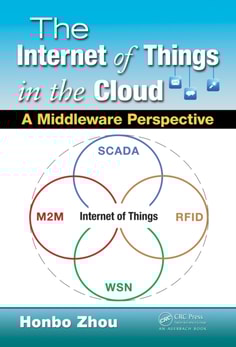
Although the Internet of Things (IoT) is a vast and dynamic territory that is evolving rapidly, there has been a need for a book that offers a holistic view of the technologies and applications of the entire IoT spectrum.
Starting from the fundamentals, this book provides a concise yet complete treatment of piezoelectric materials, an important class of smart materials which are useful as both actuators and sensors.
Collecting scattered knowledge into one coherent account, this book provides a compendium of both classical and recently developed results on reversible computing.
Although several books and academic courses discuss data management and networking, few of them focus on the convergence of networking and software technologies for identifying, addressing, and managing distributed data.
Visualization and analysis tools, techniques, and algorithms have undergone a rapid evolution in recent decades to accommodate explosive growth in data size and complexity and to exploit emerging multi- and many-core computational platforms.
Data-intensive science has the potential to transform scientific research and quickly translate scientific progress into complete solutions, policies, and economic success.
In today's interactive network environment, where various types of organizations are eager to monitor and track Internet use, anonymity is one of the most powerful resources available to counterbalance the threat of unknown spectators and to ensure Internet privacy.
This book presents common techniques used in numerous models, algorithms, and tools developed during the last decade to implement desktop grid computing.
The Reference Model of Open Distributed Processing (RM-ODP) is an international standard that provides a solid basis for describing and building widely distributed systems and applications in a systematic way.
With the recent proliferation of service-oriented architectures (SOA), cloud computing technologies, and distributed-interconnected systems, distributed fusion is taking on a larger role in a variety of applications-from environmental monitoring and crisis management to intelligent buildings and defense.
New sequencing technologies have broken many experimental barriers to genome scale sequencing, leading to the extraction of huge quantities of sequence data.
Cloud computing has created a shift from the use of physical hardware and locally managed software-enabled platforms to that of virtualized cloud-hosted services.
Detailing powerful methods for reducing the energy costs associated with operating a data center, Making Your Data Center Energy Efficient examines both equipment and building facilities.