InMarch2005about40scientistsfromEurope,JapanandtheUScametogether the second time to discuss ways to achieve sustained performance on superc- puters in the range of Tera?
Welcome to the proceedings of the 2005 International Conference on Emb- ded Software and Systems (ICESS 2005) held in Xian, China, December 16-18, 2005.
The flying machines proposed by Leonardo da Vinci in the fifteenth century, the se- reproducing automata theory proposed by John von Neumann in the middle of the twentieth century and the current possibility of designing electronic and mechanical systems using evolutionary principles are all examples of the efforts made by humans to explore the mechanisms present in biological systems that permit them to tackle complex tasks.
VECPAR is a series of international conferences dedicated to the promotion and advancement of all aspects of high-performance computing for computational science, as an industrial technique and academic discipline, extending the fr- tier of both the state of the art and the state of practice.
Dieses Lehrbuch bietet einen gut verständlichen Einstieg in die technischen Grundlagen der Informatik, ohne tiefgehende mathematische Vorkenntnisse vorauszusetzen.
What if in a world drowning in noise, confusion, and fractured truths, we could finally hold up a mirror so clear, it reveals not only what is, but what might be?
This book grew out of material which was taught at the International Summer School on Architecture Design and Validation Methods, held June 23-July 5, 1997, on the Island of Lipari and directed to graduate students and young researchers.
Innovations in hardware architecture, like hyper-threading or multicore processors, mean that parallel computing resources are available for inexpensive desktop computers.
Dieses Lehrbuch bietet einen gut verständlichen Einstieg in die technischen Grundlagen der Informatik, ohne tiefgehende mathematische Vorkenntnisse vorauszusetzen.
The emergence of quantum computing introduces a significant shift in the digital and security landscape-prompting organizations to reassess the foundations of how we protect information.
As digital ecosystems advance toward pervasive connectivity, smart devices have become embedded in the operational, social, and economic fabric of modern life.
As digital ecosystems advance toward pervasive connectivity, smart devices have become embedded in the operational, social, and economic fabric of modern life.
The emergence of quantum computing introduces a significant shift in the digital and security landscape-prompting organizations to reassess the foundations of how we protect information.
Der zunehmende Einsatz dreidimensional strukturierter elektronischer Schaltkreise und Baugruppen ermöglicht eine signifikante Steigerung ihrer Funktionalität durch hohe Integrationsdichten sowie heterogener Integration.
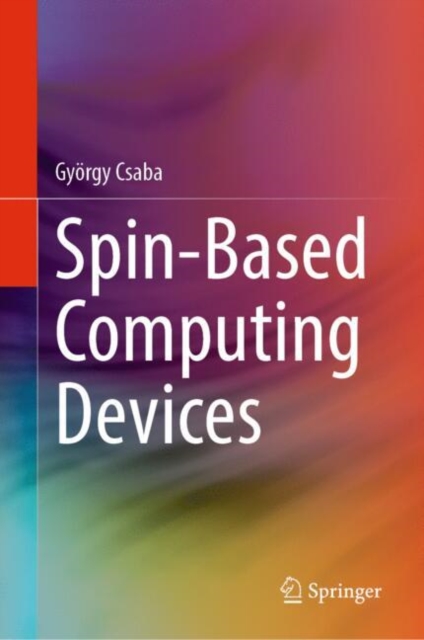
This book provides readers with a single-source reference to the state of the art in domain-wall, nanomagnet and spin-wave-based computing devices, enabling them to provide additional computing functions and lower the power consumption of electronic devices by orders of magnitudes.
This book provides readers with a single-source reference to the state of the art in domain-wall, nanomagnet and spin-wave-based computing devices, enabling them to provide additional computing functions and lower the power consumption of electronic devices by orders of magnitudes.