A digital twin represents the indistinguishable digital counterpart of the physical object to simulate, monitor and test with real time synchronization.
A radical and challenging book which argues that artificial intelligence needs a completely different set of foundations, based on ecological intelligence rather than human intelligence, if it is to deliver on the promise of a better world.
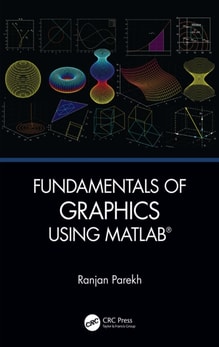
This book introduces fundamental concepts and principles of 2D and 3D graphics and is written for undergraduate and postgraduate students of computer science, graphics, multimedia, and data science.
Coupled with machine learning, the use of signal processing techniques for big data analysis, Internet of things, smart cities, security, and bio-informatics applications has witnessed explosive growth.
This book introduces fundamental concepts and principles of 2D and 3D graphics and is written for undergraduate and postgraduate students of computer science, graphics, multimedia, and data science.
Coupled with machine learning, the use of signal processing techniques for big data analysis, Internet of things, smart cities, security, and bio-informatics applications has witnessed explosive growth.
Modelling Transitions shows what computational, formal and data-driven approaches can and could mean for sustainability transitions research, presenting the state-of-the-art and exploring what lies beyond.
Modelling Transitions shows what computational, formal and data-driven approaches can and could mean for sustainability transitions research, presenting the state-of-the-art and exploring what lies beyond.
This book looks at various application and data demand drivers, along with data infrastructure options from legacy on premise, public cloud, hybrid, software-defined data center (SDDC), software data infrastructure (SDI), container as well as serverless along with infrastructure as a Service (IaaS), IT as a Service (ITaaS) along with related technology, trends, tools, techniques and strategies.
Cybersecurity and Privacy in Cyber-Physical Systems collects and reports on recent high-quality research that addresses different problems related to cybersecurity and privacy in cyber-physical systems (CPSs).
Cybersecurity and Privacy in Cyber-Physical Systems collects and reports on recent high-quality research that addresses different problems related to cybersecurity and privacy in cyber-physical systems (CPSs).
New computational design tools have evolved rapidly and been increasingly applied in the field of design in recent years, complimenting and even replacing the traditional design media and approaches.
This book looks at various application and data demand drivers, along with data infrastructure options from legacy on premise, public cloud, hybrid, software-defined data center (SDDC), software data infrastructure (SDI), container as well as serverless along with infrastructure as a Service (IaaS), IT as a Service (ITaaS) along with related technology, trends, tools, techniques and strategies.
This comprehensive handbook serves as a professional reference as well as a practitioner's guide to today's most complete and concise view of nanoscale networking and communications.
New computational design tools have evolved rapidly and been increasingly applied in the field of design in recent years, complimenting and even replacing the traditional design media and approaches.
The Internet of Nano-Things (IoNT) is a system of nano-connected devices, objects, or organisms that have unique identifiers to transfer data over a computer or cellular network wirelessly to the Cloud.
The Internet of Nano-Things (IoNT) is a system of nano-connected devices, objects, or organisms that have unique identifiers to transfer data over a computer or cellular network wirelessly to the Cloud.
The book addresses the need to investigate new approaches to lower energy requirement in multiple application areas and serves as a guide into emerging circuit technologies.
The book addresses the need to investigate new approaches to lower energy requirement in multiple application areas and serves as a guide into emerging circuit technologies.
DAPSYS (International Conference on Distributed and Parallel Systems) is an international biannual conference series dedicated to all aspects of distributed and parallel computing.
Making Grids Work includes selected articles from the CoreGRID Workshop on Grid Programming Models, Grid and P2P Systems Architecture, Grid Systems, Tools and Environments held at the Institute of Computer Science, Foundation for Research and Technology - Hellas in Crete, Greece, June 2007.
Grid Computing: International Symposium on Grid Computing (ISGC) 2007 is one of the most important annual events in Asia that brings together scientific contributions by world class researchers and scientists working in the Grid Computing field to exchange ideas, to present challenges, solutions and future development.
Speech Processing has rapidly emerged as one of the most widespread and well-understood application areas in the broader discipline of Digital Signal Processing.
In the past decades, the main stream of microelectronics progress has been mainly powered by Moore's law which focuses on IC miniaturization down to nanoscale.
Distributed and Parallel Systems: From Cluster to Grid Computing is an edited volume based on DAPSYS 2006, the 6th Austrian-Hungarian Workshop on Distributed and Parallel Systems, which is dedicated to all aspects of distributed and parallel computing.
The Problem of the Unknown Component: Theory and Applications addresses the issue of designing a component that, combined with a known part of a system, conforms to an overall specification.
Towards collaborative business ecosystems Last decade was fertile in the emerging of new collaboration mechanisms and forms of dynamic virtual organizations, leading to the concept of dynamic business ecosystem, which is supported (or induced ?