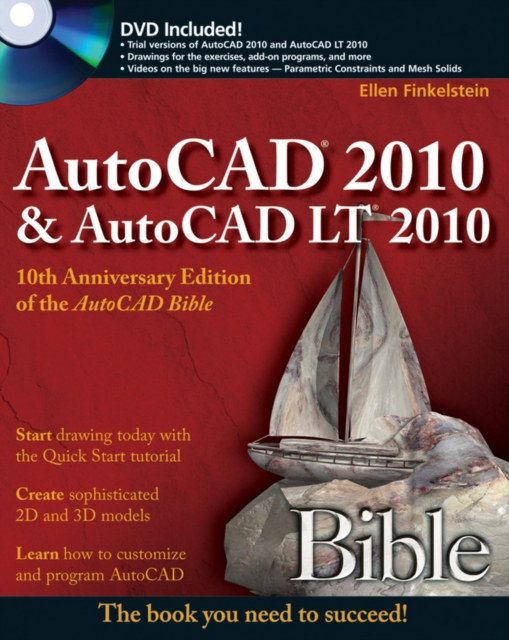
Shows how to use the leading technical drawing software-AutoCAD-and its less-expensive sister product, AutoCAD LT, in the friendly, easy-to-understand For Dummies style Shows first-time AutoCAD users how to create precise and efficient 2-D technical drawings and get started with 3-D technical drawings Topics covered include creating a basic layout; drawing and editing; writing text in drawings; plotting, creating, and editing external reference files; CAD standards; and drawing on the Internet Explores new features in the latest version of AutoCAD, including text improvements, streamlined Plot and Page Setup dialogue boxes, increased emphasis on tool palettes, better tools for transmitting sets of electronic files, and much more Includes a new chapter on sheet sets and a new collection of features for creating, managing, and publishing all of the drawings that make up a project
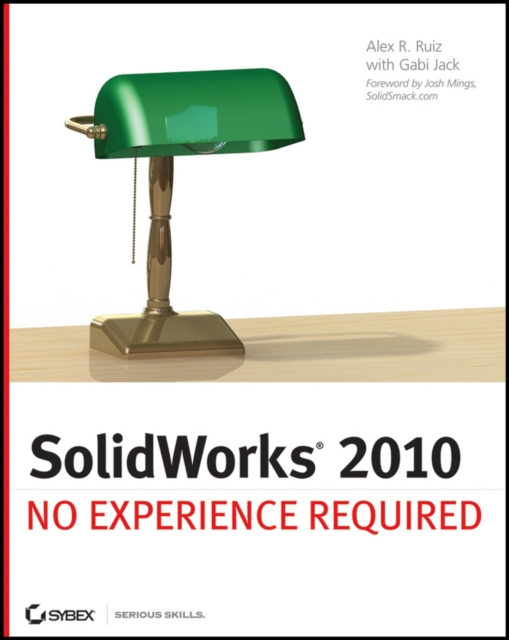
The only continuous, step-by-step tutorial for SolidWorks SolidWorks is a 3D CAD manufacturing software package that has been used to design everything from aerospace robotics to bicycles.
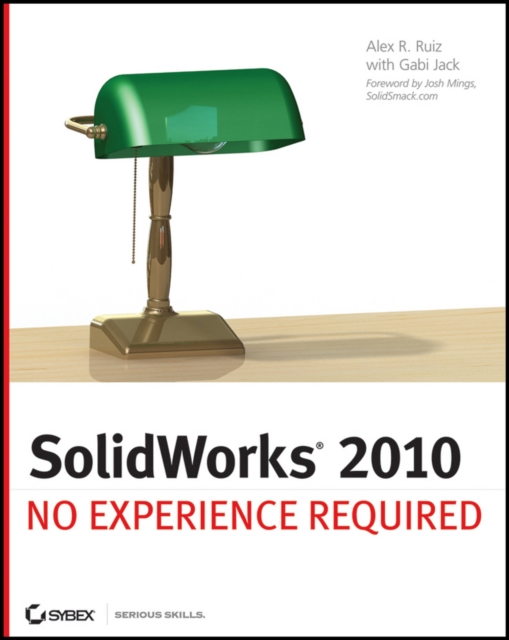
The only continuous, step-by-step tutorial for SolidWorks SolidWorks is a 3D CAD manufacturing software package that has been used to design everything from aerospace robotics to bicycles.
Whether it s your first venture into 3D technical drawing software or you re switching to SolidWorks from something else, you re probably excited about what this CAD program has to offer.
AutoCAD is the leading software tool for creating technical and architectural drawings, but it definitely doesn't lead in the "e;easy to master"e; category.
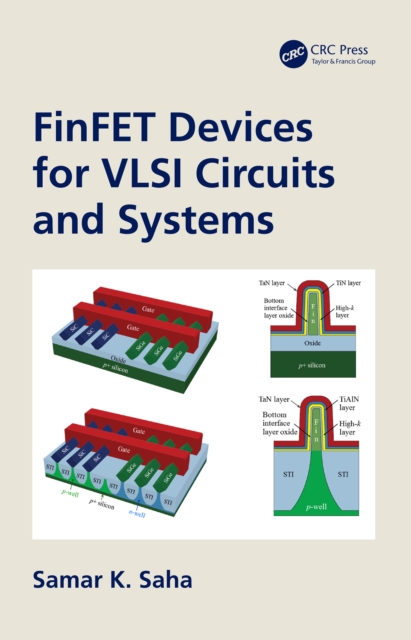
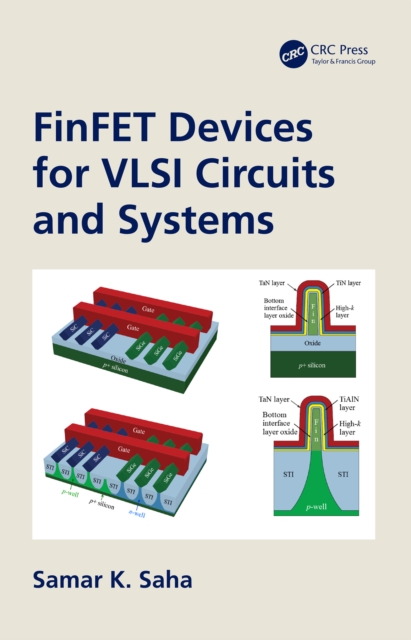
To surmount the continuous scaling challenges of MOSFET devices, FinFETs have emerged as the real alternative for use as the next generation device for IC fabrication technology.
To surmount the continuous scaling challenges of MOSFET devices, FinFETs have emerged as the real alternative for use as the next generation device for IC fabrication technology.
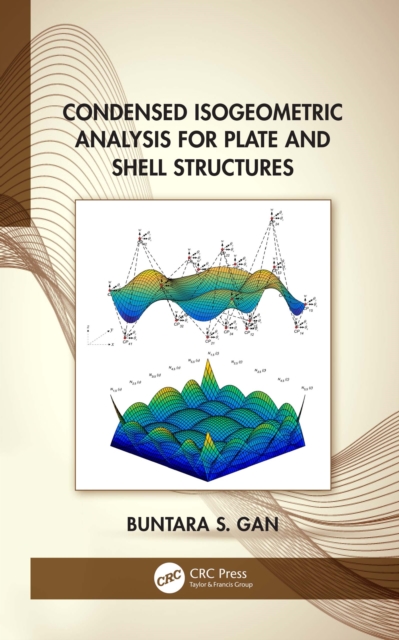
Condensed Isogeometric Analysis for Plates and Shell Structures proposes a novel technique for plate and shell governing equations based on isogeometric analysis, which condenses the dynamic equilibrium equation for plate and shell structures-suitable for reducing the computation cost of large degrees of freedom due to the adoption of Non-Uniform Rational Basis Spline (NURBS) models in the plate and shell element formulations.
Condensed Isogeometric Analysis for Plates and Shell Structures proposes a novel technique for plate and shell governing equations based on isogeometric analysis, which condenses the dynamic equilibrium equation for plate and shell structures-suitable for reducing the computation cost of large degrees of freedom due to the adoption of Non-Uniform Rational Basis Spline (NURBS) models in the plate and shell element formulations.
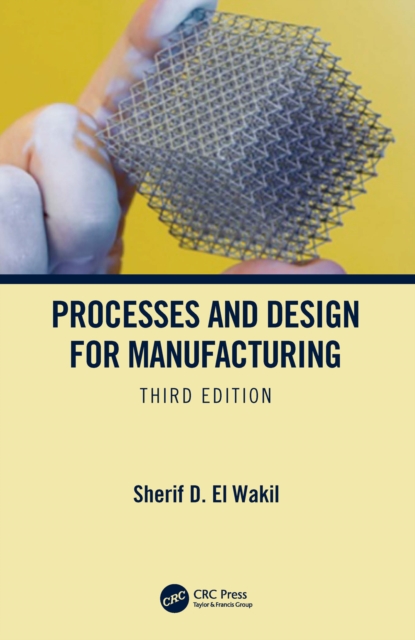
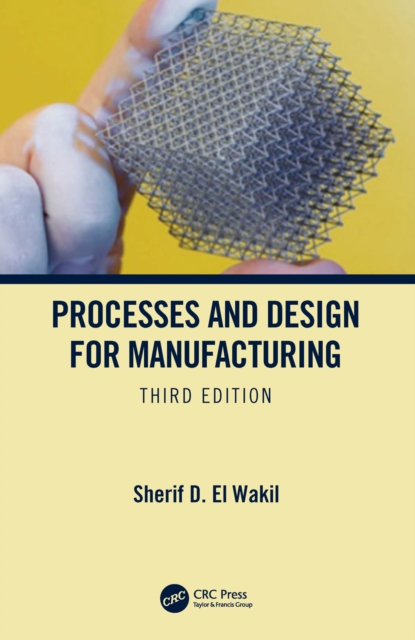
Processes and Design for Manufacturing, Third Edition, examines manufacturing processes from the viewpoint of the product designer, investigating the selection of manufacturing methods in the early phases of design and how this affects the constructional features of a product.
Processes and Design for Manufacturing, Third Edition, examines manufacturing processes from the viewpoint of the product designer, investigating the selection of manufacturing methods in the early phases of design and how this affects the constructional features of a product.
XV From the Old to the New xvii Acknowledgments xx| Verilog A Tutorial Introduction Getting Started 2 A Structural Description 2 Simulating the binaryToESeg Driver 4 Creating Ports For the Module 7 Creating a Testbench For a Module 8 Behavioral Modeling of Combinational Circuits 11 Procedural Models 12 Rules for Synthesizing Combinational Circuits 13 Procedural Modeling of Clocked Sequential Circuits 14 Modeling Finite State Machines 15 Rules for Synthesizing Sequential Systems 18 Non-Blocking Assignment ("e;
SystemVerilog for Verification, Second Edition provides practical information for hardware and software engineers using the SystemVerilog language to verify electronic designs.
Many new topologies and circuit design techniques have emerged recently to improve the performance of active inductors, but a comprehensive treatment of the theory, topology, characteristics, and design constraint of CMOS active inductors and transformers, and a detailed examination of their emerging applications in high-speed analog signal processing and data communications over wire and wireless channels, is not available.
Low-Power High-Level Synthesis for Nanoscale CMOS Circuits addresses the need for analysis, characterization, estimation, and optimization of the various forms of power dissipation in the presence of process variations of nano-CMOS technologies.
Adopting new fabrication technologies not only provides higher integration and enhances performance, but also increases the types of manufacturing defects.
The purpose of this book is to present computationally efficient algorithms for calculating the dynamics of robot mechanisms represented as systems of rigid bodies.
As the scaling limits of the conventional Si technology is approached, many have pursued alternative and revolutionary concepts as means to further improve the performance of future electronics.
Power Distribution Networks with On-Chip Decoupling Capacitors is dedicated to distributing power in high speed, high complexity integrated circuits with power levels exceeding tens of watts and the power supply below a volt.
Design for Manufacturability and Statistical Design: A Constructive Approach provides a thorough treatment of the causes of variability, methods for statistical data characterization, and techniques for modeling, analysis, and optimization of integrated circuits to improve yield.
Dynamics of Microelectromechanical Systems is a systematic overview of the dynamics of MEMS (microelectromechanical systems), microstructures, and their responses.
With dramatic increases in on-chip packing densities, routing congestion has become a major problem in integrated circuit design, impacting convergence, performance, and yield, and complicating the synthesis of critical interc- nects.
Current-mode circuits, where information is represented by the branch currents of the circuits rather than the nodal voltages as of voltage-mode circuits, possess many unique and attractive characteristics over their voltage-mode counterparts including a small nodal time constant, high current swing in the presence of a low supply voltage, reduced distor- tion, a low input impedance, a high output impedance, less sensitive to switching noise, and better ESD immunity.