Appropriate for use as a graduate text or a professional reference, Languages for Digital Embedded Systems is the first detailed, broad survey of hardware and software description languages for embedded system design.
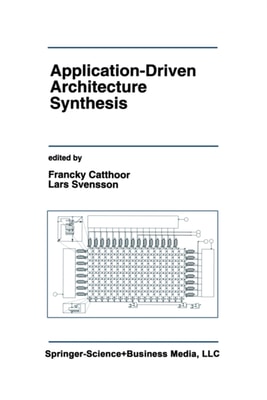
Research on high-level synthesis started over twenty years ago, but lower-level tools were not available to seriously support the insertion of high-level synthesis into the mainstream design methodology.
Field-Programmable Gate Arrays (FPGAs) have emerged as an attractive means of implementing logic circuits, providing instant manufacturing turnaround and negligible prototype costs.
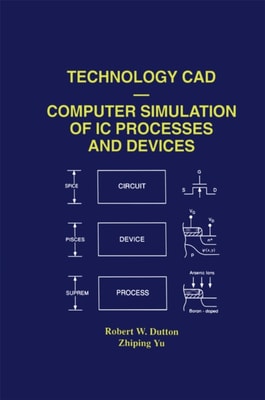
As MOS devices are scaled to meet increasingly demanding circuit specifications, process variations have a greater effect on the reliability of circuit performance.
The ever-increasing miniaturization of digital electronic components is hampering the conventional testing of Printed Circuit Boards (PCBs) by means of bed-of-nails fixtures.
For many years, the dominant fault model in automatic test pattern gen- eration (ATPG) for digital integrated circuits has been the stuck-at fault model.
The quest for higher performance digital systems for applications such as gen- eral purpose computing, signal/image processing, and telecommunications and an increasing cost consciousness have led to a major thrust for high speed VLSI systems implemented in inexpensive and widely available technologies such as CMOS.
Moore's law [Noy77], which predicted that the number of devices in- tegrated on a chip would be doubled every two years, was accurate for a number of years.
The success of VHDL since it has been balloted in 1987 as an IEEE standard may look incomprehensible to the large population of hardware designers, who had never heared of Hardware Description Languages before (for at least 90% of them), as well as to the few hundreds of specialists who had been working on these languages for a long time (25 years for some of them).
This book presents a detailed summary of research on automatic layout of device-level analog circuits that was undertaken in the late 1980s and early 1990s at Carnegie Mellon University.
Physical Design for Multichip Modules collects together a large body of important research work that has been conducted in recent years in the area of Multichip Module (MCM) design.
Co-Synthesis of Hardware and Software for Digital Embedded Systems, with a Foreword written by Giovanni De Micheli, presents techniques that are useful in building complex embedded systems.
by Phil Moorby The Verilog Hardware Description Language has had an amazing impact on the mod- em electronics industry, considering that the essential composition of the language was developed in a surprisingly short period of time, early in 1984.
Data Management and Internet Computing for Image/Pattern Analysis focuses on the data management issues and Internet computing aspect of image processing and pattern recognition research.
Semantic Video Object Segmentation for Content-Based Multimedia Applications provides a thorough review of state-of-the-art techniques as well as describing several novel ideas and algorithms for semantic object extraction from image sequences.
In order to establish technical prerequisites for efficient electronic business and education on the Internet, appropriate system support is needed as a vital condition for maximization of both short-term and long-term profits.
Multi-Frame Motion-Compensated Prediction for Video Transmission presents a comprehensive description of a new technique in video coding and transmission.