The volume of Springer Proceedings in Geoarchaeology and Archaeological Mineralogy contains selected papers presented at the 9th Geoarchaeology Conference, which took place during September 19-22, 2022, at the South Urals Federal Research Center, the Ural Branch of the Russian Academy of Sciences, Miass, Russia.
This book provides a cross-disciplinary perspective on the degradation and deterioration of the cultural record encompassed by urban headstones located in parish churchyards.
This book covers all aspects of the economics and management of geotourism, an increasingly important sector of nature tourism that focuses on the geology and landscape of different territories, providing a pleasurable and educational tourist experience.
This book discusses Nevada in the context of the history of soil investigations; soil-forming factors; general soil regions; soil geomorphology; taxonomic structure of the soils; taxonomic soil regions; soil-forming processes; benchmark, endemic, rare, and endangered soils; and use of soils.
This book deals with the challenges for efficient groundwater management, with a focus on South Asia and India, providing a balanced presentation of theory and field practice using a multidisciplinary approach.
Sauropodomorpha Huene 1932 is one of the most successful groups of dinosaurs, including the most abundant and diverse herbivorous forms with a worldwide record, extending from the late Triassic to the late Cretaceous.
This edited book gives a general overview on current research, focusing on geoenvironmental issues and challenges in hydrogeosciences in model regions in Asia, Europe, and America, with a focus on the Middle East and Mediterranean region and surrounding areas.
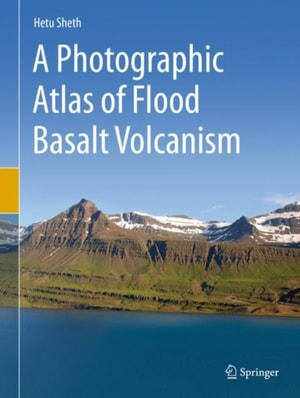
This unique book presents hundreds of spectacular photographs of large-scale to small-scale field geological features of flood basalt volcanism from around the world.
This book provides essential information and recent findings on hydro-environmental issues in the Lower Danube River, particularly its hydrological and hydromorphological processes; physico-chemical features; climate and water-related hazards; and not only the biodiversity and quality but also the sustainable management and governance of its hydro-environment.
This book is the outcome of more than a decade of research and technical development activities at Spain's Geological Survey (IGME) concerning shallow geothermal energy, which were pursued in collaboration with other public bodies and European entities.
The evolution of the Argentina Continental Margin during the Quaternary and the stratigraphic and morphosedimentary configuration responded to climatic variability, oceanographic changes, glacioeustatic fluctuations and tectono-isostatic processes, which began to impact on the margin during previous geological periods.
This book explores the geotectonic evolution of the lithosphere beneath the Indian Shield, which comprises a collage of cratons variously bounded by mobile belts and palaeo-rifts.
This is the first book that analyses the future raw materials supply from the demand side of a society that chiefly relies on renewable energies, which is of great significance for us all.
This volume is a compilation of the research presented at the International Asteroid Day workshop which was celebrated at Barcelona on June 30th, 2015.
This book highlights recent advances in the discipline of biogeochemistry that have directly resulted from the development of critical zone (CZ) science.
This book presents the integrated use of magnetometry and ground-penetrating radar geophysical mapping to understand the human presence within buried archaeological landscapes.
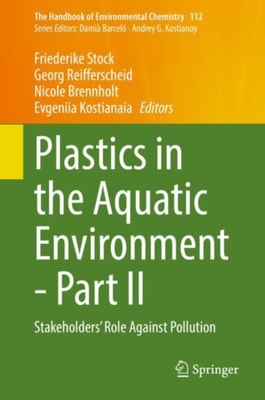
This book reviews comprehensively the opportunities and responsibilities of science, society and politics to combat plastic pollution in marine and freshwaters.
South Asia, harboring the complex Himalayan terrains, has over one-fifth of the world's population and is recognized as the most hazard-prone region of the world.
The evolution of geological cartography in Cuba in its more than 135 years of history has been possible through the consultation of numerous archival reports, publications, maps and personal interviews with different authors and geologists of vast experience.
This book addresses the hazard of gas explosions in sealed underground coal mines, and how the risk of explosion can be assessed, modeled, and mitigated.
This textbook presents a comprehensive process-oriented approach to biogeochemistry that is intended to appeal to readers who want to go beyond a general exposure to topics in biogeochemistry, and instead are seeking a holistic understanding of the interplay of biotic and environmental drivers in the cycling of elements in forested watersheds.