The special issue contains contributions presented at the international workshop Seismic waves in laterally inhomo- geneous media IV, which was held at the Castle of Trest, Czech Republic, May 22-27, 1995.
Geodynamics concerns with the dynamics of the global motion of the earth, of the motion in the earth's interior and its interaction with surface features, together with the mechanical processes in the deformation and rupture of geological structures.
The special issue contains contributions presented at the international workshop Seismic waves in laterally inhomogeneous media IV, which was held at the Castle of Trest, Czech Republic, May 22-27, 1995.
Plate tectonics has significantly broadened our view of the dynamics of continental evolution, involving both the processes currently active at the surface and those extending deep into the interior of the Earth.
Variations in seismic Q are sensitive to a much greater extent than are seismic velocity variations on factors such as temperature, fluid content, and the movement of solid state defects in the earth.
During the 20th century, lake research has become an internationally recognised field of scientific activity, improving our understanding on physical, chemical and biological processes, on fresh water ecology, and water resources among others.
This volume contains the proceedings of the workshop on "e;Soil Monitoring: Methods for Early Detection and Surveying of Soil Contamination and Degradation"e;, held at the ETH seminar centre "e;Stefano Franscini"e; of Monte Verita, Ascona (Switzerland) from October 18 - 23, 1992.
Urban subsurface resources and particularly urban groundwater are vulnerable to environmental impacts, and their rational management is of major importance.
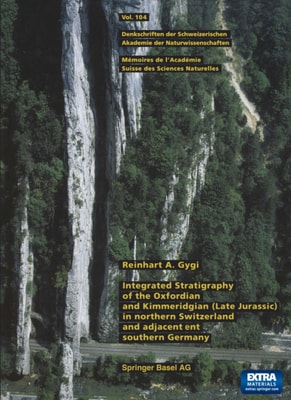
The book summarizes about 40 years of the author's research on sedimentary geology in an epicontinental (shelf) sea during the Late Jurassic in northern Switzerland.
The book provides a characteristic of sulfate karst, the features of its distribution and development in the Perm region, based on their own research and generalization of data accumulated in recent years.
This book unites studies in the fields of archaeometry, geoarchaeology, and ancient technologies, based on cases from northern Eurasia, and includes archaeometallurgy, stone tools investigation, exploitation of geological resources in the past, bioarchaeology, residue analysis, pottery and lithics investigation, and use of the GIS in archaeology.
This book encompasses the most challenging topics in earthquake engineering and seismology aiming at seismic risk reduction and reveals the outstanding progresses made in Europe in the past four years.
The book summarizes research work on the Wajid Sandstone, which provides integrated field and laboratory data to enable a detailed description of this unit including a facies analysis, porosity data, as well as permeability data to establish aquifer models.
This book addresses the various factors affecting fluvial systems, the processes governing them, system responses arising from human-nature interventions, and geospatial and geo-ecological modeling to understand system behaviour better and restore degraded ecosystems around the globe.
Although several excellent works exist that describe the effective elastic thickness (Te) of the lithosphere-its theory, significance and relevance to Earth sciences in general-none cover the details of the methods for its estimation.
This book illustrates the main modern mineralogical analytical procedures that can be applied for forensic purposes on various typologies of materials and substances and has both theoretical and practical approach.
This book provides the basic know-how and guidance to effectively exploit non-destructive geophysical technologies and apply them in the underground mining environment to optimise mineral extraction and to contribute to safer mining.
This book presents gravity aspects (gravity disturbance, Marussi tensor, two gravity invariants, their certain ratio, the strike angles, and the virtual deformations) which are computed and evaluated for the Moon, using the recent static global gravity field model (GRGM1200A) to degree and order of 600 in spherical harmonic expansion.
This volume details the function of hydrocarbon seeps, their evolution over time, the most important seep occurrences and the fauna present in ancient hydrocarbon seeps.
Our dependency on groundwater resources and overuse thereof has led to a decline in water table so that in the last couple of decades the focus has shifted back to the traditional practices of rainwater harvesting, and ways and means have been sought to promote Rainwater harvesting in Urban areas to recharge the stressed groundwater systems.