Handbook of Environmental Isotope Geochemistry, Volume 2: The Terrestrial Environment, B focuses on the processes, methodologies, principles, and approaches involved in isotope geochemistry.
Developments in Geochemistry, Volume 2: Rare Earth Element Geochemistry presents the remarkable developments in the chemistry and geochemistry of the rare earth elements.
Developments in Petrology, Volume 8: Numerical Petrology: Statistical Interpretation of Geochemical Data presents the methods that are likely to be useful to the average petrologist.
Handbook of Exploration Geochemistry, Volume 2: Statistics and Data Analysis in Geochemical Prospecting aims to survey the techniques available for the quality control of laboratory data, storage and retrieval of field and laboratory information, statistical analysis of single- and multi-element data, and presentation of geochemical data as maps.
Handbook of Exploration Geochemistry, Volume 3: Rock Geochemistry in Mineral Exploration focuses on the application of rock geochemistry in mineral exploration, including deposits of plutonic association, volcanic and sedimentary association, and sequence of geochemical exploration.
A balanced text that bridges the gap between introductory petrography-oriented texts and the more advanced texts that have a thermodynamic and/or chemical approach.
Handbook of Exploration Geochemistry, Volume I: Analytical Methods in Geochemical Prospecting focuses on the principles, methodologies, approaches, and techniques employed in geochemical prospecting.
Handbook of Environmental Isotope Geochemistry, Volume 1: The Terrestrial Environment, A focuses on isotope hydrology and aqueous geochemistry, as well as an overview of carbon, sulfur, and nitrogen isotopes in terrestrial systems.
Developments in Petrology, 6: Trondhjemites, Dacites, and Related Rocks focuses on the geology, geochemistry, and petrology of several kinds of trondhjemites, dacites, and genetically related rocks.
Developments in Geomathematics, 3: Introduction to the Mathematics of Inversion in Remote Sensing and Indirect Measurements focuses on the application of the mathematics of inversion in remote sensing and indirect measurements, including vectors and matrices, eigenvalues and eigenvectors, and integral equations.
Developments in Geotectonics, 10: The Expanding Earth focuses on the principles, methodologies, transformations, and approaches involved in the expanding earth concept.
Written for the practicing analyst, Analytical Methods for Geochemical Exploration offers thoroughly tested chemical analysis methods for determining what base or precious metals are in geochemical exploration samples, such as rocks, soil, or sediment.
As the author states in his Preface, this book is written at a time when scientific and lay communities recognize that knowledge of environmental chemistry is fundamental in understanding and predicting the fate of pollutants in soils and waters, and in making sound decisions about remediation of contaminated soils.
Aeolian Dust and Dust Deposits explores the entrainment, dispersion, and deposition of aeolian dust and dust deposits, with emphasis on transport and deposition of dust derived by deflation of surface sediments and soils.
Simulating Nearshore Environments provides computer procedures that realistically represent nearshore processes and supplement or replace trial and error methodology.
This thesaurus is presented in six languages, English, French, German, Italian, Russian and Spanish, and sponsored by the International Council for Scientific and Technical Information (ICSTI) and the International Union of Geological Sciences (IUGS).
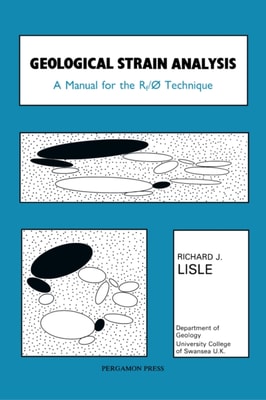
The trend towards a more quantitative approach in structural geology has stimulated the development of a number of techniques for determining the strain in deformed rocks of which the most widely used is one called the Rf/&fgr; method.
This volume provides bibliographic and textural information which gives a real understanding of the 40 ore deposits in Western and West Central Europe.
Provides bibliographic and textual information about the principal ore deposits of Northern Europe, plus descriptions of 30 selected deposits from the USSR.
Descriptive Micrometeorology compiles views and findings in micrometeorology, which is concerned with the surface boundary layer or thin slice of atmosphere extending from the ground up to a height of approximately 50 meters.
The Upper Atmosphere: Meteorology and Physics focuses on the study of the characteristics, movements, composition, and observations of the upper atmosphere.
Physics of the Earth's Interior embraces such a wide range of properties and processes that the space available in one volume imposes severe limitations on their discussion.
Thermodynamics of Clouds is a coherent and rational account of the thermodynamics of clouds that requires only a little knowledge of general thermodynamics; which takes up each idea from the beginning and allows the reader to appreciate the degree of rigor or of approximation at each stage; and which discusses each hypothesis and develops each theory with a clear statement of the basic physical concepts.
Continental Drift brings together within one volume a discussion of the geophysical evidence relating to horizontal movements in the earth's crust in its widest sense.
Descriptive Physical Oceanography: An Introduction, Fourth Enlarged Edition considers the synoptic or descriptive aspects of physical oceanography with considerable illustrative materials and some 45 additional figures.
Geophysics in the Affairs of Man: A Personalized History of Exploration Geophysics and its Allied Sciences of Seismology and Oceanography describes many of the key and intriguing developments which took place within several major fields of geophysics.
Developments in Geotectonics, 15: Crustal Properties across Passive Margins covers the papers presented at the symposium "e;"e;Crustal Properties across Passive Margins"e;"e;, held at Dalhousie University in Halifax, Nova Scotia on June 19-23, 1978.