Living Shorelines: The Science and Management of Nature-based Coastal Protection compiles, synthesizes and interprets the current state of the knowledge on the science and practice of nature-based shoreline protection.
Geoinformatics for Marine and Coastal Management provides a timely and valuable assessment of the current state of the art geoinformatics tools and methods for the management of marine systems.
Starting with the 2010 Gulf of Mexico Deepwater Horizon oil spill incident, Oil Spill Impacts: Taxonomic and Ontological Approaches chronicles a timeline of events that focus on the impact of oil spills and provides an understanding of these incidents using a number of approaches.
This volume analyses how visual and written narratives from Lusophone, or rather «Lusotopic», spaces – Portugal, Mozambique, East Timor and Goa – point to productive critical dialogues with the existing theories in Indian Ocean studies.
This book presents the R software environment as a key tool for oceanographic computations and provides a rationale for using R over the more widely-used tools of the field such as MATLAB.
This book presents the R software environment as a key tool for oceanographic computations and provides a rationale for using R over the more widely-used tools of the field such as MATLAB.
This title brings to light the discoveries and insights into the lives of many marine species made possible over the last decade by passive acoustic recorders (PAR).
Upon the 100th anniversary of the most terrifying stretch of shark attacks in American history--a wave said to have been the inspiration for Jaws--comes a reissue of the classic Lyons Press account and investigation.
'A voluminous encyclopedia of Tethyan geology and, as such, it provides an invaluable source of information for those interested in this region, and Earth history in general.
There are many conferences, workshops and meetings annually around the world, each emphasizing a specialty area for scientific exploration and research.
The idea of the Arctic Ocean as a mediterranean sea is a shock to those of us-and that includes most of us-who cannot shake ourselves free of the Mercatorean vision.
The idea of the Arctic Ocean as a mediterranean sea is a shock to those of us-and that includes most of us-who cannot shake ourselves free of the Mercatorean vision.
Although Volume 1 deals mainly with phytoplankton, it ends with a comparison of the primary productivity of different major regions and of the factors responsible for varying production.
A concise guide to the theory and application of numerical methods for predicting ocean acoustic propagation, also providing an introduction to numerical methods, with an overview of those methods presently in use.
In recent years, significant advances in both the theoretical and observational sides of physical oceanography have allowed the ocean's physical behavior to be described more quantitatively.
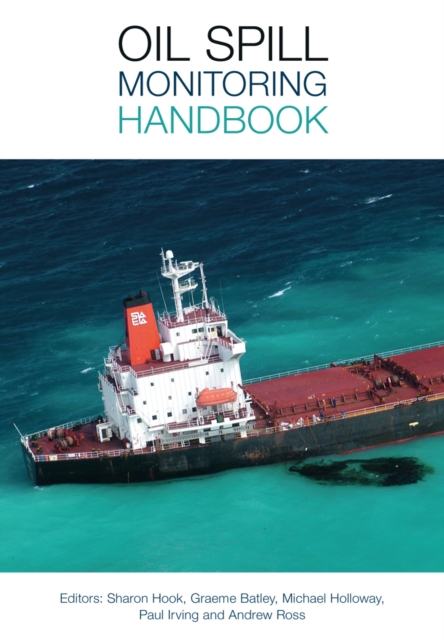
The rapid economic development of many countries since World War II has resulted in a considerable increase in the marine transport of raw materials, especially of crude oils, and in offshore activities.
This revised edition of a popular textbook is written for students, physical oceanographers, engineers, hydrologists, fisheries experts and a number of other professionals who require quantitative expressions of biological oceanographic phenomena.
Marine and Offshore Corrosion describes the principles of effective corrosion control treatments in marine environments, with emphasis on economic solutions to corrosion.
Understanding the Oceans brings together an internationally distinguished group of authors to consider the enormous advances in marine science that have been achieved since the voyages of HMS Challenger a century ago.
This work addresses the whole range of problems relating to the application of satellite technology to studies of regional seas and sea phenomona - the Gulf Stream, the Kuroshia Current - and coastal zones.
Modelling large-scale wave fields and their interaction with coastal and offshore structures has become much more feasible over the last two decades with increases in computer speeds.
From prehistoric times to the present, the Ocean has been used as a highway for trade, a source of food and resources, and a space for recreation and military conquest, as well as an inspiration for religion, culture, and the arts.
From vividly colored underwater photographs of Australia's Great Barrier Reef to life-size dioramas re-creating coral reefs and the bounty of life they sustained, the work of early twentieth-century explorers and photographers fed the public's fascination with reefs.
Early in 1979, a group of wave researchers proposed a wave model inter- comparison study to clarify the interrelations existing among the various wave models which have been developed in past years for real-time wave forecasting, wave statistics compilations, or hindcast case studies.
Since the computing revolution, modelling has become the most important way in which we further our knowledge about how the sea moves and how the processes in the sea operate.
Along much of the shoreline of the world, tidal inlets play an important role in nearshore processes, providing links between the coastal oceans and protected embayments.
Underwater acoustic digital signal processing and communications is an area of applied research that has witnessed major advances over the past decade.
Inverse problems have a long history in acoustics, optics, electromagnetics and geophysics, but only recently have the signals provided by ocean acoustic sensors become numerous and sophisticated enough to allow for realistic identification of the ocean parameters.
In the 20 years since publication of the first edition of this book there have been a number of significant changes in the practice of coastal engineering.
This indispensable handbook provides state-of-the-art information and common sense guidelines, covering the design, construction, modernization of port and harbor related marine structures.
The impetus for the conference held at Bombannes, France in May, 1982 arose out of a Scientific Committee on Oceanic Research (SCOR) Working Group on "e;Mathematical Models in Biological Oceanography"e;.
Developed in partnership with the National Geographic Society, market-leading OCEANOGRAPHY: AN INVITATION TO MARINE SCIENCE, 9e gives you a basic understanding of the scientific questions, complexities, and uncertainties involved in ocean use-as well as the role and importance of the ocean in nurturing and sustaining life on Earth.