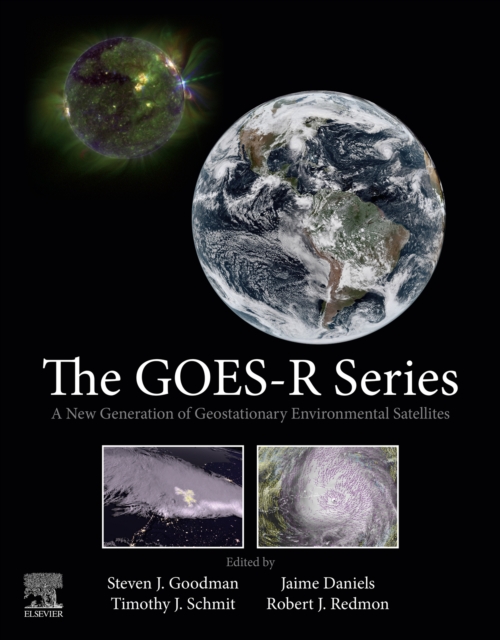
The GOES-R Series: A New Generation of Geostationary Environmental Satellites introduces the reader to the most significant advance in weather technology in a generation.
Nucleation of Water: From Fundamental Science to Atmospheric and Additional Applications provides a comprehensive accounting of the current state-of-the-art regarding the nucleation of water.
This book is one out of 8 IAEG XII Congress volumes, and deals with the processes occurring on the coastal zone, which represents a critical interface between land and sea, as the contribution of the ocean to the provision of energy and mineral resources will likely increase in the coming decades.
Climate Change: Alternate Governance Policy for South Asia provides an assessment of climate change issues through the socioeconomic lens of one of the world's poorest, most populous regions.
Statistical Postprocessing of Ensemble Forecasts brings together chapters contributed by international subject-matter experts describing the current state of the art in the statistical postprocessing of ensemble forecasts.
Energy and Climate Change: An Introduction to Geological Controls, Interventions and Mitigations examines the Earth system science context of the formation and use of fossil fuel resources, and the implications for climate change.
Ice Caves synthesizes the latest research on ice caves from around the world, bringing to light important information that was heretofore buried in various reports, journals, and archives largely outside the public view.
The Gap Between Weather and Climate Forecasting: Sub-seasonal to Seasonal Prediction is an ideal reference for researchers and practitioners across the range of disciplines involved in the science, modeling, forecasting and application of this new frontier in sub-seasonal to seasonal (S2S) prediction.
Smart, Resilient and Transition Cities: Emerging Approaches and Tools for Climate-Sensitive Urban Development starts with a presentation of three widespread Urban Metaphors, which are gaining increasing attention from urban planners and decision-makers: Smart City, Resilient City and Transition Towns, being all of them focused on the need for enhancing cities' capacities to cope with the multiple and heterogeneous challenges threatening contemporary cities and their future development and, above all, with climate issues.
Remote Sensing of Aerosols, Clouds, and Precipitation compiles recent advances in aerosol, cloud, and precipitation remote sensing from new satellite observations.
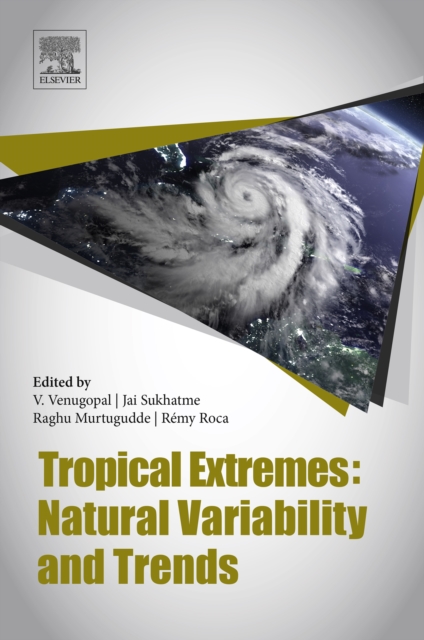
Tropical Extremes: Natural Variability and Trends features the most up-to-date information on present and future trends related to climate change and tropical extremes.
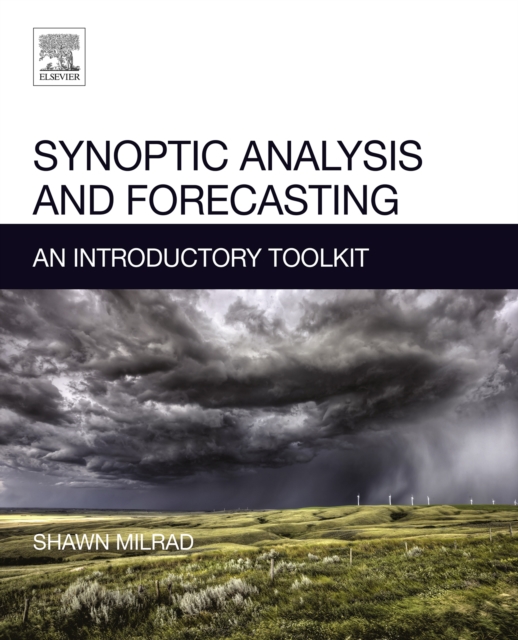
Synoptic Analysis and Forecasting: An Introductory Toolkit provides the bridge between the introductory fundamentals of a meteorology course and advanced synoptic-dynamic analysis for undergraduate students.
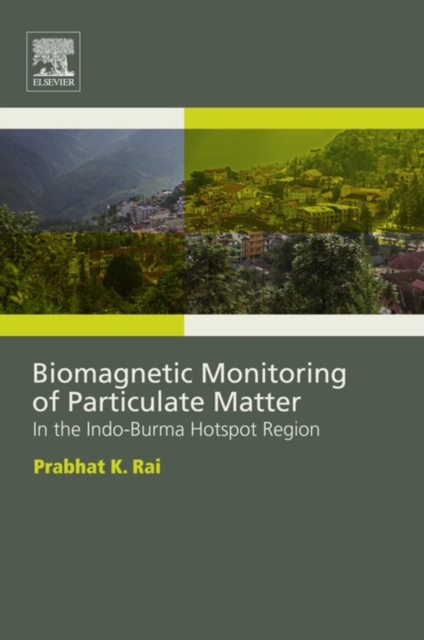
Air pollution originating from rapid industrialization, urbanization, population growth and economic development has disturbed the urban ecosystems of ecologically sensitive regions like the Indo-Burma hot spot, and they are under severe air pollution stress with limited resources to collect data on what is happening.
Atmospheric Impacts of the Oil and Gas Industry provides the most up-to-date scientific and technological methods available to quantify oil and gas industry emissions and atmospheric impacts in a manner that is relevant to the development of, compliance with, and enforcement of effective policy and regulations.
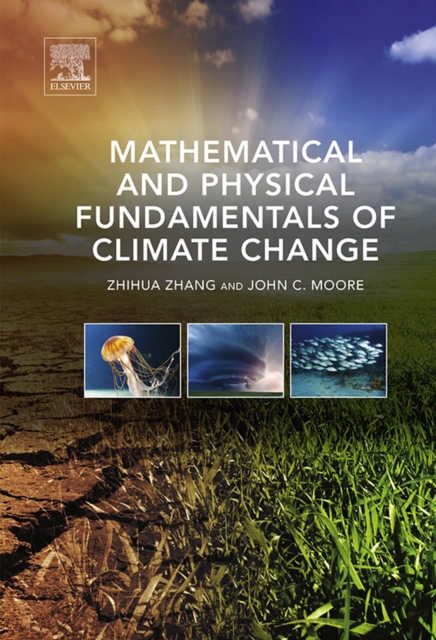
Mathematical and Physical Fundamentals of Climate Change is the first book to provide an overview of the math and physics necessary for scientists to understand and apply atmospheric and oceanic models to climate research.
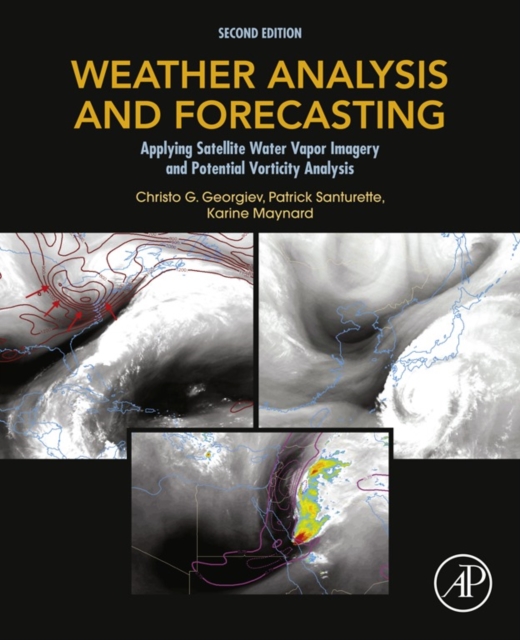
Weather Analysis and Forecasting: Applying Satellite Water Vapor Imagery and Potential Vorticity Analysis, Second Edition, is a step-by-step essential training manual for forecasters in meteorological services worldwide, and a valuable text for graduate students in atmospheric physics and satellite meteorology.
Climate Change Biology, 2e examines the evolving discipline of human-induced climate change and the resulting shifts in the distributions of species and the timing of biological events.
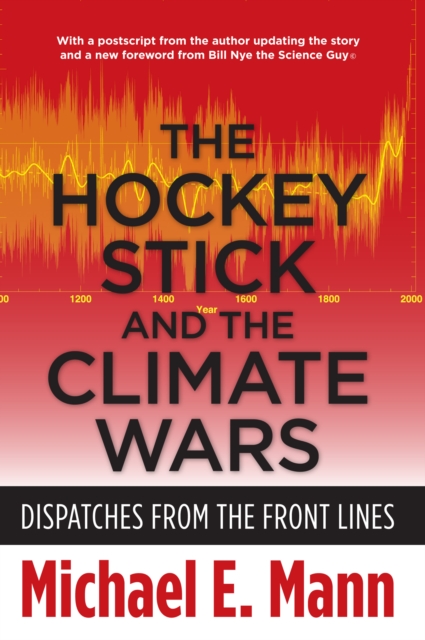
The ongoing assault on climate science in the United States has never been more aggressive, more blatant, or more widely publicized than in the case of the Hockey Stick graph-a clear and compelling visual presentation of scientific data, put together by MichaelE.
This volume discusses climate change impacts on groundwater quality in arid and semi-arid regions, and provides human health risk assessments due to pollution of surface and groundwater.
Hydro-Meteorological Hazards, Risks, and Disasters provides an integrated look at major atmospheric disasters that have had and continue to have major implications for many of the world's people, such as floods and droughts.
The Mediterranean region contains a diverse and interesting climate ranging from areas with permanent glaciers to areas of subtropical, semiarid regions.
Written by pioneers in the field, Highlights in Helioclimatology examines the scientific evidence related to the influence of solar activity on climate and the resulting atmospheric process that creates hurricanes.
This book summarizes three years of extensive research conducted in Sri Lanka, Indonesia and Vietnam as part of the CECAR - Asia project, which was intended to enhance resilience to climate and ecosystem changes by developing mosaic systems to strengthen resilience of bio-production systems through the integration of large-scale modern agriculture systems with traditional, decentralized small-scale systems.
Paleoclimatology: Reconstructing Climates of the Quaternary, Third Edition-winner of a 2015 Textbook Excellence Award (Texty) from The Text and Academic Authors Association-provides a thorough overview of the methods of paleoclimatic reconstruction and of the historical changes in climate during the past three million years.
At a time of so much politicized debate over the phenomenon of global warming, the second edition of The Future of the World's Climate places the discussion in a broader geological, paleo-climatic, and astronomical context.
This book outlines the performance and management of mangroves in the changing climatic scenario of the Asia-Pacific region and draws examples and lessons from the national and community-driven mangrove conservation programs of relevant countries including Pakistan, India, Bangladesh, Sri Lanka, Myanmar, Thailand, Cambodia, Indonesia, the Philippines, and Japan as well as the Pacific islands.
This volume integrates a conceptual framework with participatory methodologies to understand the complexities of dryland socio-ecological systems, and to address challenges and opportunities for stewardship of future drylands and climate change in the global south.
The 3rd edition of Mesoscale Meteorological Modeling is a fully revised resource for researchers and practitioners in the growing field of meteorological modeling at the mesoscale.
This book provides an accessible but intellectually rigorous introduction to the global social movement for 'climate justice' and addresses the socially uneven consequences of anthropogenic climate change.
Exploring the link between the ocean's currents and rapid climate changeWally Broecker is one of the world's leading authorities on abrupt global climate change.
Mobilities Facing Hydrometeorological Extreme Events 2 covers our need to understand how the interaction of hydro-meteorological, social and development dynamics combine to bring improvement to or a worsening of both mobile and immobile exposure.
Today, predicting the impact of human activities on the earth's climate hinges on tracking interactions among phenomena of radically different dimensions, from the molecular to the planetary.
Volcanic Ash: Hazard Observation presents an introduction followed by four sections, each on a separate topic and each containing chapters from an internationally renowned pool of authors.
From the Preface: In the 18 years since my technical monograph Lightning (McGraw-Hill, 1969; Dover, 1984) was first published, there have been significant advances in our understanding of lightning, but, until now, there has been no new monograph on the subject.
For advanced undergraduate and beginning graduate students in atmospheric, oceanic, and climate science, Atmosphere, Ocean and Climate Dynamics is an introductory textbook on the circulations of the atmosphere and ocean and their interaction, with an emphasis on global scales.