This book offers a detailed look into the latest advancements and strategies for managing biotic and abiotic stresses in wheat cultivation, with a focus on Indian agricultural conditions.
Science, Culture, and Climate: Navigating Change makes an engaging case that solutions to the climate crisis require a deep embrace of science, along with an understanding of social constructs and history.
This book offers a detailed look into the latest advancements and strategies for managing biotic and abiotic stresses in wheat cultivation, with a focus on Indian agricultural conditions.
This book contains the papers selected by the Scientific Committee and represented at the XIV International Conference "e;Solar-Terrestrial Relations and Physics of Earthquake Precursors"e;, which was hold at the Institute of Cosmophysical Research and Radio Wave Propagation, Far Eastern Branch of the Russian Academy of Sciences, Kamchatka.
This book contains the papers selected by the Scientific Committee and represented at the XIV International Conference "e;Solar-Terrestrial Relations and Physics of Earthquake Precursors"e;, which was hold at the Institute of Cosmophysical Research and Radio Wave Propagation, Far Eastern Branch of the Russian Academy of Sciences, Kamchatka.
Blending information from popular mainstream articles, highly technical publications, and research journals, the second edition of Principles of Air Quality Management features new sections on air toxics, new information on chronic and acute health effects, and new approaches to the assessment of those impacts on sensitive populations.
A clear, concise discussion of today's hottest topics in climate change, including adapting to climate change and geo-engineering to mitigate the effects of change, Engineering Response to Climate Change, Second Edition takes on the tough questions of what to do and offers real solutions to the practical problems caused by radical changes in the Earth's climate.
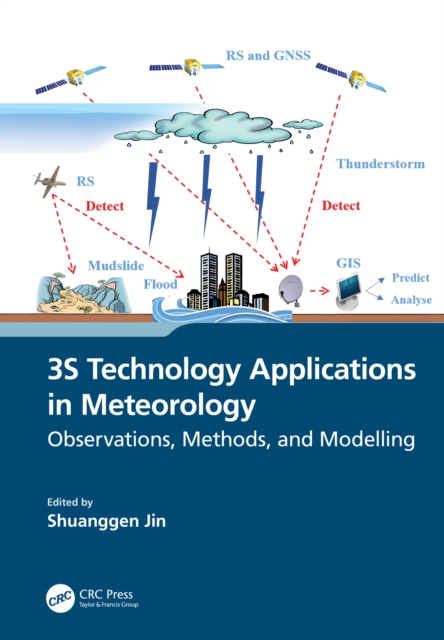
Spatial information technology and its integration, such as remote sensing, geographic information systems (GIS), and global navigation satellite systems (GNSS), known as 3S technology, have been extensively utilized in managing and monitoring natural disasters.
Spatial information technology and its integration, such as remote sensing, geographic information systems (GIS), and global navigation satellite systems (GNSS), known as 3S technology, have been extensively utilized in managing and monitoring natural disasters.
Are there universal laws governing the persistence of weather, and is it possible to predict climate transitions as generated by natural or man-made perturbations?
It is widely acknowledged that, in addition to global and regional efforts to cope with climate change by means of mitigation measures, adaptation initiatives can and perhaps should play a key role in enabling communities from across Africa to better handle the problems related to it.
"e;Soil Health and Climate Change"e; presents a comprehensive overview of the concept of soil health, including the significance of key soil attributes and management of soil health in conventional and emerging land use systems in the context of climate change.
The global food security and sustainable agriculture are the key challenges before the scientific community in the present era of enhanced climate variability, rapidly rising population and dwindling resources.
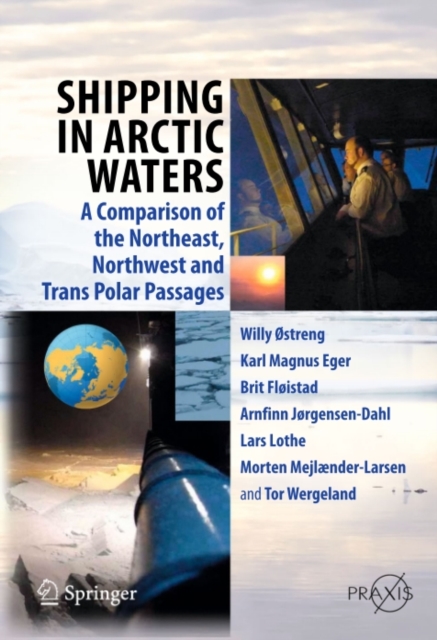
The most comprehensive and richest study undertaken so far of the factors and conditions that will determine the scope and range of shipping and shipping activities in Arctic waters now and in the future.
Covering an area of over 130 million km2 spanning the Mediterranean, equator and tropics, the African continent features a spectacular geographic diversity.
If you only have 30 seconds, there is time using this book to make sense of the science behind the seeming vagaries of the weather, the controversies, predictions and forecasts for climate change that shape our day-to-dayexperiences of the great outdoors.
Climate change, energy production and consumption, and the need to improve the sustainability of all aspects of human activity are key inter-related issues for which solutions must be found and implemented quickly and efficiently.
GKSS SCHOOL OF ENVIRONMENTAL RESEARCH The National Research Laboratory GKSS (member of the Hermann von Helmholtz-Association of German Reserach Centres) located in Geesthacht, near Hamburg, is engaged in environmental research.
This volume is the result of the International IDNDR-Conference on Early Warning Systems for the Reduction of Natural Disasters, held at the Geo- ForschungsZentrum in Potsdam, Germany from 7-11 September 1998.