This book provides contributions from leading experts on the integration of novel sensing technologies to yield unprecedented observations of coupled biological, chemical, and physical processes in the ocean from the macro to micro scale.
This book highlights both the diversity of perspectives and approaches to Arctic research and the inherent interdisciplinary nature of studying and understanding this incomparable region.
The book integrates the fundamental factors that determine current and future impacts of biofuels production on water supply and demand in the context of climatic changes.
This book presents selected mathematical problems involving the dynamics of a two-dimensional viscous and ideal incompressible fluid on a rotating sphere.
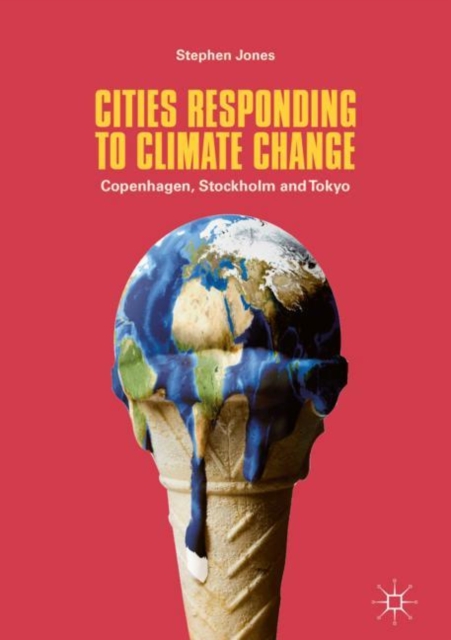
This book presents pioneering work on a range of innovative practices, experiments, and ideas that are becoming an integral part of urban climate change governance in the 21st century.
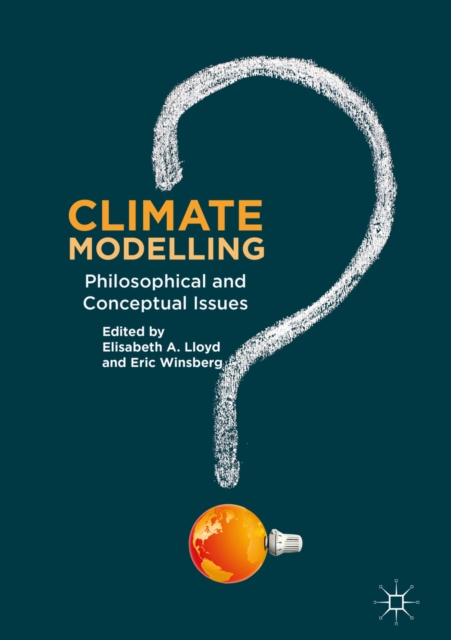
This edited collection of works by leading climate scientists and philosophers introduces readers to issues in the foundations, evaluation, confirmation, and application of climate models.
This book presents a novel picture in current advances in research of theoretical and practical frameworks of environmental problems and solutions taken from the latest empirical research findings.
The objective of this edited volume is to bring together a diverse set of analyses to document how small-scale societies responded to paleoenvironmental change based on the evidence of their lithic technologies.
This book performs a SWOT (strengths, weaknesses, opportunities and threats) analysis to examine the current food crisis and how it relates to the use of crops for energy.
This book focuses on the water-energy-climate nexus, which can be used to improve energy security and quality of life for millions of people in developing countries.
This brief is based on an analysis that was performed on the 2010 winter storms that caused considerable damage to coastal communities in Atlantic Canada.
This book examines international climate change mitigation and adaptation regimes with the aim of proposing fair climate stability implementation strategies.
The SpringerBriefs on Atmospheric and Space Sciences in two volumes presents a concise and interdisciplinary introduction to the basic theory, observation & modeling of atmospheric and ionospheric coupling processes on Earth.
This book gathers 22 papers which were presented at the 6th International Symposium of the ICA Commission on the History of Cartography in Dubrovnik, Croatia on 13-15 October 2016.
The present book offers a compelling sketch of how technological advances have shaped humankind's evolution and how they can unlock ways to combat climate change and environmental threats.
This textbook introduces a set of fundamental equations that govern the conservation of mass (dry air, water vapor, trace gas), momentum and energy in the lower atmosphere.
This book analyses the effectiveness of climate finance as political instrument to reduce the effect of anthropogenic activities on climate change and promote the green growth in developing countries.
This book describes the derivation of the equations of motion of fluids as well as the dynamics of ocean and atmospheric currents on both large and small scales through the use of variational methods.
This textbook introduces fundamental dynamics of tropical atmosphere and ocean useful for advanced graduate courses in atmospheric and climate sciences.
The book addresses urban transformations towards sustainability in light of challenges of global urbanization processes and the consequences of global environmental change.
While sponges represent a very simple group of organisms, which are represented by over 8000 species, there is considerable interest in the increasing role they may play in future marine ecosystems.
Advances in Nonlinear Geosciences is a set of contributions from the participants of "e;30 Years of Nonlinear Dynamics"e; held July 3-8, 2016 in Rhodes, Greece as part of the Aegean Conferences, as well as from several other experts in the field who could not attend the meeting.
Featuring a collection of informative and descriptive chapters, this book is essential reading for environmental scientists, environmental toxicologists and people from allied fields.
This unique book provides a multidisciplinary review of current, climate-change research projects at universities around the globe, offering perspectives from all of the natural and social sciences.
This book offers a selection of the best articles presented at the CUPUM (Computers in Urban Planning and Urban Management) Conference, held in the second week of July 2017 at the University of South Australia in Adelaide.
This book provides a comparative analysis of policy instruments designed to respond to climate change, drought and floods in connection with agricultural producers and their communities in four case study areas: Alberta and Saskatchewan, Canada; Coquimbo, Chile; and Mendoza, Argentina.
This book brings together thirteen selected papers presented in the Third International Seminar on Science and Geopolitics of Arctic-Antarctic-Himalaya, held in India in September 2015.
This book guides architects, landscape designers, urban planners, agronomists and society on the implementation of sustainable rooftop farming projects.
This book applies the multidisciplinary approaches of econometrics, statistics, finance and artificial intelligence for pricing and forecasting the carbon market in the context of managerial issues.
This book presents projections and blueprints of the future geologic period, climate and biosphere, based on our current understanding of the Earth's history and recent developments in the atmosphere-ocean-cryosphere system.
This book showcases experiences from research, field projects and best practice in climate change adaptation in countries in the Latin American region, focusing on managing vulnerability and fostering resilience.
This book is the result of a team of approximately 100 scientists and resource managers who worked together for two years to understand the effects of climatic variability and change on water resources, fisheries, forest vegetation, non-forest vegetation, wildlife, recreation, cultural resources and ecosystem services.