This book provides an overview of several components of mesoscale modeling: boundary conditions, subgrid-scale parameterization, moisture processes, and radiation.
This book is intended to give atmospheric scientists a basic understanding of the physical and mathematical foundations of stochastic Lagrangian models of turbulent diffusion.
This book presents the expanded versions of invited papers presented at the International Symposium on the Life Cycles of Extratropical Cyclones, held in Bergen, Norway, 27 June-1 July 1994.
From low humor to high drama, TV weather reporting has encompassed an enormous range of styles and approaches, triggering chuckles, infuriating the masses, and at times even saving lives.
The objectives of the American Meteorological Society are "e;the development and dissemination of knowledge of meteorology in all its phases and applications, and the advancement of its professional ideals.
The portending process of climate change, induced by the anthropogenic accumulations of greenhouse gases in the atmosphere, is likely to generate effects that will cascade through the biosphere, impacting all life on earth and bearing upon human endeavors.
MUCH OF MY WEATHER and climate research over the past 50 years has focused on how atmospheric conditions impact the environment, the ec- omy, and human activities/health.
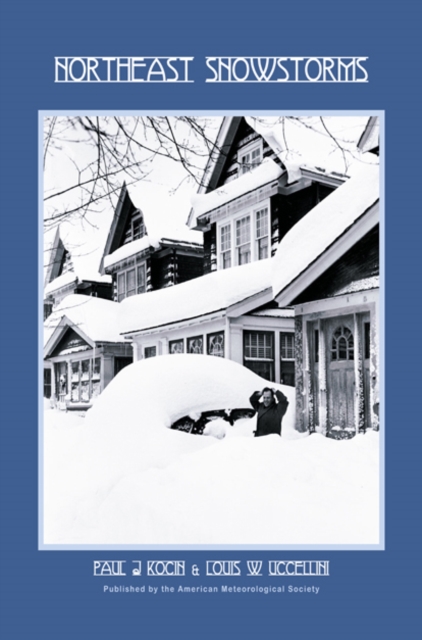
Designed with researchers, students, and weather observers and enthusiasts in mind, Northeast Snowstorms takes the unique approach of utilizing conventional weather charts and detailed descriptions of individual storms to analyze storms in a multi-disciplinary way.
Through a series of reviews by invited experts, this monograph pays tribute to Richard Reed's remarkable contributions to meteorology and his leadership in the science community over the past 50 years.
This book explores the interplay between science, economics, politics, and ethics in understanding the challenge that climate change poses to the international community.
With Broeker as his guide, award-winning science writer Robert Kunzig looks back at Earth's volatile climate history so as to shed light on the challenges ahead.
'Brilliant and fundamental, this is the necessary book about our prime global emergency' Ian McEwan The news is full of hotly debated and divergent claims about the impacts and risks of climate change.
This book on the climate change, natural resources, landscape and agricultural ecosystems describes the contributing challenges related to natural resources, soil erosion, irrigation planning, water, landscape, sustainable crop yield agriculture and biomass estimation.
Cloud Structure and Distributions over the Tropical Pacific Ocean offers a rigorous examination of cloud formations, distributions, and their intricate relationship with large-scale atmospheric dynamics in the tropical Pacific.
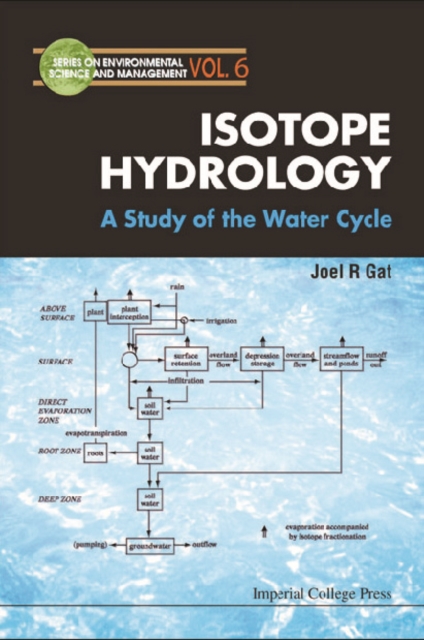
Within the realm of the newly evolving discipline of environmental sciences, the stable-isotope methodology is being used to an ever-increasing extent, especially in the study of the water cycle and of paleo-climatology.
Views on the dynamics of tropical forests are changing rapidly with the recognition that their environment is variable on the decadal to century scale.
Following the recognition that airborne particulate matter, even at quite modest concentrations, has an adverse effect on human health, there has been an intense research effort to understand the mechanisms and quantify the effects.
The Third Assessment Report of the Intergovernmental Panel on Climate Change (IPCC) has presented strong evidence that human-induced climate change is occurring and that all countries of the world will be affected and need to adapt to impacts.
This book counteracts the current fashion for theories of "e;chaos"e; and unpredictability by describing a theory that underpins the surprising accuracy of current deterministic weather forecasts, and it suggests that further improvements are possible.
This book presents selected papers from the International Geographical Union (IGU) Thematic Conference 2022, which was held at the Central University of Haryana, Mahendragarh, India, November 24-25, 2022.
Natural Disasters and Preparedness is a comprehensive course designed to equip students with a deep understanding of various natural disasters and practical strategies for effective preparedness.