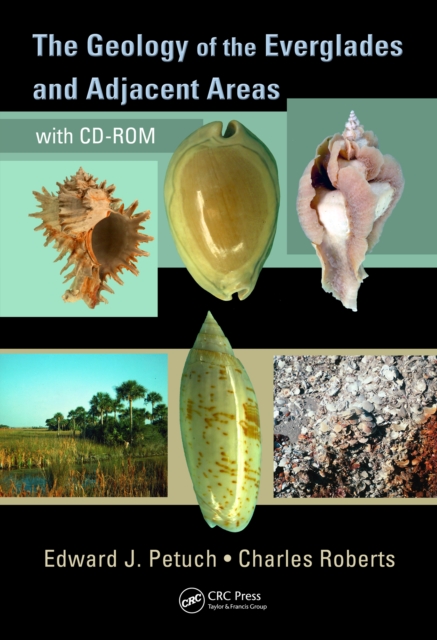
Painting a complete picture of the history of the Everglades, The Geology of the Everglades and Adjacent Areas brings together theperspectives of various geoscientists to provides an overview of the geology, paleontology, and paleoceanography of the Everglades region.
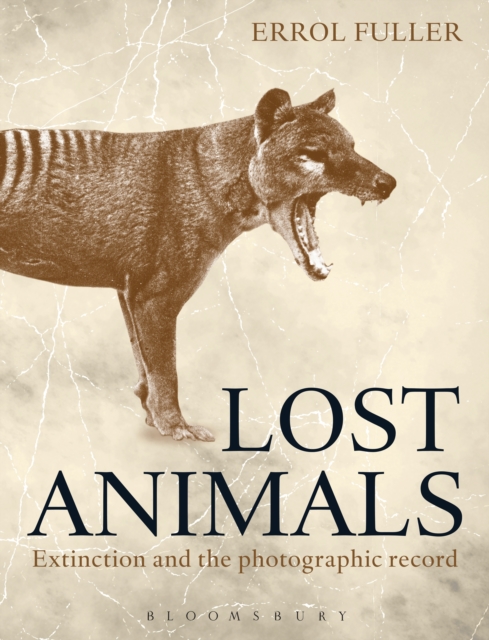
'An honest, compelling and important account, and a critical plea for a fusion of farming, food and nature to provide global ecological security' CHRIS PACKHAMWhy are so many animals facing extinction?
________________ WINNER OF THE 2015 PULITZER PRIZE FOR GENERAL NON-FICTION ________________ 'An invaluable contribution to our understanding of present circumstances, just as the paradigm shift she calls for is sorely needed' - Al Gore, New York Times 'Compelling .
This is a new and completely rewritten edition of the well-known text Microfossils (first published in 1980) covering all the major microfossil groups, with information on taxonomy, phylogeny, ecology and palaeoecology.
The volume contains summaries of facts, theories, and unsolved problems pertaining to the unexplained extinction of dozens of genera of mostly large terrestrial mammals, which occurred ca.
An understanding of the uniquely human behavior of stone tool making tackles questions about hominins' ability to culturally transmit and expand their base of social and practical knowledge and their cognitive capacities for advanced planning.
Science is supposedly ultimately constrained by the nature of the physical world, meaning that changes in scientific methods and practice are supposed to be away from those with less utility and toward those that are more revealing, useful, and productive of insights into the nature of that world.
A top priority in climate research is obtaining broad-extent and long-term data to support analyses of historical patterns and trends, and for model development and evaluation.
Recent years have witnessed exciting and important scientific breakthroughs in the study of Neanderthals and their place in human evolution which have transformed our appreciation of this group's paleobiology and evolution.
Paleopalynology, second edition, provides profusely illustrated treatment of fossil palynomorphs, including spores, pollen, dinoflagellate cysts, acritarchs, chitinozoans, scolecodonts, and various microscopic fungal and algal dispersal bodies.
Previous volumes in this 'Developments in Paleoenvironmental Research' (DPER) series have focussed on providing in-depth descriptions of palaeoenvironmental techniques or have described the applications of these approaches on various regional bases.
The plant fossil record provides evidence that the genus Metasequoia was widely distributed and experienced a wide range of climatic and environmental conditions throughout the Northern Hemisphere from the early Late Cretaceous to the Plio-Pleistocene.
Unraveling the mystery of the catastrophic age of extinctionsTwo hundred sixty million years ago, life on Earth suffered wave after wave of cataclysmic extinctions, with the worst wiping out nearly every species on the planet.
Sixty-five million years ago, a comet or asteroid larger than Mount Everest slammed into the Earth, inducing an explosion equivalent to the detonation of a hundred million hydrogen bombs.