This volume focuses on frontiers in regional research and identifies trends and future developments in the areas of innovation, regional growth and migration.
Uniquely informed by a sociological perspective, this major new textbook introduces the underlying origins and consequences of international migration, placing individuals within a broader social, cultural and historical context.
This provocative volume takes an international, multidisciplinary approach to understanding globalization and assessing its economic, social, and environmental effects.
In the light of mass migration, the rise of nationalism and the resurgence of global terrorism, this timely volume brings the debate on border protection, security and control to the centre stage of international relations research.
This book explores various forms of highly skilled mobility in the European Union, assessing the potential for this movement to contribute to individual and societal development.
This timely book moves beyond struggling, suffering and loss to argue that forced migration often provides opportunities for men to pursue new relationships and re-organise their intimate lives.
This book explores the commonalities between the struggles of the last years around the Mediterranean and tries to find the cultural roots of this season of protests and activism against repression and a growing systemic crisis.
This book offers a critical account of studies of local immigration policy and a relational approach to explain its emergence, variation, and effects in a context of interdependence and globalization.
This book constitutes a systematic and critical assessment of the nature, evolution, and prospects of the development partnership between the 79-member African, Caribbean, and Pacific (ACP) group of states and the 28-member European Union (EU).
This book is about ethnic diversity in voluntary organizations and seeks to explain whether intergroup contact contributes to the development of generalized trust.
This book adopts a multidisciplinary approach to the issue of "e;local liabilities"e;, drawing on close analysis of the case of Chinese migrants and the Italian industrial district of Prato in order to elucidate the problems, or liabilities, that derive from the separation between natives and immigrants in local systems of people and firms.
This book presents an analysis of the various transformation processes at work in the international migratory dynamic of Mexicans as a consequence of the 2008 international economic crisis and the implementation of an increasingly strict American migration policy.
This edited volume explores the circumstances under which vulnerable communities can better adapt to climate and environmental change, and focuses in particular on the centrality of migration as a resilience and adaptation strategy for communities at risk.
This book responds to recent criticisms that the research and theorization of multilingualism on the part of applied linguists are in collusion with neoliberal policies and economic interests.
This book overcomes the dichotomies, generalizations and empirical shortcomings that surround the understanding of return migration within the migration-development-peace-building nexus.
This book explores diverse communities living in Central Asia and the Caucasus, who are generally gathered under the umbrella term of 'Gypsies', their multidimensional identities, self-appellations and labels given to them by surrounding populations, researcher and policy-makers.
This book provides essential background information on the protracted displacement of several ethnic groups along the Thai-Myanmar border before turning to an examination of whether Myanmar has now shifted into a post-conflict society, the expected challenges involved in reintegrating returnees to Myanmar, and the possibility of voluntary and sustainable repatriation.
The present volume of the Yearbook of Corpus Linguistics and Pragmatics series, presents cutting-edge corpus pragmatics research on language use in new social and educational environments.
This book takes food parcels as a vehicle for exploring relationships, intimacy, care, consumption, exchange, and other fundamental anthropological concerns, examining them in relation to wider transnational spaces.
This book fills a significant lacuna in our understanding of the refugee crisis by analyzing the dynamics that lie behind fifteen years of asylum policies in the European Union.
This book critically assesses mobilities across the Mediterranean Basin and explores the implications of changing European relationships in the light of observations of the intersectional formation and evolution of identities, behavior and ideas.
The goal of this book is to explore disaster risk reduction (DRR), migration, climate change adaptation (CCA) and sustainable development linkages from a number of different geographical, social and natural science angles.
This volume addresses the topic of circular migration with regard to its multiple dimensions and human, political and civil rights implications from a global perspective.
Exploring how people negotiate and reconcile, construct and re-construct their distinctive gender and ethnic identities in a cross-cultural context, Hu examines what happens when two distinct cultures meet at the intimate interface of marriage and family.
This book comprises the historical overview of migration processes in Kyrgyzstan, contemporary migration trends in international migration and various social, economic and political impacts of migration.
This book offers a brand new point of view on immigration detention, pursuing a multidisciplinary approach and presenting new reflections by internationally respected experts from academic and institutional backgrounds.
The contributions of this book examine contemporary dynamics of migration and mobility in the context of the general societal transformations that have taken place in Europe over the past few decades.
Drawing on examples from the global North and South, this book examines the relationship between migration, development and diaspora engagement from a governance perspective.
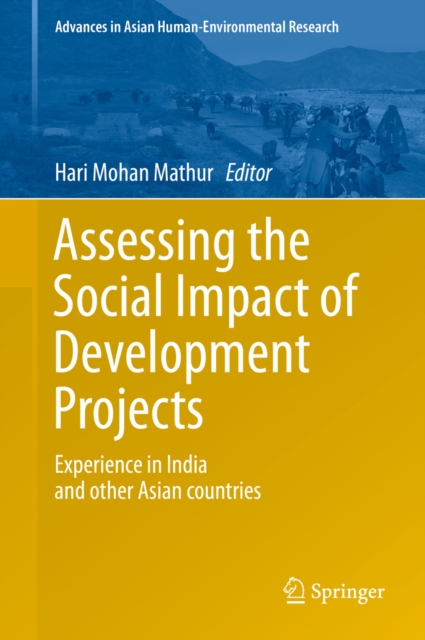
This book shows how social impact assessment (SIA), which emerged barely five decades ago, as a way to anticipate and manage potentially negative social impacts of building dams, power stations, urban infrastructure, highways, industries, mining and other development projects, is now widely in use as a planning tool, especially in developed countries.