Offering a thought provoking theoretical conversation around ecological crisis and natural resource extraction, this book suggests that we are on a trajectory geared towards total extractivism guided by the mythological Worldeater.
Governing Arctic Seas introduces the concept of ecopolitical regions, using in-depth analyses of the Bering Strait and Barents Sea Regions to demonstrate how integrating the natural sciences, social sciences and Indigenous knowledge can reveal patterns, trends and processes as the basis for informed decisionmaking.
This book explains vessels' ability to overcome ice on the Northern Sea Route, as well as the criteria of safe speed and maneuvering of vessels on ice.
The book provides a review of the most relevant topics on the booming discipline of palaeohydrology and focuses on previous extreme events like exceptional floods and droughts.
This book presents an overview and knowledgeable on water resources management in Balkan countries - Slovenia, North Macedonia, Serbia, Croatia, Greece, and Bulgaria.
This book discusses water resources management in Romania from a hydrological perspective, presenting the latest research developments and state-of-the-art knowledge that can be applied to efficiently solve a variety of problems in integrated water resources management.
This book applies system theory to analyze the operation and structure of the complex earth surface system, including the interactions between society and nature that cause environmental degradation and threats to human populations.
This book presents most recent research studies on mapping and spatial analysis of socio-economic and environmental indicators used by various national and international contributors to regional development projects.
Given the increasing uncertainty due to catastrophic climate events, terrorist attacks, and economic crises, this book addresses planning for resilience by focusing on sharing knowledge among policy-makers, urban planners, emergency teams and citizens.
This monograph explores traditional farming communities in French-speaking areas of the western Alps for the period 1500-1914 and how they endured in such an environment despite the many problems and risks which it posed for their subsistence and welfare.
This book focuses on a representative example and one of the world's largest steppe conversions, and provides a detailed overview of the results of the BMBF-funded research project KULUNDA.
These proceedings of the Smart and Sustainable Cities Conference (SSC) in Moscow from May 23 to 26, 2018 addresses important questions regarding the global trend of urbanization.
This book addresses the complex socio-political context of natural resource management in coastal and marine environments throughout the contemporary Pacific Islands and provides lessons that can be applied around the globe.
This book bringing together leading researchers in the field of renewable energy to discuss sustainability on a broad scale and to examine the status quo of renewable energy industry development in a global context.
This book presents selected papers from the EuroKarst 2018 conference, which highlighted the latest advances in the field of Karst Hydrogeology and Carbonate Reservoirs.
This book investigates the role of the National Petroleum Council (CNP) and especially of Petrobras in the construction and shaping of courses in Geosciences, as part of the historical process of the search for and exploration of oil, which began in Brazil in 1864 and ended in 1968 with the discovery of the first offshore well.
Collaboration across boundaries is widely recognized as a vital requisite for the advancement of innovative science to address problems such as environmental degradation and global change.
This book explores the potential of geoethics, as designed within the operational criteria of addressing the deeds and values of the human agent as part of the Earth system.
This book presents the polycentric and multiscale view of landscape which has been developed in Russia within a framework of physical geography since the early twentieth century.
This book explores the potential of geoethics, as designed within the operational criteria of addressing the deeds and values of the human agent as part of the Earth system.
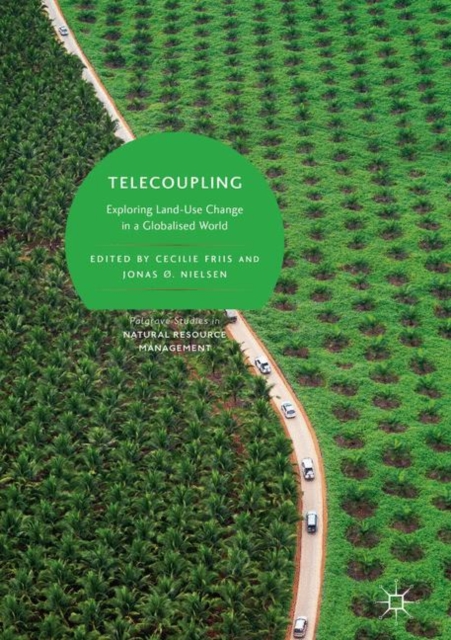
This book presents a comprehensive exploration of the emerging concept and framework of telecoupling and how it can help create a better understanding of land-use change in a globalised world.
This book takes a comprehensive look at several cases of climate change adaptation responses across various sectors and geographical areas in urban Africa and places them within a solid theoretical context.
The 50th anniversary of the Disaster Research Center of the University of Delaware provoked a discussion of the field's background, its accomplishments, and its future directions.
This book includes a selection of the best papers presented at the Jinan Forum on Geography and Ecological Sustainability held in Guangzhou, China, from 17 to 19 February 2017, as well as several invited papers.