Now in a completely updated, full-color edition, this leading textbook has been thoroughly revised to reflect the sweeping economic, social, and political changes the past decade has brought to Europe and to incorporate new research and teaching approaches in regional geography.
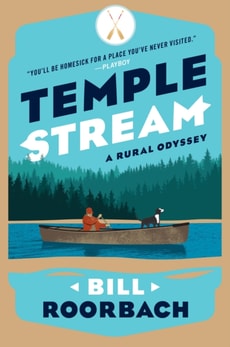
Great blue herons, yellow birches, damselflies, and beavers are among the talismans by which Bill Roorbach uncovers a natural universe along the stream that runs by his house in Farmington, Maine.
How only violence and catastrophes have consistently reduced inequality throughout world historyAre mass violence and catastrophes the only forces that can seriously decrease economic inequality?
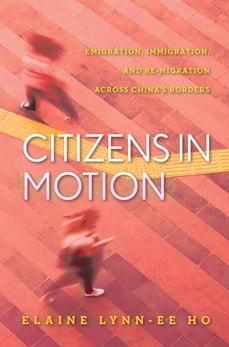
More than 35 million Chinese people live outside China, but this population is far from homogenous, and its multifaceted national affiliations require careful theorization.
The book addresses the interdisciplinary and multiscale theme of the design of sustainable, inclusive and creative urban green spaces in relation to the socio-ecological transition and in line with the systemic vision promoted by the 2030 Agenda, the 17 Sustainable Development Goals (SDGs) and the principles outlined by the New European Bauhaus (European Commission, 2021).
Thinking About GIS: Geographic Information System Planning for Managers presents a planning model for designing data and technology systems that will meet any organization's specific needs.
This timely, insightful, and data-led book fills a gap in gang scholarship by examining gangs in rural areas, specifically focusing on youth gang activity.
This book provides huge knowledge and data in the fields of geospatial sciences, earth environmental sciences, humanities, and social sciences, which target a diverse range of readers, such as academics, scientists, students, environmentalists, meteorologists, urban planners, remote sensing, and GIS experts.
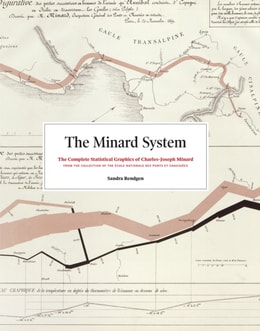
If you have any interest in information graphics, maps, or history, you know of the seminal flow map of Napoleon's 1812 march into Russia by Charles-Joseph Minard, made famous by Edward Tufte, and considered to be one of the most magnificent data graphics ever produced.
Without discrediting the expedition's success or Admiral Richard Byrd's leadership, this book makes clear for the first time that the admiral was not the saintly hero he and the press depicted.
Taking a micro-geographical approach to Israeli-Palestinian relations, this book analyses the history of space and place in West Jerusalem and Jaffa in the context of specific addresses.