Based on work by the Miombo Network in southern Africa, this book helps decision-makers and general readers alike improve their understanding of the socio-ecology of the Miombo woodlands across southern Africa.
This book provides comparative data on fish ecology and small-scale fisheries between Tapajos (clear water) and Negro (black water) rivers, in the Brazilian Amazon.
This book illustrates an alternative approach to 'state of sustainability' reporting by presenting cross-sectoral and multi-disciplinary discussions on sustainability issues in the context of a developing country, Botswana.
It is widely acknowledged that life has adapted to its environment, but the precise mechanism remains unknown since Natural Selection, Descent with Modification and Survival of the Fittest are metaphors that cannot be scientifically tested.
This book examines key concepts and analytical approaches in complexity theory as it applies to landscape ecology, including complex networks, connectivity, criticality, feedback, and self-organisation.
This book presents an overview study about plant biogeography and vegetation of the high mountains of Central and South-West Asia, by a group of specialists familiar with its area and plant growth and ecology.
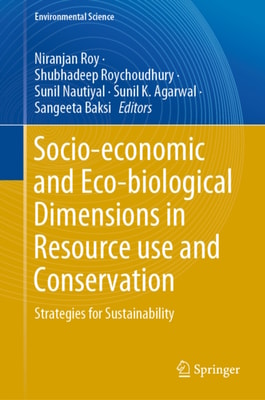
It has long been claimed that addressing biodiversity loss and other environmental problems demands a better understanding of the social dimensions of conservation; nevertheless, the active participation of indigenous peoples and local communities (IPLCs) in conservation initiatives is still a challenging and somehow controversial issue.
This book is the first to integrate biological control into a conceptual framework - ecostacking - uniting all aspects of biological control and ecosystem services.
This book presents an important discussion on urbanization and sustainable soil management from a range of perspectives, addressing key topics such as sustainable cities, soil sealing, rehabilitation of contaminated soils, property rights and liability issues, as well as trading systems with regard to land take.
It has long been claimed that addressing biodiversity loss and other environmental problems demands a better understanding of the social dimensions of conservation; nevertheless, the active participation of indigenous peoples and local communities (IPLCs) in conservation initiatives is still a challenging and somehow controversial issue.
This book aims to cover the multitude of corporate approaches towards mainstreaming biodiversity conservation and ecological management in policies and action plans, and explores the roles of these efforts in achieving national and global targets for the Sustainable Development Goals (SDGs).
The second-longest European river after the Volga, the Danube is one of the world's most important rivers in terms of its geographical and historical significance.
This book chronicles the decades-long work of studying, analyzing, and reversing the environmental pressures that threatened India's Chilika Lagoon, the largest brackish-water lagoon in the region, and the second largest in the world.
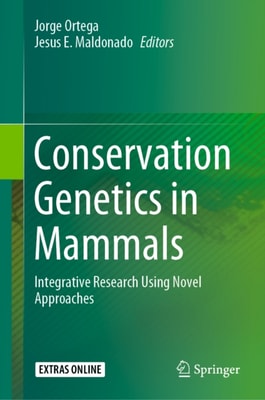
This book focuses on the use of molecular tools to study small populations of rare and endangered mammals, and presents case studies that apply an evolutionary framework to address innovative questions in the emerging field of mammalian conservation genomics using a highly diverse set of novel molecular tools.
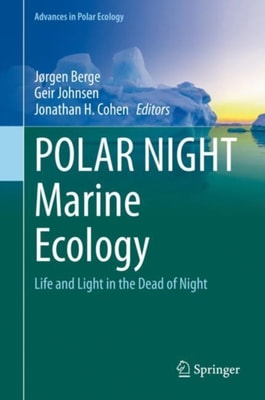
Until recently, the prevailing view of marine life at high latitudes has been that organisms enter a general resting state during the dark Polar Night and that the system only awakens with the return of the sun.
This book presents the outcomes of the 2017 national workshop and international conference organized by CEENR of ISEC, Bengaluru and Assam University Silchar.
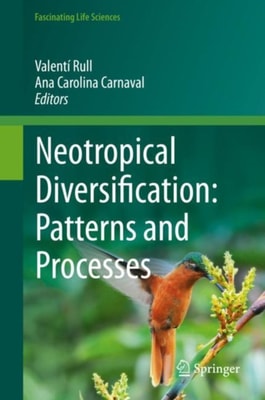
This book provides a comprehensive overview of the patterns of biodiversity in various neotropical ecosystems, as well as a discussion on their historical biogeographies and underlying diversification processes.
Plant classifications are based on morphological characters and it is difficult, particularly in small plants and grasses, to identify these below generic level on the basis of these characters using a dissecting microscope.
This book identifies all valid species belonging to the superfamily Mactroidea living in American waters, distributed across fourteen biogeographical provinces.
Based on actual data of Soviet whaling, and reliable methodologies that existed at the time when this monograph was written, it examines the distribution and migration patterns of whales of the Southern Ocean.
The vegetation addressed in this book is, biologically, one of the most diverse on Earth, with many characteristic taxa offering refuge and food sources for many resident and migratory animals.
This book critically examines the environmental hazards posed by global warming with regard to future food security, which will depend on a combination of stresses, both biotic and abiotic, imposed by climate change; variability of weather within a growing season; and the development of cultivars that are more sensitive to different ambient conditions.
Australia's varied grasslands have suffered massive losses and changes since European settlement, and those changes continue under increasingly intensive human pressures for development and agricultural production.
Evolutionary developmental biology or evo-devo is a field of biological research that compares the underlying mechanisms of developmental processes in different organisms to infer the ancestral condition of these processes and elucidate how they have evolved.