Utopianism, alongside its more prevalent dystopian opposite together with ecological study has become a magnet for interdisciplinary research and is used extensively to examine the most influential global medium of all time.
Originally published in French in 1974, radical feminist Francoise d'Eaubonne surveyed women's status around the globe and argued that the stakes of feminist struggle was not about equality but about life and death-for humans and the planet.
Sustainability Beyond 2030: Trajectories and Priorities for Our Sustainable Future is an indispensable guide to understanding our planet's sustainability past, present, and future.
Arts, Ecologies, Transitions provides in-depth insights into how aesthetic relations and current artistic practices are fundamentally ecological and intrinsically connected to the world.
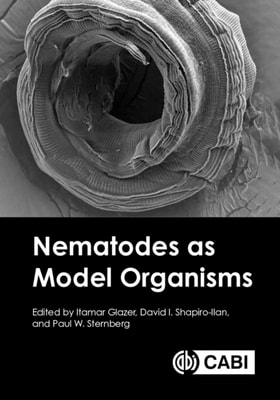
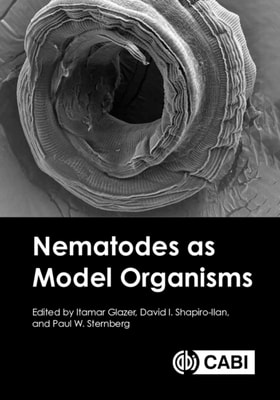
Nematodes are incontestably the most numerous and the most diverse metazoans in freshwater habitats, and these properties bestow exceptional significance to their role in the environment.
Nematodes are incontestably the most numerous and the most diverse metazoans in freshwater habitats, and these properties bestow exceptional significance to their role in the environment.
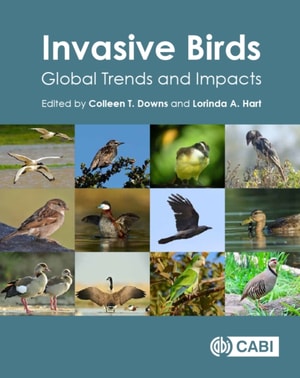
Examining globally invasive alien birds, the first part of this book provides an account of 32 global avian invasive species (as listed by the Invasive Species Specialist Group, ISSG).
Examining globally invasive alien birds, the first part of this book provides an account of 32 global avian invasive species (as listed by the Invasive Species Specialist Group, ISSG).
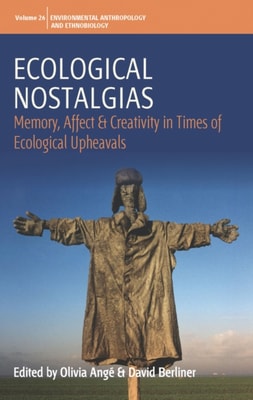
Introducing the study of econostalgias through a variety of rich ethnographic cases, this volume argues that a strictly human centered approach does not account for contemporary longings triggered by ecosystem upheavals.
Insect Conservation: A Global Synthesis is a landmark, field-defining work written by Professor Michael Samways, one of the founding fathers of this burgeoning discipline of conservation science.
Insect Conservation: A Global Synthesis is a landmark, field-defining work written by Professor Michael Samways, one of the founding fathers of this burgeoning discipline of conservation science.
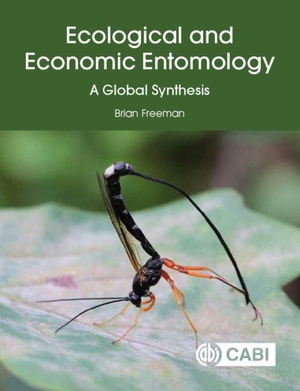
Ecological and Economic Entomology is a comprehensive advanced text covering all aspects of the role of insects in natural ecosystems and their impacts on human activity.
Ecological and Economic Entomology is a comprehensive advanced text covering all aspects of the role of insects in natural ecosystems and their impacts on human activity.
This edited volume explores the crucial intersections between Indigenous Land-Based Knowledge (ILK), sustainability, settler colonialism, and the ongoing environmental crisis.
As the global pursuit for environmental sustainability and circular water economy grows ever ambitious, this book explores recent trends, methods, and advancements in industrial wastewater treatment.
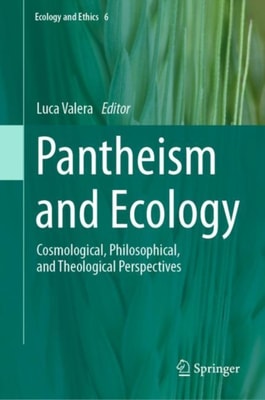
This book provides a comprehensive overview of the relationship between pantheism and ecology, particularly considering different cultural approaches and diverse religious, theological, and philosophical traditions.