Recognized and advocated as a powerful tool, the role of remote sensing in identifying, mapping, and monitoring soil salinity and salinization will continue to expand.
Exploring the implementation of participatory, multistakeholder, and transdisciplinary ecosystem health research, Integrated Assessment of Health and Sustainability of Agroecosystems combines the latest theories in complexity and management with practical tools and approaches for sustainable rural development research.
Resource Management Information Systems: Remote Sensing, GIS and Modelling, Second Edition provides you with the knowledge and skill necessary to design, build, implement, and operate spatial resource management information systems for the management of physical resources.
The explosion of public interest in the natural environment can, to a large extent, be attributed to greater public awareness of the impacts of global warming and climate change.
Since the publication of the first edition of Food, Energy, and Society, the world's natural resources have become even more diminished due to the rapid expansion of the global human population.
Sustainable Agroecosystem Management: Integrating Ecology, Economics, and Society examines the challenges for developing integrated approaches to the management of agricultural ecosystems.
Forest Certification examines the historical roots of forest certification, the factors that guide the development of protocols, the players involved, the factors determining the customers to be certified, and the benefits of certification.
Faced with the growing problems of climate change, ecosystem degradation, declining agricultural productivity, and uncertain food security, modern agricultural scientists look for potential relief in an ancient practice.
The success of the first volume of The Biology of Sea Turtles revealed a need for broad but comprehensive reviews of major recent advances in sea turtle biology.
Building on our knowledge of soil ecology under natural, undisturbed conditions, Soil Tillage in Agroecosystems focuses on how cultivation affects soil and the soil environment.
Earthworm Ecology, Second Edition updates the most comprehensive work available on earthworm ecology with extensive revisions of the original chapters.
As a review of the status of biogeography in the West Indies in the 1980s, the first edition of Biogeography of the West Indies: Past, Present, and Future provided a synthesis of our current knowledge of the systematics and distribution of major plant and animal groups in the Caribbean basin.
Successful management of agricultural landscapes depends on the recognition of the relationships between the processes and the structures that maintain the system.
Structure and Function in Agroecosystem Design and Management presents an advanced discussion of the need to design agricultural systems that 1) increase reliance on biological interactions in agroecosystems as a means of decreasing dependence on the use of large quantities of agrochemicals and the consumption of fossil fuel energy and 2) continue
Agroecologists from around the world share their experiences in the analysis and development of indicators of agricultural sustainability in Agroecosystem Sustainability: Developing Practical Strategies.
Featuring contributions from leading experts in the field, Climate Change and Managed Ecosystems examines the effects of global climate change on intensively constructed or reconstructed ecosystems, focusing on land use changes in relation to forestry, agriculture, and wetlands including peatlands.
Much of our current knowledge on biological invasion was derived from field studies, but many recent advances relied heavily on mathematics and computing, particularly mathematical modeling.
A detailed account of the biology and ecology of vascular wetland plants and their applications in wetland plant science, Wetland Plants: Biology and Ecology presents a synthesis of wetland plant studies and reviews from biology, physiology, evolution, genetics, community and population ecology, environmental science, and engineering.
With contributions from experts in various specialties, Plant-Environment Interactions discusses recent advances in cellular and molecular regulation of stress tolerance.
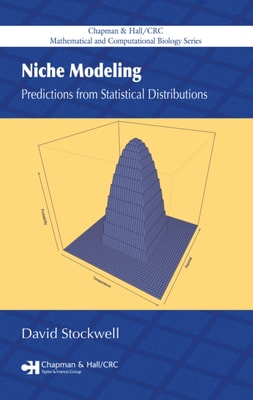
Using theory, applications, and examples of inferences, Niche Modeling: Predictions from Statistical Distributions demonstrates how to conduct and evaluate niche modeling projects in any area of application.
Completely revised and updated, Treatment Wetlands, Second Edition is still the most comprehensive resource available for planning, designing, and operating wetland treatment systems.
Following in the footsteps of the successful first edition, Functional Plant Ecology, Second Edition remains the most authoritative resource in this multidisciplinary field.
Agroecosystems in a Changing Climate considers the consequences of changes in the atmosphere and climate on the integrity, stability, and productivity of agroecosystems.
With all of the environmental and social problems confronting our food systems today, it is apparent that none of the strategies we have relied on in the pasthigher-yielding varieties, increased irrigation, inorganic fertilizers, pest damage reductioncan be counted on to come to the rescue.
Part of the worldwide biodiversity program DIVERSITAS, the Global Mountain Biodiversity Assessment (GMBA) assesses the biological richness of high-elevation biota.
Responding to a heightened awareness of the possible adverse effect of treated wood, this book presents multidisciplinary research results and fundamental information on regulations, wood treatment alternatives, and documentation of environmental releases.
The core of a multibillion dollar sport fishing industry, tarpon and bonefish, two of the earth's oldest creatures, are experiencing obvious and precipitous population decline.
Ecologists sometimes have a less-than-rigorous background in quantitative methods, yet research within this broad field is becoming increasingly mathematical.
Strongly grounded in the scientific method and evidence, The Environment: Science, Issues, and Solutions presents an organized, accessible, building block approach that introduces the principles of ecology.
A richly illustrated field guide to all of North America's major habitatspacked with invaluable information to help you get the most out of your outdoor adventuresWhether you're a birder, naturalist, outdoor enthusiast, or ecologist, knowing the surrounding habitat is essential to getting the most out of your experiences in the field.
A remarkable look at the rarest butterflies, how global changes threaten their existence, and how we can bring them back from near-extinctionMost of us have heard of such popular butterflies as the Monarch or Painted Lady.
This practical guide for primary care provides a context-specific introduction to the sustainability challenges associated with good health-care delivery and provides easy-to-implement yet impactful actions that can be taken to reduce and mitigate the impact of primary care on the living world while also looking at the impact of the changing planet on health care that people will encounter.
Fitness and adaptation are fundamental characteristics of plant and animal species, enabling them to survive in their environment and to adapt to the inevitable changes in this environment.
This book is an attempt to compile and integrate the information documented by many botanists, both Egyptians and others, about the vegetation of Egypt.