Biological Environmental Science is an introductory textbook for undergraduate students who desire a one semester course or, alternatively, a springboard course for advanced environmental offerings.
This book explores the applicability of multiple remote sensors to acquire information relevant to restoration and conservation efforts in wetlands using data collected from airborne and space multispectral/hyperspectral sensors, light detection and ranging (LiDAR), Unmanned Aircraft Systems (UAS), and a hand-held spectroradiometer.
Sustainability and the Rights of Nature in Practice is the much-needed complementary volume to Sustainability and the Rights of Nature: An Introduction (CRC Press, May 2017).
Sustainability and the Rights of Nature in Practice is the much-needed complementary volume to Sustainability and the Rights of Nature: An Introduction (CRC Press, May 2017).
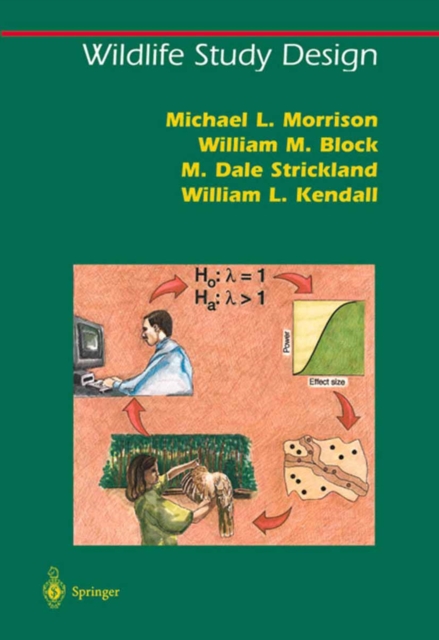
We developed the first edition of this book because we perceived a need for a compilation on study design with application to studies of the ecology, conser- tion, and management of wildlife.
Handbook of Operations Research in Natural Resources will be the first systematic handbook treatment of quantitative modeling natural resource problems, their allocated efficient use, and societal and economic impact.
The Alsea Logging and Aquatic Resources Study, commissioned by the Oregon Legislature in 1959, marked the beginning of four decades of research in the Pacific Northwest devoted to understanding the impacts of forest practices on water quality, water quantity, aquatic habitat, and aquatic organism popu- tions.
While studies of restoration and ecological succession have been published independently, there is much overlap between these approaches that has not been adequately explored.
Is it a sign of the times that last year the Nobel committee chose to award the Nobel Peace prize to Wangari Maathai for having planted 30 million trees?
Despite the number of wildlife and conservation studies that are conducted, researchers and resource managers have not had a comprehensive guide to planning new studies.
The Goodwin-Niering Center for Conservation Biology and Environmental Studies at Connecticut College is a comprehensive, interdisciplinary program that builds on one of the nation's leading undergraduate environmental studies programs.
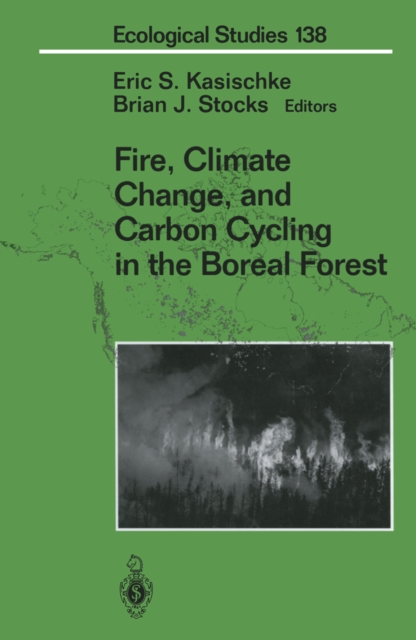
In boreal forests, which contain large amounts of the world's terrestrial organic carbon, fire is a natural and fundamental disturbance regime essential in controlling many ecosystem processes.
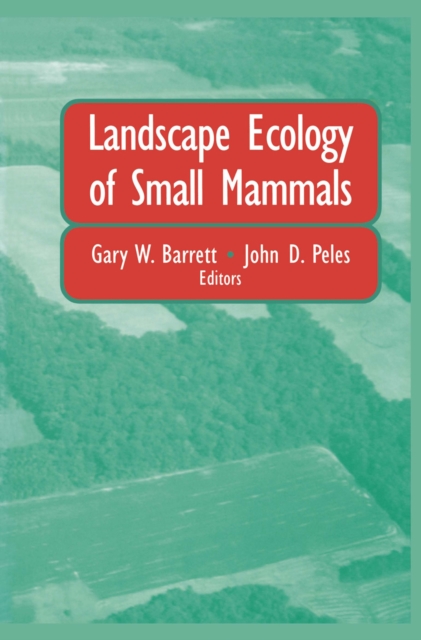
Small mammals can be regarded as excellent subjects to test suppositions about population growth migration and reproduction, and, in particular, on how the complex physical structure of the environment affects the ecology of populations and communities.
A long-awaited yet startlingly urgent new collection from ';a contemporary master'*a fierce, big-hearted eye on our last, tumultuous decade, and our fragile environment *Los Angeles Review of Books Linda Gregerson's long-awaited new collection is a tour de force, a compendium of lives touched by the radical fragility of the planet and, ultimately, the endless astonishment and paradox of being human within the larger ecosystem, ';in a world where every breath I take is luck.