Climate is the most important component of the Earth's environment and climatic fluctuations have a strong impact on water supplies, vegetation, energy use etc.
Presented here are authoritative and up-to-date assessments of the homogenous and heterogenous chemical and physical processes occuring in the troposphere and stratosphere, especially during the "e;ozone hole"e; event.
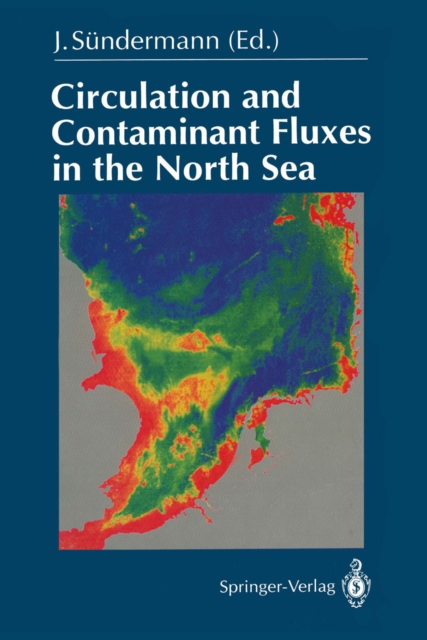
In this publication you will find a comprehensive data set of the North Sea ecosystem, including the distribution and the fate of contaminants, their transport paths and their analysis by means of numerical models.
Im interdisziplinären Dialog diskutieren Vertreter aus Theologie, Philosophie, Geographie, Pädagogik, Psychologie und Verhaltenswissenschaft beispielhaft ethische Fragestellungen zum Umgang des Menschen mit Natur und Umwelt.
Soil and water pollution have a serious impact on the environment, and soil scientists and hydrologists need fundamental help for the estimation of the consequences.
Defining ecology as a system-theory oriented synthesis ofboth earth and life sciences, the book aims at a novel co-herent understanding of chemicalimpact on the lower at-mosphere and characteristic types of terrestrial ecosystems.
This book is a natural extension of the SCOPE (Scientific Committee of Problems on the Environment) volumes on the carbon (C), nitrogen (N), phosphorus (P) and sulfur (S) biogeochemical cycles and their interactions (Likens, 1981; Bolin and Cook, 1983).
The author, experienced in industry and academia, presents a set of 15 recent review essays which identify and examine critical current issues of environmental management.
Starting with the description of meteorological variables in forest canopies and its parameter variations, a numerical three-dimentional model is developed.
Professor Hermann Remmert, führender Ökologie-Experte und Autor zahlreicher wissenschaftlicher Publikationen, gibt hier eine gut lesbare und auch für den Laien verständliche Einführung in die viel-diskutierte Thematik: Naturschutz.
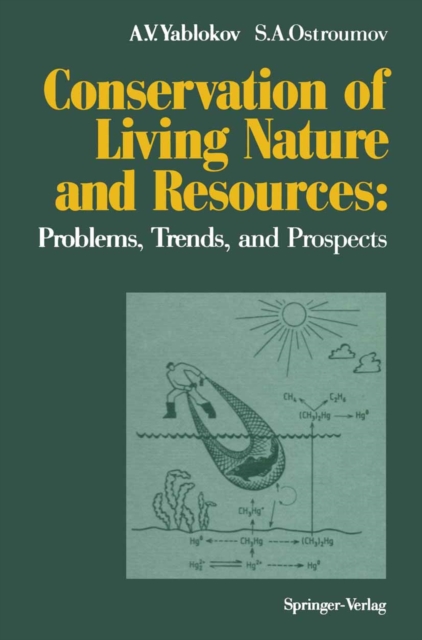
This book is based on our two books, published in the USSR and translated in a number of other countries Conservation of living nature: problems and perspectives (1983) and The levels of conservation of living nature (1985).
Ecophysiology of Desert Arthropods and Reptiles starts with a new classification of the world's deserts, based upon the type of precipitation and the effect on their faunas of arthropods and reptiles.
Exposure to polychlorinated dibenzodioxins and -furanes at very low concentrations is of particular interest with respect to possible human health risks.
On May 25,1978, the Commission on Toxicology ofthe Division of Clinical Chemistry of the International Union of Pure and Applied Chemistry (IUPAC) established its Subcommittee on Environmental and Occupational Toxicology of Cadmium following aseries of Commission meetings in Kristiansand, Norway.
Hazard assessment of a compound (xenobiotic) discharged to the aquatic environment requires data on both exposure and effects to various components of the ecosystem.
Atmospheric carbon dioxide concentration has increased globally from about 280 ppm before the Industrial Revolution (Pearman 1988) to about 353 ppm in 1990.
This volume contains a selection of papers presented to the Fourth International Symposium on Environmental Biogeochemistry (ISEB), and a conference on Biogeochemistry in Relation to Mining Industry and Environmental Pollution (Leaching Conferenc~, held in Canberra, Aust- ralia on August 26-31 and September 3-4, 1979, respectively.
The Handbook of Environmental Chemistry provides the compilation of today's knowledge of processes in the natural environment and the behavior and impact of pollutants.
An important purpose of The Handbook of Environmental Chemistry is to aid the understanding of distribution and chemical reaction processes which occur in the environment.