This book highlights recent advancements and innovations in trenchless technology via the adoption of combined micro-tunnelling and pipe-jacking techniques.
This book deals with the general principles, policy instruments, sustainability of supply chain, and business of health-care waste (HCW) management including inputs on exercise in immune health defense against COVID 19.
This book investigates the relationships between economies of scale in food consumption and a number of socio-economic and demographic characteristics of households and household behavioural choices since food is the major share of household expenditure for poor households.
This book includes selected papers from the International Conference on Recent Developments in Sustainable Infrastructure (ICRDSI-2020) and consists of themes pertaining to structural engineering and construction technology and management.
This book highlights the approaches for achieving trans-disciplinary research integration for "e;semi-arid dryland agriculture systems"e; under changing climates, while also identifying the elements of a collaborative research agenda that are needed to advance global food security.
This book Food in a Planetary Emergency is a timely overview of the current food systems and the required transformations to respond to the challenges of climate change, population pressures, biodiversity loss and use of natural resources, such as soils, water and phosphorus.
This book includes selected papers from the International Conference on Recent Developments in Sustainable Infrastructure (ICRDSI-2020) and consists of themes pertaining to geotechnical engineering, transportation engineering, environmental engineering and water resources management.
This book guides readers to the new concept of "e;Satoumi"e; and explains how its practice works to solve challenges in complex social-ecological systems of coastal areas.
Geospatial technology is a combination of state-of-the-art remote sensing and technology for geographic information systems (GIS) and global navigation satellite systems (GNSS) for the mapping and monitoring of landscapes and environment.
This book covers the research fields in biodiversity conservation, the Belt and Road eco-environmental cooperation, China's five-year plan for eco-environmental protection, sustainable development goals assessment, and human health loss assessment.
The book is the collection of the latest research results from Chinese Academy of Environmental Planning in environmental policy and reform during the past years, mainly related to ecological compensation, the emission trading, the environment audit, carbon tax, environment friendly city, environmental health, economic policy in medical waste, scattered coal treatment subsidies, environmental policy efficiency analysis, environmental industry statistics, environmental performance evaluation, green fiscal and taxation policy, etc.
This book aims to answer the question: how can the industry action international approaches to corporate sustainability, ultimately achieving sustainable development and overall sustainability?
This book summarizes the achievements and experience of the Yangtze River rehabilitation and protection, analyzes the new situation and requirements of the Yangtze River rehabilitation and protection, and discusses the main issues and their solution alternatives for the Yangtze River rehabilitation and protection efforts.
This book highlights recent advancements in such an important topic, through contribution from experts demonstrating different applications in 'day-to-day' life, both existing and newly emerging biological technologies, and thought provoking approaches from different parts of the world, potential future prospects associated with some frontier development in non-conventional energy sources.
This book highlights recent advancements in such an important topic, through contribution from experts demonstrating different applications in 'day-to-day' life, both existing and newly emerging non-biological technologies, and thought provoking approaches from different parts of the world, potential future prospects associated with some frontier development in non-conventional energy sources.
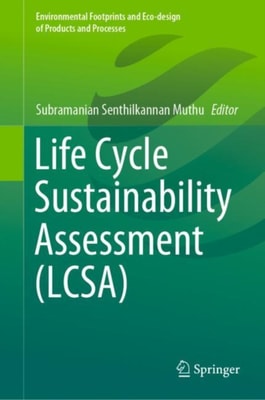
Environmental Life Cycle Assessment (ELCA) that was developed about three decades ago demands a broadening of its scope to include lifecycle costing and social aspects of life cycle assessment as well, drawing on the three-pillar or 'triple bottom line' model of sustainability, which is the result of the development of the Life Cycle Sustainability Assessment (LCSA).
This book focuses on the behavioral interactions among possible stakeholders in carbon labeling practice, brings the attentions of stakeholders' interests to explore the opportunities, and challenges related to carbon labeling practice, thus to provide insight into low-carbon consumption and production.
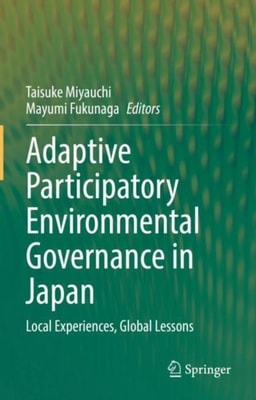
This book contributes to the theoretical and practitioner literature in environmental governance and sustainability of natural resources by linking case studies of the roles of narratives to the three key practices in local environmental governance: socio-political legitimacy in participation; collaboratively creating stakeholder-ness, and cultivating social and ecological capabilities.
This book highlights the Eco-design or Sustainable design in textiles and fashion, aimed at reducing their environmental impact throughout their life cycle.
Global population by 2050 is predicted to be over 9 billion and accordingly, the production systems will demolish about 140 billion tons per year of minerals, ores, fossil fuels and biomass, i.
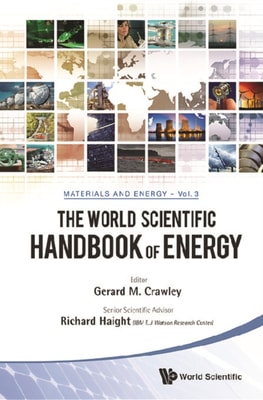
Competition for energy resources worldwide will almost certainly increase because of population growth and economic expansion, especially in countries such as China and India, with large populations.
This book highlights the sustainable aspects of fashion and textiles in Latin America and discusses how the manufacturing and consumption of textile products and fashion are significant sources of environmental damage.
This book presents the advantages of the circular economy as a powerful - and inevitable - model for tackling the current challenges against shrinking resources and establishing the resource efficient economy.
The book is about climate resilience and environmental sustainability approaches, discussing knowledge at global level and the local challenges, presented by authors from various countries.
Water, Energy and Food are the very basic necessities of human life and all the three of them are interconnected with each other, this connection being called the Water-Energy-Food nexus.
This book provides policymakers, researchers, and other interested audiences with knowledge on how to quantify and integrate and advance co-benefits in their decisions.