The chapters in this volume are edited versions of papers presented at the NATO Ad- vanced Research Workshop on Environmental Change Adaptation and Security held in Budapest, Hungary, from October 16 - 18, 1997.
of ecological (also biological) variables b which interact in their dynamic t evolution: det dbt dt = f (et, bt)' dt = 9 (et, bt)* Among the solution paths to this interaction between economic and ecologi- cal variables, we look for those which are sustainable.
Human health as well as aquatic and terrestrial ecosystems are threatened from increa- sing levels of environmental radiation of various sources, many of them of anthropoge- nic causality: large areas of the former Soviet Union suffer from radioactive pollution, in particular after the Chemobyl accident; the increase in the incidence of UVB radiati- on at the Earth's surface as a result of a progressive depletion of stratospheric ozone is a global problem that requires international concerted actions; in areas of former uranium mining the natural radiation level is substantially increased due to elevated radon levels; a growing portion of the population involved in air traffic is exposed to increased levels of natural radiation; and with the International Space Station an increasing number of astronauts will be exposed to the complex field of cosmic radiation.
Separation technologies are of crucial importance to the goal of significantly reducing the volume of high-level nuclear waste, thereby reducing the long-term health risks to mankind.
This book takes a long-term view of environmental policy in Poland, which thus serves as an example to increase our understanding of environmental policy making in general in the former Eastern bloc countries.
A comprehensive source book for anybody interested in the potential of remote sensing and GIS technology for the Eastern Europe countries in transition, and less developed countries in general.
The monitoring of point sources by the Environmental Protection Agency (EPA), the states, and the tribes has documented and helped reduce the levels of chemical stressors affecting our ecosystems.
When the Protocol on Environmental Protection to the Antarctic Treaty entered into force on 14 January 1998, a new phase commenced for the Antarctic Treaty System.
The rapidly growing human population has increased the dependence on fossil fuel based agrochemicals such as fertilizers and pesticides to produce the required agricultural and forestry products.
These proceedings of a NATO Advanced Research Workshop on "e;Environmental Reconstruction in Headwater Areas"e; provide a landmark in the evolution of a distinctive movement, perhaps an emerging new philosophy, within the practice of headwater management.
It is only with the ending of the Cold War that the issue of environmental hazards at many former nuclear testing sites around the world has attracted international scientific interest.
In my office I am encased in bookshelves which hold an accumulation of literature on ecology that represents the papers and books over the last 50 years.
Agriculture is a crucial component of the economies of many of the countries in transition from a centrally-planned to a market economy and the sector is by no means immune to the environmental and socioeconomic problems confronting the countries as a whole.
Flexible Incentives for the Adoption of Environmental Technologies in Agriculture identifies and structures more flexible economic incentives for the achievement of environmental goals in agriculture.
This volume is based on the presentations and deliberations of an Advanced Research Workshop (ARW) "e;Caspian Sea: A Quest for Environmental Security"e; that was held on March 15-19, 1999, in Venice (Italy).
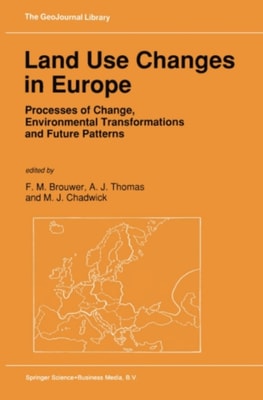
The patterns of land use that have evolved in Europe reflect the boundaries set by the natural environment and socio-economic responses to the needs of the population.
This book is the result of more than a decade's preoccupation with the issue of compliance in the Barents Sea fisheries, first as an interpreter in the Norwegian Coast Guard, then as a graduate student at the University of Troms0, and finally, as a PhD student at the University of Oslo and a research fellow at the FridtjofNansen Institute (FNI).
In 1984, a conference called Wildlife 2000: Modeling habitat relationships of terrestrial vertebrates, was held at Stanford Sierra Camp at Fallen Leaf Lake in the Sierra Nevada Mountains of California.
Most of the attention with respect to the increase in atmospheric greenhouse gas concentrations centers around three issues: human-generated sources of carbon, mostly from burning fossil fuels; tropical deforestation, which accelerates the production of atmospheric carbon while causting havoc with biodiversity and the economic development of tropical countries; and the temperature increase that may accompany increased atmospheric greenhouse gas concentrations.
The structure and functioning of eutrophicated aquatic ecosystems has received considerable attention from limnologists as well as water managers in recent years.
The use of tritium as a basic fuel material in a thermonuclear fusion reactor raises particular safety issues due to the combined effects of its physico- chemical properties and radioactive nature.
than 6,000 hectares of arable land turn The second half of the twentieth century will pass into history as an epoch that saw great irreversibly into desert (Tolba, 1992).
The three parts of this volume - Technical Refinement; Technical Innovation; and Project Management and Risk Minimisation - reflect the areas of opportunity for improved cost effective techniques for exploration and production of oil and gas in the North Sea and worldwide.