Le changement climatique devrait augmenter la probabilit et l'ampleur des risques climatiques extrmes, notamment les scheresses et les inondations, auxquels le secteur agricole est tout particulirement expos.
Il nous faut relever le dfi du dveloppement d'un systme alimentaire mondial capable de nourrir une population croissante et plus aise tout en prservant les cosystmes sensibles ; d'entrer en concurrence pour l'accs aux ressource naturelles limites ; d'augmenter la croissance de la productivit agricole tout en attnuant le changement climatique et en s'y adaptant ainsi qu'aux autres dangers ; et de contribuer au bien-tre dans les zones rurales.
Ce rapport examine les pratiques de gestion des exploitations propices a la croissance verte, aussi bien les innovations menees par les agriculteurs (comme celles qui sont liees aux sols et a l'eau, la lutte integree contre les ennemis des cultures, l'agriculture biologique) que les technologies axees sur la science (comme les biotechnologies et l'agriculture de precision).
Cette publication annuelle est une source d'information concernant le dveloppement des politiques agricoles et du soutien l'agriculture dans les pays de l'OCDE et dans certaines conomies mergentes en utilisant la mthodologie de l'Estimation du soutien aux producteurs de l'OCDE.
Le rapport des Perspectives agricoles de l'OCDE et de la FAO 2016-2025 prsente une analyse des marchs nationaux, rgionaux et mondiaux de produits agricolesde 41 pays et 12 rgions, dont les pays membres de l'OCDE (l'Union europenne est reprsente comme une rgion) et d'importants producteurs agricoles, tels que l'Inde, la Chine, le Brsil, la Fdration de Russie et l'Argentine.
Cette publication annuelle est une source d'information concernant le dveloppement des politiques agricoles et du soutien l'agriculture dans les pays de l'OCDE et dans certaines conomies mergentes en utilisant la mthodologie de l'Estimation du soutien aux producteurs de l'OCDE.
Cette publication contient des statistiques sur les pecheries dans les pays de l'OCDE (a l'exception de l'Autriche) et dans quelques economies non-membres (Argentine, Republique populaire de Chine, Colombie, Indonesie, Lettonie, Lituanie, Perou, Federation de Russie, Afrique du Sud, Taipei chinois, Thailande) de 2007 a 2014.
This publication examines the critical issues surrounding water security (water shortage, water excess, inadequate water quality, the resilience of freshwater systems), providing a rationale for a risk-based approach and the management of trade-offs between water and other (sectoral and environmental) policies.
To address many of the environmental challenges that face us today, including climate change, countries are striving to deploy efficient and effective tools for environmental management at the national level.
This book is the first comprehensive study to review and take stock in OECD countries of progress in developing indicators to measure the environmental performance of agriculture.
This book presents a method to develop financing strategies for investment-heavy environmental infrastructure, such as urban water supply, wastewater collection and treatment, and municipal solid waste.
While Poland has undergone major change in the last decade, in this 2004 review of Poland's economy, OECD finds that much needs to be done to facilitate convergence with the rest of Europe.
This book covers the broader application of environmental biotechnology for protecting the environment through different bioremediation and biodegradation techniques framed toward removing environmental contaminants, including emerging contaminants.
This important and insightful book provides, for the first time, a broad presentation of ongoing research into public participation in landscape conservation, management and planning, following the 2000 European Landscape Convention which came into force in 2004.
Flood catastrophes which happened world-wide have shown that it is not sufficient to characterize the hazard caused by the natural phenomenon "e;flood"e; with the well-known 3M-approach (measuring, mapping and modelling).
The book is the only technical volume that explains how equivalency analysis methods mentioned in Annex II of the European Environmental Liability Directive should be implemented.
This standard work on contaminated site management covers the whole chain of steps involved in dealing with contaminated sites, from site investigation to remediation.
Playing a critical role in both influencing climate change and mitigating its impacts, the world's diverse wetlands have become one of the world's most threatened ecosystems as unsustainable land-use practices coupled with irrational use of water have already resulted in large-scale wetlands loss and degradation.
Geotechnologies and the Environment: Environmental Applications and Mana- ment presents an engaging and diverse array of physically-oriented GIScience applications that have been organized using four broad themes.
At the landmark 1992 United Nations Conference on Environment and Development (Earth Summit), solemn resolutions were made both to protect the world's biodiversity and to co-operate on managing natural forests in a sustainable and ecologically responsible way.
The Wetland Book is a comprehensive resource aimed at supporting the trans- and multidisciplinary research and practice which is inherent to this field.
In Arctic Canada, Hudson Bay is a site of great exploration history, aboriginal culture, and a vast marine wilderness supporting large populations of marine mammals and birds.
Addressing the links between science and the real world with a sound scientific baseline, Coastal Water Bodies targets researchers of various disciplines whose interest lies in the integrated sustainable management of coastal water bodies.
Beyond the Biophysical provides a broad overview of agriculture and natural resource management (NRM) scholarship and practice that lies beyond the biophysical, emphasizing instead epistemological, cultural, and political foundations of NRM.
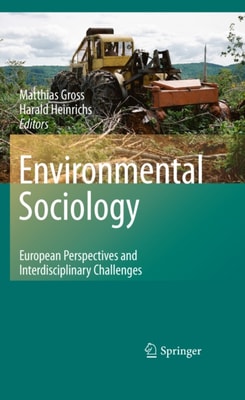
Despite being a relatively young sub-discipline, European environmental sociology has changed considerably in the last decades towards more interdisciplinary collaborations and problem solving.
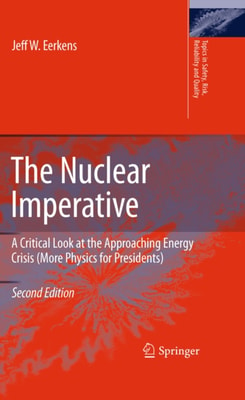
In this well documented global wake-up call, nuclear physicist Jeff Eerkens explores remedies for the impending energy crisis, when oil and natural gas are depleted.
Deserts are unique ecosystems with their own biotic and abiotic components, and are often rich in renewable natural resources, the appropriate management of which can contribute significantly to the sustainable management of desert regions for the welfare of the people.
This volume is the result of years of commitment with world-wide sanitation challenges from various research networks linking the editors and authors of this volume to many other sanitation scholars and professionals.
This book presents a comprehensive compilation of registration requirements necessary for authorisation of biological control agents (viruses, bacteria, fungi, active substances of natural origin and semiochemicals) in OECD countries.
As government and community leaders, private companies, citizens, and applied scientists search for low-cost methods to cleanup environmental pollution, phytotechnologies can contribute to the solution by utilizing natural processes to reduce environmental risk.
Facilitating Sustainable Innovation through Collaboration, takes an unusually international perspective of sustainable innovation with contributions from Australia, Europe, and North America.