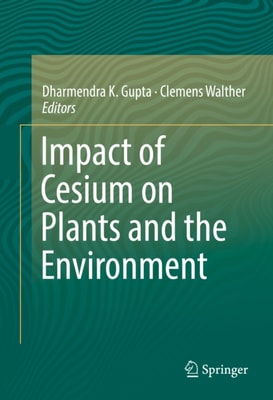
This book provides extensive and comprehensive knowledge to the researchers/academics who are working in the field of cesium contaminated sites, and the impact on plants.
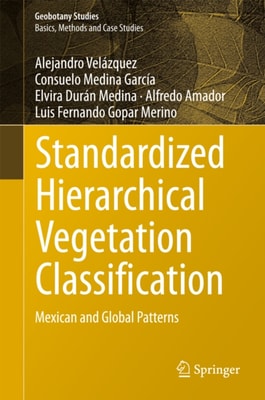
This book outlines the transitions between cultured and natural land cover/vegetation types and their implications in the search for alternatives to reverse the trend of anthropogenic environmental degradation.
This book highlights the multi-faceted nature of corporate social responsibility and the need for greater engagement across academia to help develop the mechanisms needed to encourage socially responsible approaches across the board.
This book presents a comprehensive overview and analysis of mangrove ecological processes, structure, and function at the local, biogeographic, and global scales and how these properties interact to provide key ecosystem services to society.
Reviews of Environmental Contamination and Toxicology attempts to provide concise, critical reviews of timely advances, philosophy and significant areas of accomplished or needed endeavor in the total field of xenobiotics, in any segment of the environment, as well as toxicological implications.
This book presents an extensive review of the context and an analysis of the market for clean energy technologies, with batteries as the primary case study.
The goal of this book is to explore disaster risk reduction (DRR), migration, climate change adaptation (CCA) and sustainable development linkages from a number of different geographical, social and natural science angles.
This book deals with past legacies and emerging challenges associated with agriculture production, water and environmental management, and local and national development.
This volume offers a new perspective to debates on local food and urban sustainability presenting the long silenced voices of the small-scale farmers from the productive green fringe of Sydney's sprawling urban jungle.
This book is a comprehensive volume dealing with climate change impacts on agriculture, and which can help guide the redesign of agricultural management and cropping systems.
This book explores humanity's relationship with the natural world throughout evolutionary history, and the need to reorient this onto a symbiotic basis.
Landscapes have been fundamentalto the human experience world-wide and throughout time, yet how did we as humanbeings evolve or co-evolve with our landscapes?
This book sheds new light on the causes and consequences of elephant migration in the Panchet Forest Division of Bankura District in West Bengal, India- an area characterized by fragmented forested landscape modified by agriculture and settlement expansion.
Reviews of Environmental Contamination and Toxicology attempts to provide concise, critical reviews of timely advances, philosophy and significant areas of accomplished or needed endeavor in the total field of xenobiotics, in any segment of the environment, as well as toxicological implications.
This edited volume summarizes information about the situational context, threats, problems, challenges and solutions for sustainable pastoralism at a global scale.
This book provides results of spatial and temporal distributions of water quality parameters and marine primary production and its relationship with the driving atmospheric, ocean circulation and hydrobiological mechanisms established through a synergistic use of multi-spectral region spaceborne data and results of numerical model simulations of marine in-water and atmospheric processes related to the marine ecosystem.
This two-volume set discusses recent approaches and technological innovations for sustainable agriculture in smallholder farming systems impacted by climate change.
This book is about the process of water management decentralization in African countries, which is seen as a means of advancing river basin management at the lowest appropriate level.
Central to this edited volume is the proposition that the mountainous border region of Southeastern Europe needs to become a special target of European Union scale, regional development policy-making.
This book explores whether and how a reinterpretation of Sub-Saharan cities, through the concept of adaptive capacity, could bridge this distance and contribute to a new understanding of the contemporary city.
This book is a part of the Sabkha Ecosystems series which was designed to provide information on sabkha ecosystems of different regions and to add to the collective knowledge available about saline ecosystems.
This volume is the first of its kind to presentcontemporary, state-of-the-art examples of how social science theories, models,and findings can advance all aspects of campus sustainability, an area that hasso far been largely neglected.
This book discusses the role of ESD stakeholders at university level, involving civil society and the private sector and public sectors (including local, national and intergovernmental bodies).
This book presents new concepts as well as practical applications and experiences in the field of information technology for environmental engineering.
This volume brings together, in a central text, chapters written by leading scholars working at the intersection of modeling, the natural and social sciences, and public participation.
This book addresses critical questions and analyses key issues regarding Indigenous/Aboriginal Peoples and governance of land and protected areas in the Arctic.
Wetlands are among the world's most valuable and most threatened habitats, and in these crucially important ecosystems, the invertebrate fauna holds a focal position.
Invasions by exotic grasses, particularly annuals, rank among the most extensive and intensive ways that humans are contributing to the transformation of the earth's surface.
In view of the increasing quest for environmental management in businesses, this book provides a good reference to firms to understand how they may manage their supply chains to improve business and environmental performance.
Reviews of Environmental Contamination and Toxicology attempts to provide concise, critical reviews of timely advances, philosophy and significant areas of accomplished or needed endeavor in the total field of xenobiotics, in any segment of the environment, as well as toxicological implications.
This book presents the latest findings and ongoing research in the field of green information systems and green information and communication technology (ICT).
This book critically discusses different aspects of algal production systems and several of the drawbacks related to microalgal biomass production, namely, low biomass yield, and energy-consuming harvesting, dewatering, drying and extraction processes.
This book explores the fundamental determinants of long term changes in agricultural land use and the associated implications for environmental and food security.