Formed in 1995 by EPA, several other federal and state agencies, and several private organizations, the National Advisory Committee on Acute Exposure Guideline Levels for Hazardous Substances (referred to as the NAC) develops, reviews, and approves acute exposure guideline levels (AEGLs) for up to 400 extremely hazardous substances (EHSs).
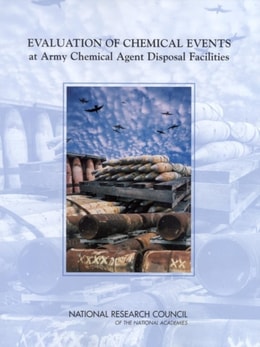
Chemical warfare materiel (CWM) is a collection of diverse items that were used during 60 years of efforts by the United States to develop a capability for conducting chemical warfare.
In keeping with a congressional mandate (Public Law 104-484) and the Chemical Weapons Convention, the United States is currently destroying its chemical weapons stockpile.
Industrial stormwater is derived from precipitation and/or runoff that comes in contact with industrial manufacturing, processing, storage, or material overburden and then runs offsite and enters drainage systems or receiving waters.
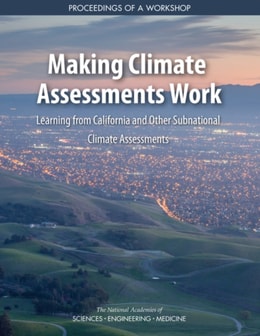
Climate assessment activities are increasingly driven by subnational organizationscity, county, and state governments; utilities and private companies; and stakeholder groups and engaged publicstrying to better serve their constituents, customers, and members by understanding and preparing for how climate change will impact them locally.
Exposures at low doses of radiation, generally taken to mean doses below 100 millisieverts, are of primary interest for setting standards for protecting individuals against the adverse effects of ionizing radiation.
The social cost of carbon (SC-CO2) is an economic metric intended to provide a comprehensive estimate of the net damages - that is, the monetized value of the net impacts, both negative and positive - from the global climate change that results from a small (1-metric ton) increase in carbon-dioxide (CO2) emissions.
Over the last decade, several large-scale United States and international programs have been initiated to incorporate advances in molecular and cellular biology, -omics technologies, analytical methods, bioinformatics, and computational tools and methods into the field of toxicology.
Radioactive Sources: Applications and Alternative Technologies assesses the status of medical, research, sterilization, and other commercial applications of radioactive sources and alternative (nonradioisotopic) technologies in the United States and internationally.
In 1999 the National Academies of Sciences, Engineering, and Medicine released a landmark report, Our Common Journey: A Transition toward Sustainability, which attempted to "e;reinvigorate the essential strategic connections between scientific research, technological development, and societies' efforts to achieve environmentally sustainable improvements in human well-being.
The Environmental Protection Agency (EPA) applies scientific results that have been provided by various parts of its own organization and by external organizations.
The Integrated Risk Information System (IRIS) is a program within the US Environmental Protection Agency (EPA) that is responsible for developing toxicologic assessments of environmental contaminants.
Potential health effects from chemicals that disrupt endocrine function pose an environmental health concern because of their ability to interfere with normal hormone function in human and wildlife populations.
The US Environmental Protection Agency (EPA) Integrated Risk Information System (IRIS) program develops toxicologic assessments of environmental contaminants.
The border region shared by the United States and Mexico is currently experiencing multiple crises on both sides that present challenges to safeguarding the region's sustainable natural resources and to ensuring the livelihoods of its residents.
As the Gulf of Mexico recovers from the Deepwater Horizon oil spill, natural resource managers face the challenge of understanding the impacts of the spill and setting priorities for restoration work.
The Hanford Nuclear Reservation, where about two-thirds of the nation's weapons plutonium was produced from 1944 to 1987, is the site of the largest and most complex nuclear cleanup challenge in the United States.
More than a decade after the Deepwater Horizon disaster, the Gulf Research Program convened a diverse group of 60 experts in a virtual event to inform its efforts to enhance resilience to future offshore oil disasters in the Gulf of Mexico region.
The US Global Change Research Program (USGCRP) is a collection of 13 Federal entities charged by law to assist the United States and the world to understand, assess, predict, and respond to human-induced and natural processes of global change.
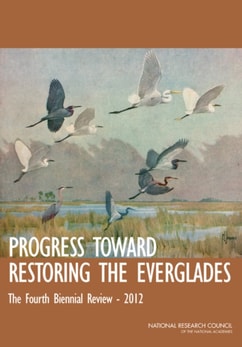
Twelve years into the Comprehensive Everglades Restoration Project, little progress has been made in restoring the core of the remaining Everglades ecosystem; instead, most project construction so far has occurred along its periphery.
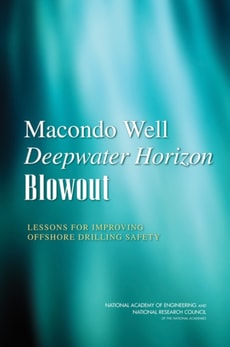
The blowout of the Macondo well on April 20, 2010, led to enormous consequences for the individuals involved in the drilling operations, and for their families.
Sustainability is based on a simple and long-recognized factual premise: Everything that humans require for their survival and well-being depends, directly or indirectly, on the natural environment.
Formed in 1995 by EPA, several other federal and state agencies, and several private organizations, the National Advisory Committee on Acute Exposure Guideline Levels for Hazardous Substances (referred to as the NAC) develops, reviews, and approves acute exposure guideline levels (AEGLs) for up to 400 extremely hazardous substances (EHSs).
This book is the sixth volume in the series Acute Exposure Guideline Levels for Selected Airborne Chemicals, and includes AEGLs for chemicals such as ammonia, nickel carbonyl and phosphine, among others.
Chemical warfare materiel (CWM) is a collection of diverse items that were used during 60 years of efforts by the United States to develop a capability for conducting chemical warfare.
In the effort to reduce the scientific and technical uncertainties over regulation of airborne particulate matter in the United States, Research Priorities for Airborne Particulate Matter: II.
Since the 1970s, concerns about health hazards associated with electric and magnetic fields from power lines and from workplace, school, and household use of electricity have led to many studies and continued controversy about whether adverse health effects occur.