What Will Work makes a rigorous and compelling case that energy efficiencies and renewable energy-and not nuclear fission or "e;clean coal"e;-are the most effective, cheapest, and equitable solutions to the pressing problem of climate change.
Despite three decades of scientists' warnings and environmentalists' best efforts, the political will and public engagement necessary to fuel robust action on global climate change remain in short supply.
Robert Wuthnow has been praised as one of "e;the country's best social scientists"e; by columnist David Brooks, who hails his writing as "e;tremendously valuable.
This intriguing volume provides a thorough examination of the historical roots of global climate change as a field of inquiry, from the Enlightenment to the late twentieth century.
This book explores the connections between two of the most transformative processes of the twenty-first century, namely climate change and globalization.
Adapting to a Changing Environment provides tools and a theoretical framework for governments and managers to understand and confront the consequences of climate change.
The first World Climate Conference, which was sponsored by the World Meteorological Organization in Geneve in 1979, triggered an international dialogue on global warming.
Focusing on climate-induced migration from Africa to Europe, Climate Change and Migration shows how global warming's impact on international relations has been significant, enhancing the security regimes in not only the advanced economies of the North Atlantic, but in the states that serve as transit points between the most advanced and most desperate nations.
What Will Work makes a rigorous and compelling case that energy efficiencies and renewable energy-and not nuclear fission or "e;clean coal"e;-are the most effective, cheapest, and equitable solutions to the pressing problem of climate change.
Robert Wuthnow has been praised as one of "e;the country's best social scientists"e; by columnist David Brooks, who hails his writing as "e;tremendously valuable.
Today there are over a billion vehicles in the world, and within twenty years, the number will double, largely a consequence of China's and India's explosive growth.
This book explores the connections between two of the most transformative processes of the twenty-first century, namely climate change and globalization.
Though not traditionally thought of as strategic natural resources, glaciers are a crucial part of our global ecosystem playing a fundamental role in the sustaining of life around the world.
Though not traditionally thought of as strategic natural resources, glaciers are a crucial part of our global ecosystem playing a fundamental role in the sustaining of life around the world.
This intriguing volume provides a thorough examination of the historical roots of global climate change as a field of inquiry, from the Enlightenment to the late twentieth century.
As major environmental crises loom, Christina Ergas makes the argument in Surviving Collapse that one possible way forward is a radical sustainable development that turns the focus from monetary gain to social and ecological regeneration and transformation.
As major environmental crises loom, Christina Ergas makes the argument in Surviving Collapse that one possible way forward is a radical sustainable development that turns the focus from monetary gain to social and ecological regeneration and transformation.
To deal with the climate crisis we need a new paradigm of technological and social development aimed at the restoration of ecological systems--the bio-digital energy paradigm--and China is the world power best positioned to lead this change.
To deal with the climate crisis we need a new paradigm of technological and social development aimed at the restoration of ecological systems--the bio-digital energy paradigm--and China is the world power best positioned to lead this change.
This book brings together a team of renowned social scientists to ask not why climate change is happening, but how we might learn from its human dimensions to raise public and political will to fight against the climate crisis.
A bold, visionary, and mind-bending exploration of how the geometry of chaos can explain our uncertain world-from weather and pandemics to quantum physics and free will Covering a breathtaking range of topics from climate change to the foundations of quantum physics, from economic modelling to conflict prediction, from free will to consciousness and spirituality The Primacy of Doubt takes us on a unique journey through the science of uncertainty.
A bold, visionary, and mind-bending exploration of how the geometry of chaos can explain our uncertain world-from weather and pandemics to quantum physics and free will Covering a breathtaking range of topics from climate change to the foundations of quantum physics, from economic modelling to conflict prediction, from free will to consciousness and spirituality The Primacy of Doubt takes us on a unique journey through the science of uncertainty.
Very Short Introductions: Brilliant, Sharp, Inspiring In the last few years global awareness of climate change has grown very rapidly - through the school strikes led by Greta Thunberg, groups like Extinction Rebellion, the IPCC's recent high impact reports, tv documentaries, and declarations from governments around the world that we are in a climate emergency.
Very Short Introductions: Brilliant, Sharp, Inspiring In the last few years global awareness of climate change has grown very rapidly - through the school strikes led by Greta Thunberg, groups like Extinction Rebellion, the IPCC's recent high impact reports, tv documentaries, and declarations from governments around the world that we are in a climate emergency.
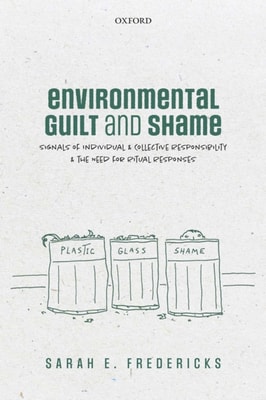
Bloggers confessing that they waste food, non-governmental organizations naming corporations selling unsustainably harvested seafood, and veterans apologizing to Native Americans at the Standing Rock Sioux Reservation for environmental and social devastation caused by the United States government all signal the existence of action-oriented guilt and identity-oriented shame about participation in environmental degradation.