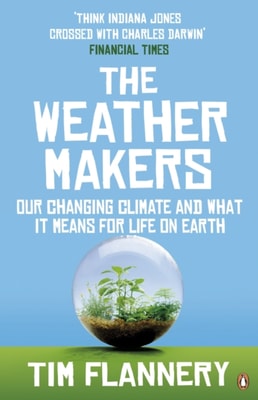
The Weather Makers tells the dramatic story of the earth's climate, of how it has changed, how we have come to understand it, and of what that means for the future.
How the utopian tradition offers answers to today's environmental crisesIn the face of Earth's environmental breakdown, it is clear that technological innovation alone won't save our planet.
Tim Flannery s international bestseller The Weather Makers has sold over a million copies and influenced politicians, movie stars, even business leaders - after reading it, Sir Richard Branson pledged more than 3 billion dollars towards developing sustainable energy sources.
From Nobel Prize winner Syukuro Manabe and Anthony Broccoli, a definitive account of how we have come to understand the fundamental processes behind global warmingSyukuro Manabe is perhaps the leading pioneer of modern climate modeling.
This book contains the first comprehensive history using extensive primary sources to trace the 1977 earthquake disaster response by the Ceausescu communist regime, contextualizing its contribution to the public risk that remains in Romania's capital Bucharest.
The current climate crisis and the rapid transformation of the natural environments will inevitably pose a threat to human settlements around the world.
Indigenous Water and Drought Management in a Changing World presents a series of global case studies that examine how different Indigenous groups are dealing with various water management challenges and finding creative and culturally specific ways of developing solutions to these challenges.
Reaching Net Zero: What It Takes to Solve the Global Climate Crisis addresses the imminent need to fully understand the causes, effects, and evidence of global warming; due to the large amount of climate disinformation and complexity of much of the available valid science, this book addresses the science of global warming in a concise, readable manner while providing an in-depth reference for readers who want more details or to study the sources of information.
Understanding Present and Past Arctic Environments: An Integrated Approach from Climate Change Perspectives provides a fully comprehensive overview of the past, present and future outlook for this incredibly diverse and important region.
Threats to the Arctic discusses all the current threats to this fragile region, emphasizing the interconnections between many environmental impacts, as well as the teleconnections between events already emerging in the Arctic (ocean circulation changes, melting of sea ice, glaciers and ice sheets) and other parts of the world.
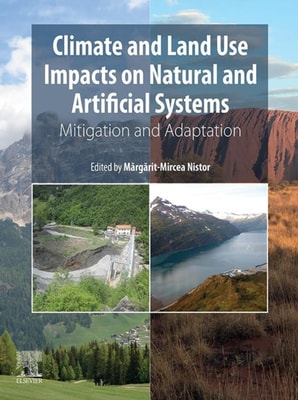
Climate and Land Use Impacts on Natural and Artificial Systems: Mitigation and Adaptation provides in-depth information on the linkages between climate change and land use, how they are related, how land use is shifting over time, and the major global regions at risk for climate and land use changes.
Indian Summer Monsoon Variability: El Nino-Teleconnections and Beyond presents the improved understanding of Indian Monsoon teleconnections (ENSO and Non-ENSO), new advances, and preferred future steps.
Solving the global climate crisis through local partnerships and experimentationGlobal climate diplomacy-from the Kyoto Protocol to the Paris Agreement-is not working.
The resilience of food systems and security to emerging challenges and threats, especially in the context of environmental and climate risks and global pandemics such as the Covid-19 crisis, is currently gaining growing importance in research, policy, and practice.
While civil society and social movements claim for more effective measures to cope with anthropogenic climate change, legal scholars are witnessing the "e;aurora"e; of climate change law.
How technological advances and colonial fears inspired utopian geoengineering projects during the late nineteenth and early twentieth centuries From the 1870s to the mid-twentieth century, European explorers, climatologists, colonial officials, and planners were avidly interested in large-scale projects that might actively alter the climate.
Indigenous Water and Drought Management in a Changing World presents a series of global case studies that examine how different Indigenous groups are dealing with various water management challenges and finding creative and culturally specific ways of developing solutions to these challenges.
Ecosystems of Resilience Practices: Contributions for Sustainability and Climate Change Adaptation focuses on resilience in action by exploring and providing approaches, perspectives, toolboxes, and theoretical discourses for the improvement and enhancement of territorial and community resilience practices towards sustainability and climate change mitigation/adaptation.
Ecosystems of Resilience Practices: Contributions for Sustainability and Climate Change Adaptation focuses on resilience in action by exploring and providing approaches, perspectives, toolboxes, and theoretical discourses for the improvement and enhancement of territorial and community resilience practices towards sustainability and climate change mitigation/adaptation.
Global Navigation Satellite System (GNSS) monitoring of the atmosphere is an interdisciplinary topic: a collaboration between geodetic and atmospheric communities.
Heat Exposure and Human Health in the Context of Climate Change introduces the effects of heat on human health, especially in the context of climate change.
Enhancing Disaster Preparedness: From Humanitarian Architecture to Community Resilience relates to the fourth priority of the UNDRR's Sendai Framework for Disaster Risk Reduction 2015-2030.
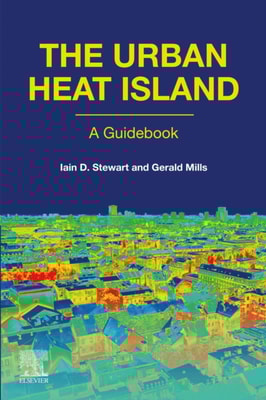
Urban Climate Change and Heat Islands: Characterization, Impacts, and Mitigation serves as a go to reference for a foundational understanding of urban-climate drivers and impacts.
Understanding Disaster Risk: A Multidimensional Approach presents the first principle from the UNISDR Sendai Framework for Disaster Risk Reduction, 2015-2030.
Strengthening Disaster Risk Governance to Manage Disaster Risk presents the second principle from the UNISDR Sendai Framework for Disaster Risk Reduction, 2015-2030.
Lakes, wetlands and coastal regions provide essential services critical to the survival of human, wildlife and, by and large, the ecosystems, which are constantly threatened by anthropogenic activities, environmental degradation and climate change.
Life Cycle Sustainability Assessment for Decision-Making: Methodologies and Case Studies gives readers a comprehensive introduction to life cycle sustainability assessment (LCSA) methodology for sustainability measurement of industrial systems, proposing an efficiency methodology for stakeholders and decision-makers.
Ecosystem and Territorial Resilience: A Geoprospective Approach provides a full review of the geoprospective approach and how it can be used in planning for and implementing environmental and territorial resilience measures.
Predicting Future Oceans: Sustainability of Ocean and Human Systems Amidst Global Environmental Change provides a synthesis of our knowledge of the future state of the oceans.
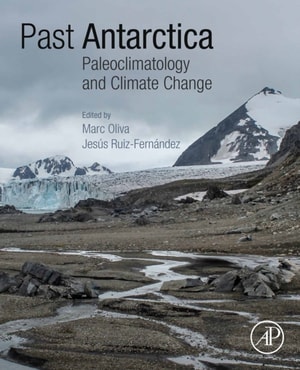
Past Antarctica: Paleoclimatology and Climate Change presents research on the past and present of Antarctica in reference to its current condition, including considerations for effects due to climate change.
Water Quality in the Third Pole: The Roles of Climate Change and Human Activities offers in-depth coverage of water quality issues (natural and human-related), the monitoring of contaminants, and the remediation of water contamination.
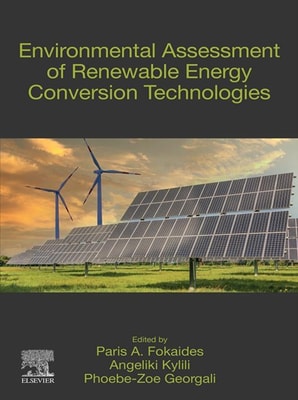
Environmental Assessment of Renewable Energy Conversion Technologies provides state-of-the-art coverage in both non-fossil energy conversion and storage techniques, as well as in their environmental assessment.
Tropical and Extratropical Air-Sea Interactions: Modes of Climate Variations provides a thorough introduction to global atmospheric and oceanic processes, as well as tropical, subtropical and mid-latitude ocean-atmosphere interactions.
The Physical Oceanography of the Arctic Mediterranean Sea describes the circulation and the processes in the Arctic Mediterranean, how our present knowledge has developed, and presents recent changes caused by a gradually warmer global climate.
This book highlights the impact of climate change on the soil microbiome and its subsequent effects on plant health, soil-plant dynamics, and the ecosphere.
Spatiotemporal Analysis of Air Pollution and Its Application in Public Health reviews, in detail, the tools needed to understand the spatial temporal distribution and trends of air pollution in the atmosphere, including how this information can be tied into the diverse amount of public health data available using accurate GIS techniques.
Environmental and Pollution Science, Third Edition, continues its tradition on providing readers with the scientific basis to understand, manage, mitigate, and prevent pollution across the environment, be it air, land, or water.