This book provides technical information on management of water resources project in delta region in India, including strategies to be adopted to minimize the losses and maximize the benefits, as well as protecting the environment.
With a chapter devoted to each of the United Nation's Sustainable Development Goals (SDGs), this edited book explores the evidence that corruption is a strong impediment to achieving the SDGs and that strong anti-corruption policy is essential if any are to be achieved.
Exploring the ongoing histories of human-centered ecosystem management in the lands and waters that comprise what is now known as North America, this book tracks the diverse ways in which human-environmental relations have been presented across different forms of media.
The boards and management of listed companies are under increasing pressure from investors to address urgent environmental, social and governance (ESG) issues.
Through cultural mapping and design methodologies, this book illuminates the role of architecture in preserving collective memory while adapting to contemporary needs.
Presenting Jewish environmentalism as a case study of contemporary post-secularism, this book exemplifies the responses of world religions to the global ecological crisis and situates Jewish environmental spirituality historically, socially, theologically, and politically.
One of a series of titles on the Futures of Asia, “Future of Cities in Asia” explores diverse facets of Asia's future city landscape during the transformative 2020s, offering insights into pivotal transformations and potential trajectories.
This book explores the transformative impact of emerging technologies such as AI, blockchain, and machine learning on industries and societies, particularly in Africa.
This compilation of papers captures the essence of the International Conference on Smart Systems for Sustainable Development using Advanced Computational Techniques (ICSSA 2025).
The boards and management of listed companies are under increasing pressure from investors to address urgent environmental, social and governance (ESG) issues.
Exploring the ongoing histories of human-centered ecosystem management in the lands and waters that comprise what is now known as North America, this book tracks the diverse ways in which human-environmental relations have been presented across different forms of media.
This compilation of papers captures the essence of the International Conference on Smart Systems for Sustainable Development using Advanced Computational Techniques (ICSSA 2025).
Through cultural mapping and design methodologies, this book illuminates the role of architecture in preserving collective memory while adapting to contemporary needs.
One of a series of titles on the Futures of Asia, “Future of Cities in Asia” explores diverse facets of Asia's future city landscape during the transformative 2020s, offering insights into pivotal transformations and potential trajectories.
Dieses Buch erklärt, was die SDGs konkret sind und was sie leisten sollen: eine intakte Umwelt schaffen, soziale Gleichheit erreichen – bei gleichzeitigem ökonomischem Wohlstand.
Dieses Buch erklärt, was die SDGs konkret sind und was sie leisten sollen: eine intakte Umwelt schaffen, soziale Gleichheit erreichen – bei gleichzeitigem ökonomischem Wohlstand.
Distributed energy resources (DERs) such as solar panels, microgrids, and residential battery storage are reshaping electricity systems by enabling autonomous consumption and localised generation.
A practical guide to eco-friendly and sustainable gardening for the modern worldWhile we might feel that our little gardens are insignificant in the grand scheme of things, quite the opposite is true.
This volume offers an interdisciplinary, spatially grounded analysis of Northern Canada—centring the territories of Yukon, the Northwest Territories, and Nunavut, and the broader geography of Inuit Nunangat—to show how climate change, infrastructure, governance, and cultural continuity co-produce northern development outcomes.
This contributed volume provides cases that may help textile professionals understand how to reduce environmental impact by using renewable energy sources (like solar or wind) in textile production.
This contributed volume provides cases that may help textile professionals understand how to reduce environmental impact by using renewable energy sources (like solar or wind) in textile production.
This book highlights diverse composting techniques, including vermicomposting, bacterial cellulose-based composting, and inoculum-based solutions, illustrating their role in sustainable waste management and nutrient-rich soil production.
This book highlights diverse composting techniques, including vermicomposting, bacterial cellulose-based composting, and inoculum-based solutions, illustrating their role in sustainable waste management and nutrient-rich soil production.
This textbook provides a comprehensive and structured approach to technology-driven green growth, integrating advanced digital tools with sustainability strategies to optimize environmental development through economic and social outcomes.
Navigating Sustainability in Polymer Materials: Principles, Practices, and Future Directions explores the evolving landscape of sustainable polymer science and offers a timely and comprehensive examination of one of the most pressing challenges facing the polymer industry today: how to embed sustainability at every stage of material design, development, and application.
Sustainable Entrepreneurship and Startup Ecosystem: Global Challenges and Opportunities explores the evolving intersection of sustainability, innovation, and entrepreneurship within a rapidly transforming global business environment.
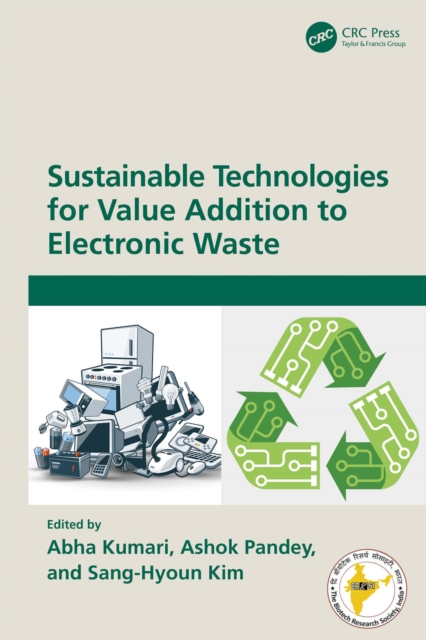
This book presents a sustainable, effective, and cost-effective solution for the valorization of e-waste for the recovery of expensive, valuable, strategic, heavy, and base metals and rare earth elements.