Fluorchlorkohlenwasserstoffe (FCKW) und Chlorkohlenwasserstoffe (CKW) zerstören maßgeblich die lebenserhaltende Ozonschicht und tragen in erheblichem Umfang zum Treibhauseffekt bei.
Ten years ago the author, together with eight co-authors, edited a textbook Remote Sensing for Environmental Sciences within the series on Ecological Studies of Springer-Verlag.
This book focuses on the most recent developments in bioremediation techniques and what the future holds for bioremediation in order to reduce the amount of pollution in the world.
This book offers a comprehensive overview of bioactive phytochemicals within by-products from leaf, stem, root, and tuber vegetables, and it explores the valorisation of these vegetable cultivation and processing by-products, not only as a source of valuable bioenergy but also for health purposes.
In this book, we have contributions from experts working on diverse aspects of waste management and waste entrepreneurship with an aim to contribute toward a holistic understanding of the existing and forthcoming waste handling challenges.
In this book, we have contributions from experts working on diverse aspects of waste management and waste entrepreneurship with an aim to contribute toward a holistic understanding of the existing and forthcoming waste handling challenges.
This book sheds new light on the transformative role of microorganisms in waste management, offering a comprehensive overview of microbial waste management strategies and their applications.
The book provides technical information on the operation of wastewater treatment plants and strategies to be adopted for the design of plants, assessment, processes and technologies for wastewater treatment and reuse for irrigation and industry, including protecting the environment.
This book highlights a need to engage research and innovation for energy production from waste given the challenges of insufficient electricity in most developing countries.
This book integrates various scientific approaches, including bioremediation and nanomaterials, to address environmental challenges posed by living organisms.
This book integrates various scientific approaches, including bioremediation and nanomaterials, to address environmental challenges posed by living organisms.
This book is written to foster discussions on the valorization of agro-industrial waste as a raw material for bioactive compounds that can assist in disease containment, the protection of soil resources, and consequently, human health.
This book provides a comprehensive overview of the challenges associated with dye pollution and highlights opportunities for sustainable development in the textile industry.
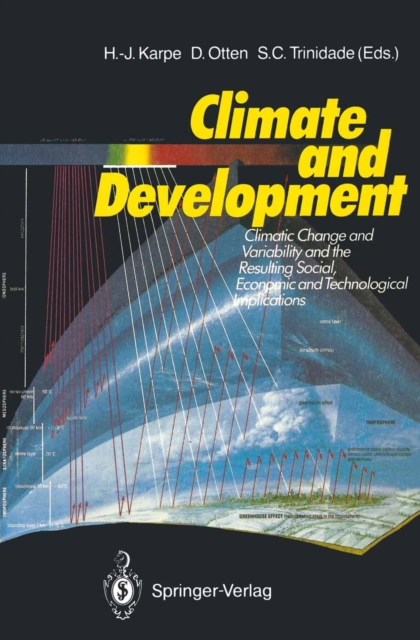
Due to the threat of a possible global climate change and the greenhouse effect caused by constituents of anthropogenic origin in the atmosphere, air quality has become a major environmental issue.
As the availability of fossils fuels becomes more limited, the negative impact of their consumption becomes an increasingly relevant factor in our choices with regards to primary energy sources.
This book covers the challenges and opportunities presented by plastics in the modern era and sheds light on the complex interplay of technology, environment, and socio-economic dynamics.
This book presents peer-reviewed papers of the 2022 10th International Conference on Environment Pollution and Prevention (ICEPP 2022), which was held in Sydney, Australia, during December 16-18, 2022.
This book encapsulates numerous ideas for developing novel strategies toward sustainable waste management, incorporating technology transfer and capacity building for sustainable waste management, and enforcing the stringent policy framework for environmental protection from improper waste management practices.
This book examines the persistent global problem of low productivity of systems in the construction industry and how it mobilizes research and social efforts to find more efficient procedures and processes associated with production, construction, and operation.
This book discusses the challenges that have arisen due to environmental hydrocarbon wastes, their toxicity to the ecosystem, limitations, the improvement of sustainable techniques, as well as the zero-waste approach used for the management of environmental hydrocarbon wastes for resilient future.
This book collates bioactive compounds from the by-products of bulb, flower and fruit vegetables, and it explores vegetable processing by-products utilization.
This book highlights microbial biodiversity, biowastes, and innovative bioprocesses that contribute to creating these environmentally friendly biopolymers.