Vor einigen Jahren wurde an die VDI-Kommission Reinhaltung der Luft der Wunsch herangetragen, sie möge sich mit dem Problem der Luftqualität in großen Städten befassen und dabei auch Planungs aspekte berücksichtigen.
This book was developed mainly from the selected presentations and contribu- tions made during the 3rd Biennual European Conference on Fish Processing in Grimsby, UK, 29th June-1st July 1999, which was sponsored by the Society of Chemical Industry, University of Lincoln, and North East Lincolnshire Council.
Band 1 dieses zweibändigen Lehrbuches gibt dem Lernenden aufbauend auf den Grundlagen einen Einstieg in die verfahrenstechnische Behandlung der vielfältigen Probleme mit dispersen Stoffen.
Professor Wolfgang Nentwig, Universität Bern, stellt die derzeit brennendsten Umweltaspekte in ihrer Gesamtproblematik anschaulich dar; sein Werk hebt sich damit positiv von den zahllosen Sammelwerken zu dieser Thematik ab.
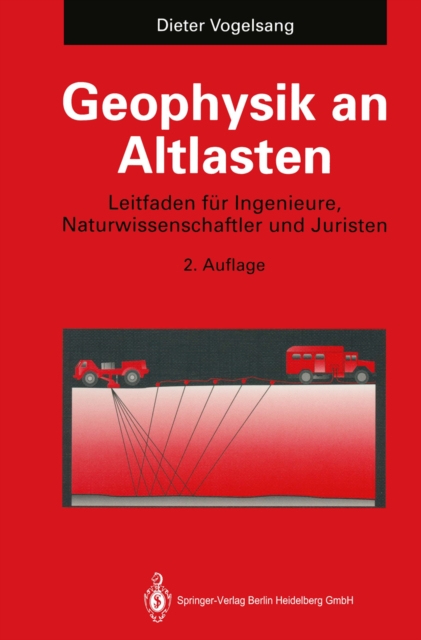
Lokalisierung und Sanierung von Altlasten entwickeln sich zu den zentralen Aufgaben von Naturwissenschaftlern, Ingenieuren und Beamten von regionalen, nationalen und internationalen Behörden im Umweltbereich.
Das Auffinden und die Sanierung von Altlasten entwickelt sich zu einer der zentralen Aufgaben von Naturwissenschaftlern, Ingenieuren und Beamten von regionalen, nationalen und internationalen Behörden im Umweltbereich.
Dieses Handbuch deckt die gesamte Problematik der Abwassertechnologie ab: Abwasseranfall aus dem häuslichen und industriellen Bereich, direkte und indirekte Abwasserableitung, Abwasserbehandlung sowie der Gewässerschutz werden gemeinsam behandelt.
With the widespread availability of satellite and aircraft remote sensing image data in digital form, and the ready access most remote sensing practitioners have to computing systems for image interpretation, there is a need to draw together the range of digital image processing procedures and methodologies commonly used in this field into a single treatment.
Die Sorge um unsere Umwelt läßt uns immer sensibler darauf achten, welche Folgen menschliche Eingriffe auf der Erde bisher bewirkt haben und noch aus lösen werden.
Die Autoren führen den Leser in die komplexe Welt der Kunststoffwirtschaft ein, denken deren Zirkularität konsequent zu Ende und zeigen auf, wie eine ganzheitliche und integrative Kreislaufstrategie aussehen kann.
Der Leser erhält Informationen zu Anlagen der elektrischen Gasreinigung, wie sie in Kraftwerken, Stahlwerken, Zementwerken, Chemieanlagen, KWK-Anlagen und Biomassekraftwerken betrieben werden.
In diesem Band werden unter anderem Handlungsempfehlungen für die Überflutungsvorsorge gegeben, die Hebung des energetischen Potenzials von Abwasser besprochen und Praxisbeispiele zur ökologischen Sanierung oder ökologischen Baubegleitung dargestellt.
Die „Brandschutzfibel“ wird dem Fachmann für Brandschutz, dem interessierten Laien und den Beratern in Versicherungen, den Feuerwehren, sowie Herstellern in der Planung künftiger Brandschutzprodukte einen fundierten Überblick über wirkungsvolle und sinnvolle Brandschutzmaßnahmen im privaten und vor allem gewerblichen Umfeld geben.
Ausgehend von den Mobilitätsbedürfnissen der modernen Industriegesellschaft und den politischen Rahmenbedingungen zum Klimaschutz werden die unterschiedlichen Antriebs- und Ladekonzepte von batterieelektrischen- und hybridelektrischen Fahrzeugen vorgestellt und bewertet.
Jan Kortmann untersucht in diesem Buch, ob der Gesundheitsschutz und die Recyclingfähigkeit potenzielle Markteintrittsbarrieren für den Verbundbaustoff Carbonbeton darstellen.
Dieses Buch beschreibt die metallurgischen Vorgänge, Thermodynamik, Strömungsmechanik und Verfahrenstechnik der Roheisenerzeugung im Hinblick auf die Hüttenwerks- und Gasreinigungsanlagen.
Die „Brandschutzfibel“ wird dem Fachmann für Brandschutz, dem interessierten Laien und den Beratern in Versicherungen, den Feuerwehren, sowie Herstellern in der Planung künftiger Brandschutzprodukte einen fundierten Überblick über wirkungsvolle und sinnvolle Brandschutzmaßnahmen im privaten und vor allem gewerblichen Umfeld geben.
Der Leser erhält Informationen zu Anlagen der elektrischen Gasreinigung, wie sie in Kraftwerken, Stahlwerken, Zementwerken, Chemieanlagen, KWK-Anlagen und Biomassekraftwerken betrieben werden.
In diesem Band werden unter anderem Handlungsempfehlungen für die Überflutungsvorsorge gegeben, die Hebung des energetischen Potenzials von Abwasser besprochen und Praxisbeispiele zur ökologischen Sanierung oder ökologischen Baubegleitung dargestellt.