This book addresses critical issues for contemporary cities building their future, presenting a cohesive narrative rooted in the diverse experiences of its authors and reflecting the systemic nature of urban environments.
Entrepreneurship and Competitive Sustainability: Innovative Approaches is a rigorous, practice-focused edited volume that maps how entrepreneurial action can serve as a powerful catalyst for achieving the United Nations Sustainable Development Goals (SDGs).
This book systematically discusses the fundamental, principle and method of pulping and reaction process intensification, recovery of value-added products from black liquor waste in the paper industry.
This book discusses the impact of high-tropospheric ozone pollution and its interactions with other major abiotic stress factors, such as elevated carbon dioxide, nitric oxide, volatile organic carbon, UV radiation, heavy metal stress, drought, salinity on the crop production and the crop quality.
This book systematically discusses the fundamental, principle and method of pulping and reaction process intensification, recovery of value-added products from black liquor waste in the paper industry.
The book examines AI's role in improving learning outcomes, expanding access to education, fostering research and innovation, and preparing students for the future workforce.
This book, presented in parts, offers a comprehensive and coherent in-depth overview of the state and condition of African agriculture, focusing on Sub-Saharan Africa.
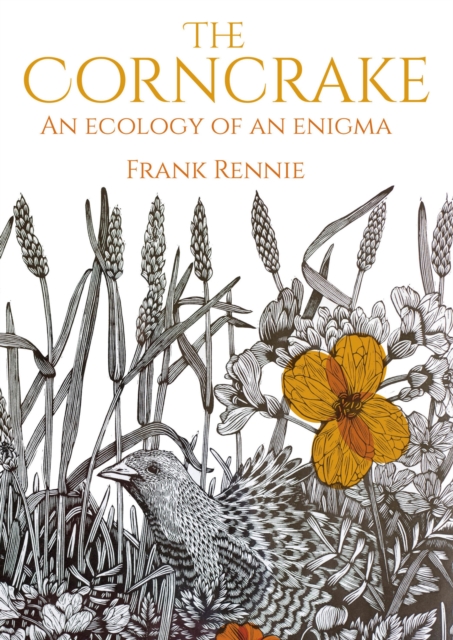
Changes in farmland management throughout the twentieth century, including agricultural intensification and increasing mechanisation, have resulted in the loss of habitat for many species.
This book describes a large and complex research and conservation project which addressed the movement behavior of a variety of wildlife species, each with varying movement patterns, resource needs, and empirical knowledge of their ecologies.
This book offers a variety of case studies and review articles that provide readers with a comprehensive understanding of the latest in micropollutant assessment and remediation.
This book highlights the life history strategies of natural vegetation in sand-shifting environments, focusing on the physiological and ecological characteristics of trees that support these strategies.
This book offers a variety of case studies and review articles that provide readers with a comprehensive understanding of the latest in micropollutant assessment and remediation.
This book, presented in parts, offers a comprehensive and coherent in-depth overview of the state and condition of African agriculture, focusing on Sub-Saharan Africa.
Drawing on ideas from across the natural sciences, social sciences and humanities, James Tyner considers how the advent of the Anthropocene and and the coming age of artificial intelligence challenges us to rethink our notions of violence.
This book covers the latest advancements of nanomaterials used in the removal of various toxic contaminants from wastewater such as metal ions, dyes, and pesticides.
This book highlights the life history strategies of natural vegetation in sand-shifting environments, focusing on the physiological and ecological characteristics of trees that support these strategies.
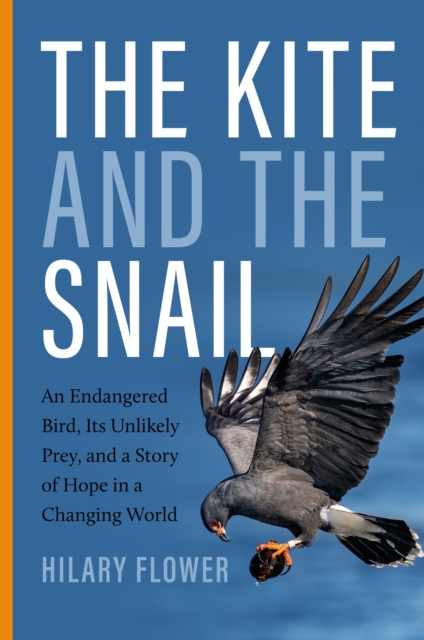
The unexpected comeback of the endangered Everglade snail kite and what it means for other species facing extinction todayWhen a bird of prey known as the Everglade snail kite became hard to find in the wetlands of South Florida where it was once abundant, scientist Hilary Flower sought answers, tracking the kite far from its ancestral home to tell a surprising story of survival and hope.
This book brings together breakthrough ideas and practical engineering insights, offering readers immediate access to innovative solutions that address today’s most pressing challenges in power and energy systems.
This book offers a comprehensive exploration of the dynamic relationship between environmental factors and public health, providing both theoretical insights and practical solutions.
This book presents the latest research developments in geoinformation science, which includes all the sub-disciplines of the subject, such as: geomatic engineering, GIS, remote sensing, digital photogrammetry, digital cartography, etc.
This book addresses critical issues for contemporary cities building their future, presenting a cohesive narrative rooted in the diverse experiences of its authors and reflecting the systemic nature of urban environments.
Drawing on ideas from across the natural sciences, social sciences and humanities, James Tyner considers how the advent of the Anthropocene and and the coming age of artificial intelligence challenges us to rethink our notions of violence.
This book 'Quantum AI-powered and HPC applications for sustainable environment and climate change' offers an in-depth exploration of how Quantum Artificial Intelligence (AI) -powered and High-Performance Computing (HPC) based technologies can revolutionize our approach to environmental sustainability and climate change mitigation.
This book covers the latest advancements of nanomaterials used in the removal of various toxic contaminants from wastewater such as metal ions, dyes, and pesticides.
This book brings together breakthrough ideas and practical engineering insights, offering readers immediate access to innovative solutions that address today’s most pressing challenges in power and energy systems.
This is a personal, reflective account of Galloway's wildlife based on life in a uniquely varied and diverse glen, tucked away between high, heather-clad hills and the shore of the Solway.
This book captures the intellectual spirit and interdisciplinary synergy of a global forum dedicated to redefining the future of civil engineering through innovation and sustainability in the field of transportation engineering.
This book presents selected papers from the 4th International Conference on Functional Textiles and Clothing Conference (FTC 2025) held at the Indian Institute of Technology (IIT) Delhi.
This book provides a comprehensive exploration of the climate resilience and molecular adaptation of alpine medicinal flora, integrating insights from ecophysiology, metabolomics, and plantomics.