Environmental management is a global phenomenon, embracing all businesses in all countries, whether or not there already exists an organised response to managing environmental impacts.
It is crucial that engineers - from students to those already practising - have a deep understanding of the environmental threats facing the world, if they are to become part of the solution and not the problem.
It is crucial that engineers - from students to those already practising - have a deep understanding of the environmental threats facing the world, if they are to become part of the solution and not the problem.
Contemporary Environmental Accounting: Issues, Concepts and Practice has been written by two of the world's leading experts in the field in order to provide the most comprehensive and state-of-the-art textbook on environmental accounting yet attempted.
Contemporary Environmental Accounting: Issues, Concepts and Practice has been written by two of the world's leading experts in the field in order to provide the most comprehensive and state-of-the-art textbook on environmental accounting yet attempted.
Toughening environmental legislation, national and supra-national environmental product policies and growing customer demands are focusing the attention of companies on the environmental and broader social issues linked to the creation and delivery of their products and services.
Toughening environmental legislation, national and supra-national environmental product policies and growing customer demands are focusing the attention of companies on the environmental and broader social issues linked to the creation and delivery of their products and services.
A number of disparate but interconnected forces such as deregulation and globalization, rapid advances in communications technology and the rise in the power of the consumer and civil society have now combined to bring corporate responsibility to prominence in many corporate boardrooms.
A number of disparate but interconnected forces such as deregulation and globalization, rapid advances in communications technology and the rise in the power of the consumer and civil society have now combined to bring corporate responsibility to prominence in many corporate boardrooms.
Business-as-usual in terms of industrial and technological development - even if based on a growing fear of pollution and shortages of natural resources - will never deliver sustainable development.
Business-as-usual in terms of industrial and technological development - even if based on a growing fear of pollution and shortages of natural resources - will never deliver sustainable development.
The authors argue the business case for sustainable development in this study that explores a range of issues beginning with corporate social responsibility and ending with eco-efficiency.
The authors argue the business case for sustainable development in this study that explores a range of issues beginning with corporate social responsibility and ending with eco-efficiency.
This book - the first of a two-volume series - argues that, today, stakeholder thinking has evolved into the study of interactive, mutually engaged and responsive relationships that establish the very context of doing modern business, and create the groundwork for transparency and accountability.
This book - the first of a two-volume series - argues that, today, stakeholder thinking has evolved into the study of interactive, mutually engaged and responsive relationships that establish the very context of doing modern business, and create the groundwork for transparency and accountability.
This book is the companion to "e;Unfolding Stakeholder Thinking: Theory, Responsibility and Engagement"e;, which examined many emerging theoretical and normative issues and was released to acclaim in October 2002.
This book is the companion to "e;Unfolding Stakeholder Thinking: Theory, Responsibility and Engagement"e;, which examined many emerging theoretical and normative issues and was released to acclaim in October 2002.
The "e;business case"e; for corporate social responsibility, which suggests that socially and environmentally aware companies can expect to reap financial rewards, is seemingly gaining widespread acceptance within the business community.
This work analyses and interprets Chinese managers' perceptions of environmental management and regulatory enforcement practices in Chinese enterprises.
This work analyses and interprets Chinese managers' perceptions of environmental management and regulatory enforcement practices in Chinese enterprises.
The last decade has seen increasing awareness of the importance of understanding corporate environmental management systems (EMSs) and their relationships with sustainability, competitiveness and institutional practice.
The last decade has seen increasing awareness of the importance of understanding corporate environmental management systems (EMSs) and their relationships with sustainability, competitiveness and institutional practice.
Eco-industrial development is born from the realisation that the places where we work waste too much and unnecessarily pollute the land, air and water.
Eco-industrial development is born from the realisation that the places where we work waste too much and unnecessarily pollute the land, air and water.
This book presents the inventive genius behind technological breakthroughs by ten global companies including Alcoa, DaimlerChrysler, Honda, ST Micro and Visteon.
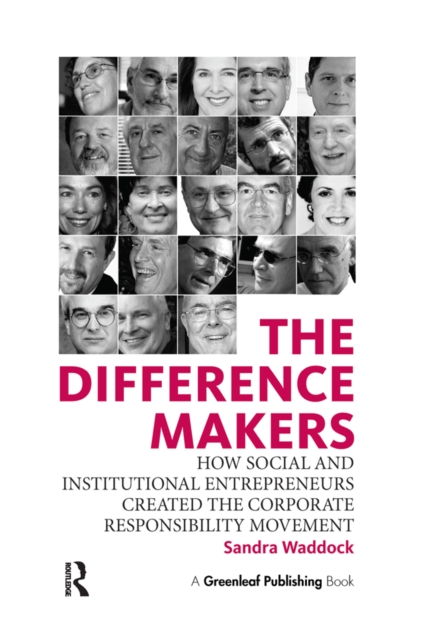
It is not often that we have the opportunity to hear from the early pioneers of a social movement about how it grew and evolved, but that is exactly what this book sets out to do.